
Cheetoh Care Guide
What a Cheetoh Actually Is The Cheetoh is a deliberate cross of two spotted domestic breeds — the Bengal and the Ocicat — made to concentrate a jungle-cat silhouette in a cat kept and sold as domestic
In This Guide
Overview
What a Cheetoh Actually Is
The Cheetoh is a deliberate cross of two spotted domestic breeds — the Bengal and the Ocicat — made to concentrate a jungle-cat silhouette in a cat kept and sold as domestic. Both parents are registered domestic breeds, but the Bengal side traces back to crosses with the Asian leopard cat several generations before the modern breed, so ask any breeder about generation and check your local rules on hybrid cats before committing. The wild look itself is a matter of coat pattern and body line, not a temperament inherited from a wild ancestor.
Who made it, and when
The programme is widely credited to a single breeder, but the accounts that name them are secondary. We could not confirm that name, the founding year, or the recognition dates that circulate on breeder sites against a primary registry document, so this guide does not repeat them. Treat any specific Cheetoh date you see quoted as unsourced until a registry publishes it.
Where it stands with registries
The Cheetoh is not a championship breed. Catz Inc, a registry that publishes a Standard of Excellence for it, labels that standard provisional — a working description of what breeders are aiming at, not a settled pedigree standard. Because the breed is young and small in number, expect few breeders and little published data.
Build and coat
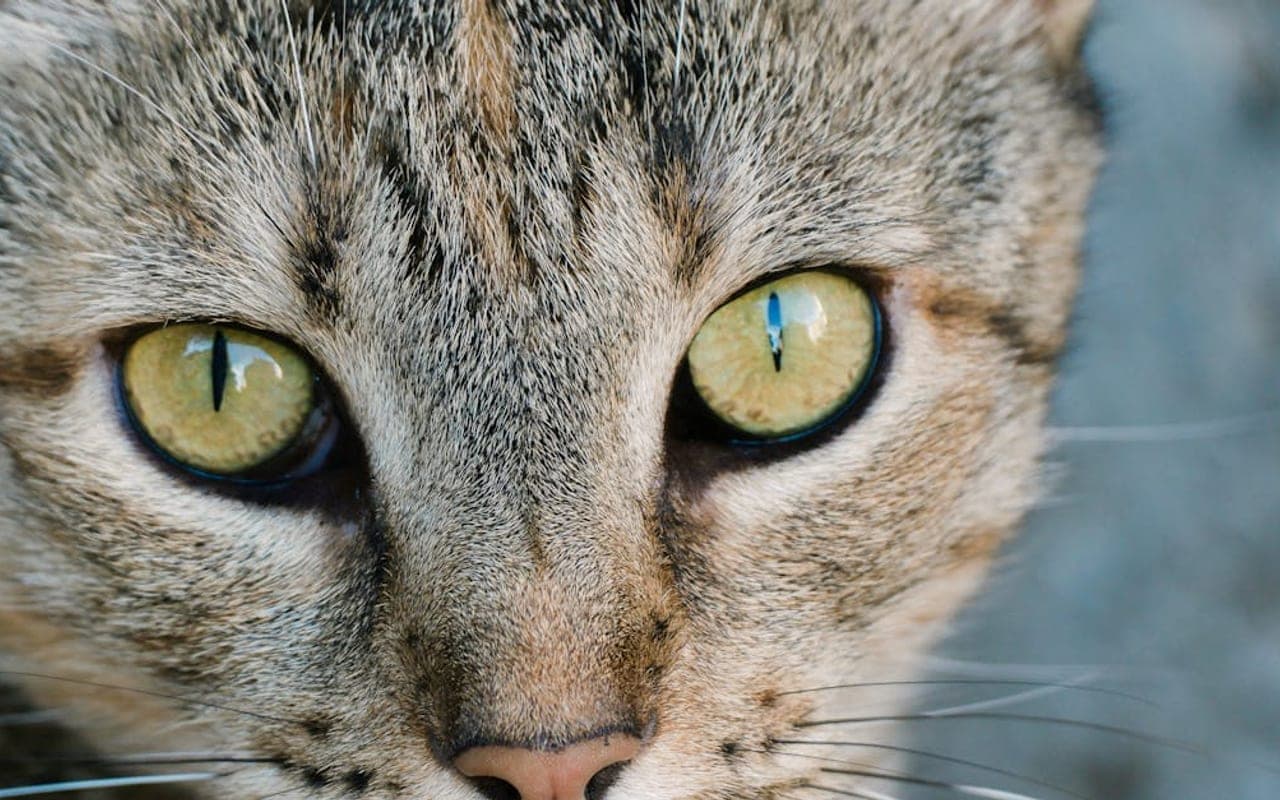
The Catz Inc provisional standard describes a very muscular cat that is athletic, graceful and lithe, with a modified wedge head, large almond eyes set wide apart, and a low-shouldered, stalking walk. It gives 15 to 28 pounds for males and up to 15 pounds for females — genuinely large for a domestic cat. The coat is very short and thick, yet soft and velvety, and must be spotted or rosetted, with the exception of the black marmalade colour.
Temperament — described, not measured
That standard describes the Cheetoh as consistently social and gentle, never aloof, and notably intelligent. Read that as a written breeding goal, not a measured behavioural finding — no published behavioural study of the breed exists. Meet the actual parents before you judge a kitten.
Exercise
Exercise and Enrichment
Both breeds behind the Cheetoh are active, and the Catz Inc provisional standard describes the result as a very muscular, athletic cat that is extremely intelligent and curious. Plan for a cat that finds its own entertainment if you supply none — and one heavy enough to reach your shelves.
Vertical space before floor space
Height matters more than square metres. A cat built to stalk and climb reaches the wardrobe top whether or not you gave it a route, so give one: a tall, stable cat tree, wall shelves or a cleared bookcase. Stability is the real specification — a tree rated for an average cat can rock under a fifteen-pound one landing, and a wobbly perch sends the cat back to your furniture.
Interactive play, twice a day
Two sessions of ten to fifteen minutes with a wand toy beat a room full of static toys, because the value sits in the chase-catch-kill sequence only a moving lure creates. Let the cat catch the toy at the end; ending on a miss every time leaves it frustrated rather than settled. Rotate toys weekly so novelty does the work instead of your arm. Puzzle feeders fill the gaps between sessions and slow eating — useful where extra weight hides under a dense coat.
Leash walking, if the cat agrees
Owners of both parent breeds harness-train successfully, and a confident Cheetoh may take to it. Fit a harness the cat cannot back out of, let it wear that harness indoors for days before you attach a lead, then let it set the pace. Stop if it crouches, freezes or hides — leash walking suits cats that enjoy it and gives an unwilling one only stress. Keep vaccination and parasite prevention current before any outdoor access.
Grooming
Grooming a Short, Dense, Very Large Cat
The Catz Inc provisional standard describes the Cheetoh coat as very short and thick, yet soft and velvety. Short and dense is the easiest combination to live with: there is no undercoat length for mats to form in, so the weekly job is lifting shed hair off before the cat swallows it — not detangling.
Coat
One weekly pass with a rubber curry or fine-toothed comb suits this coat. Work the spine and flanks, then the britches and belly — where a cat grooms itself least thoroughly. Twice weekly during a shed. No oils or sprays needed.
Nails, with a large cat's mechanics in mind
Nail care on a cat this heavy is a different job. A Cheetoh in the upper half of its weight range launches, hooks and hangs with real force, so each claw tip carries more load per grab. Blunting the outer few millimetres every two to three weeks does not stop the cat climbing; it lowers what a mis-timed grab costs your upholstery, your forearms, and the cat itself when one hooked claw takes its full weight.
Give the front dewclaw its own check: high on the inner wrist, it never touches a scratching post, so it gets no natural wear and is the nail most likely to overgrow unnoticed. Trim only the clear tip, well short of the pink quick; if you cannot see where the quick ends, have a veterinary nurse show you once.
Teeth and ears
Brush the teeth with a cat-specific paste, daily if you can: brushing is the only home measure that reaches below the gumline, where periodontal disease starts. Check ears weekly, wiping visible wax from the outer ear only. Dark debris, odour or head-shaking needs a vet: mites and infection are treated differently.
Health
Cheetoh Health: What Is Documented, and What Is Not
No breed-specific hereditary disease profile exists for the Cheetoh. It is young and rare, and no registry, university or veterinary body publishes incidence data or a health survey for it; any tidy list of "Cheetoh conditions" was copied from the Bengal. Its risks are best read through its Bengal and Ocicat parents — named below against the breed each is documented in.
Documented in the Bengal
Progressive retinal atrophy (PRA-b). The Veterinary Genetics Laboratory at UC Davis offers a DNA test for a form of PRA causing autosomal recessive blindness in Bengals, with sight loss starting around seven weeks of age and vision badly compromised by two years. Two tested parents remove the risk, so ask for results, not assurances.
Pyruvate kinase deficiency (PK-def). An inherited haemolytic anaemia caused by too little pyruvate kinase activity in red cells. A survey in BMC Veterinary Research recommended PK testing for Bengals, for breeds derived from Abyssinian crosses such as the Ocicat, and — relevant here — for novel breed programmes out-crossing to Bengals. That last phrase describes the Cheetoh literally, and note that it reaches this breed from both parent sides, not just the Bengal one.
Hypertrophic cardiomyopathy (HCM). Cornell University College of Veterinary Medicine calls HCM the most common heart disease of cats and lists the Bengal among higher-prevalence breeds. Cornell cautions that these screening results need careful veterinary interpretation, because not all cats carrying an implicated mutation develop the condition; HCM itself is diagnosed by echocardiography.
Documented in the Ocicat's ancestry
The Ocicat is described in BMC Veterinary Research as derived from Abyssinian crosses, and renal amyloidosis is worth knowing about because of that ancestry. Cornell reports a diagnosed patient is almost always an Abyssinian, and that amyloid deposits progressively displace healthy kidney tissue, though early recognition allows treatment that may slow it. We found no incidence data for Ocicats, let alone Cheetohs — treat it as a reason for routine kidney bloodwork, not a breed risk.
Routine prevention, which matters more day to day
Dental disease is among the commonest feline problems and stays silent until advanced, so brushing and vet checks earn their place. Obesity hides under a dense coat, so weigh rather than eyeball. Keep vaccination and parasite prevention on your vet's schedule: an indoor cat and a leash-walked one face different exposure.
VCA Animal Hospitals lists increased urination frequency, difficulty urinating and blood in the urine among typical signs of feline lower urinary tract disease, and notes complete obstruction — inability to pass urine, mostly in males, with straining and nothing produced — needs immediate veterinary care, being life-threatening untreated. A male straining but producing no urine is an emergency that night.
Cheetoh lifespan is not well established: with so few cats and no survey, any figure quoted is borrowed from the parents, not measured. None of this replaces examination by your own vet.
Frequently Asked Questions
Does the Cheetoh have its own hereditary disease profile?
No. Nobody publishes breed-specific incidence or screening data for the Cheetoh — it is too new and too rare. Expectations are inferred from its Bengal and Ocicat parentage, so treat any list sold as "Cheetoh conditions" with scepticism.
Which genetic tests should I ask a breeder for?
Ask for DNA results on the Bengal-side recessive conditions, progressive retinal atrophy (PRA-b) and pyruvate kinase deficiency: both have clean tests, and two tested parents remove the risk. Also ask when the breeding cats last had a cardiac ultrasound, and to see the paperwork.
Can a breeder guarantee an HCM-free line?
No. Cornell cautions that a mutation result needs careful veterinary interpretation, because not every cat carrying one develops the condition; HCM itself is diagnosed by echocardiography rather than by DNA. A breeder who ultrasounds breeding animals and shares results is doing the right thing; one promising the condition cannot occur is overstating testing.
When is straining in the litter tray an emergency?
When a cat, particularly a male, strains repeatedly and passes little or no urine. VCA Animal Hospitals describes complete urinary obstruction as life-threatening without immediate care. Do not wait until morning and do not try a home remedy — go to a vet or emergency clinic.
Sources
This guide draws on the following published references. Each opens in a new tab so you can check it against what you have read here.
Catz Inc
Cheetoh (Provisional Standard) — Standard of Excellence(opens in a new tab)VCA Animal Hospitals
Cystitis and Lower Urinary Tract Disease in Cats(opens in a new tab)Veterinary Genetics Laboratory at UC Davis
Progressive Retinal Atrophy (PRA-b) (Bengal)(opens in a new tab)BMC Veterinary Research
Erythrocyte Pyruvate Kinase Deficiency mutation identified in multiple breeds of domestic cats(opens in a new tab)Cornell University College of Veterinary Medicine
Hypertrophic Cardiomyopathy(opens in a new tab)Cornell University College of Veterinary Medicine
Renal Amyloidosis(opens in a new tab)
Affiliate disclosure: We may earn a commission from qualifying purchases. This doesn't affect our recommendations.
Recommended Products
Cheetoh Care Guide Book
Breed-focused reading and owner references for Cheetoh care, training, grooming, and health planning.
Cheetoh Food and Supplies
Helpful supplies for cheetoh cat supplies routines at home.
Cheetoh Grooming Tools
Helpful supplies for cheetoh grooming tools routines at home.
Get personalized pet care tips
Join our newsletter for breed-specific advice, care guides, and expert tips delivered weekly.
No spam, ever. Unsubscribe anytime.