
Manx Care Guide
The Manx: The Cat the Isle of Man Made Famous The Manx is defined by what it lacks. Where most cats carry a long balancing tail, the Manx often carries none at all, and that single trait shapes its si
In This Guide
Overview
The Manx: The Cat the Isle of Man Made Famous
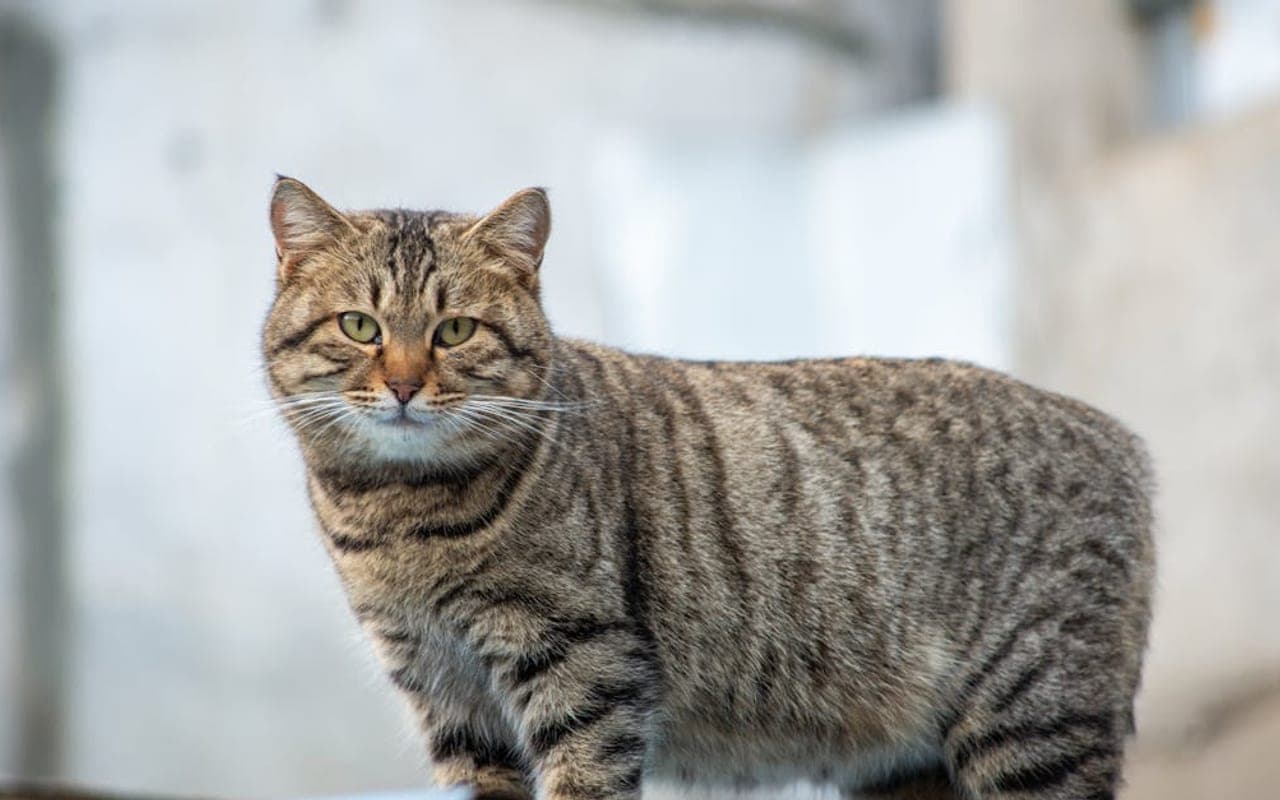
The Manx is defined by what it lacks. Where most cats carry a long balancing tail, the Manx often carries none at all, and that single trait shapes its silhouette, its history, and much of its care. The breed takes its name from the Isle of Man, the small island in the Irish Sea where a naturally occurring taillessness mutation spread through a closed island cat population for centuries before the breed was ever formalized.
Taillessness is not all-or-nothing, and Manx kittens fall along a spectrum that fanciers name precisely. A "rumpy" has no tail at all, only a dimple where one would begin. A "rumpy-riser" has a short knob of a few vertebrae that rises when you stroke down the back. A "stumpy" carries a short, often kinked stub, and a "longy" has a tail close to normal length. All four can appear in a single litter, because the same dominant gene produces different lengths of spine.
The rest of the body reads as round. The Manx has a rounded head, round eyes, a compact and muscular "cobby" body, and a deep flank. Its hind legs are notably longer than its front legs, which tilts the rump upward and gives the breed its distinctive rabbit-like hop when it moves at speed. This is a heavy, powerful cat for its size, not a delicate one.
Temperament is a large part of the appeal. Manx are known as calm, people-oriented cats that bond closely with their households and tend to follow their favorite person from room to room. Many are playful problem-solvers well into adulthood, and the breed has a long-standing reputation as a capable, watchful mouser, a legacy of its working-cat origins on island farms. It is a friendly, adaptable companion first, and a curiosity of feline genetics second.
Exercise
Keeping a Powerful, Stocky Cat Moving
The Manx is a muscular, athletic cat in a compact frame, and it needs real activity to stay sound. This is a working breed by heritage, prized for generations as a farm mouser, so the drive to chase, pounce, and hunt sits close to the surface. Because the body is heavy and cobby, an under-exercised Manx can carry excess weight that strains its joints, so daily movement matters more here than for a lean, rangy cat.
Lean into the hunting instinct with interactive play. Wand and feather teasers, balls, and toys that dart and skitter tap directly into the prey sequence the breed was bred to perform. Aim for a couple of focused sessions a day and let the cat "catch" the toy at the end, because a stalk that never resolves in a capture leaves a hunter frustrated. Puzzle feeders and treat-dispensing toys extend the work by making the cat problem-solve for food, which many Manx enjoy.
Despite lacking the tail most cats use as a counterbalance, the Manx is a strong, agile jumper, propelled by hind legs longer than its forelegs. Give it vertical territory: sturdy, well-anchored cat trees, shelves, and perches let it climb and survey, which suits a naturally watchful cat. Choose stable furniture with generous landing platforms, because a powerful cat lands hard and you want the height without the wobble.
Some Manx take readily to trained games and even clicker-based agility, chasing lures through tunnels and over low hurdles, which channels both the body and the busy mind. Keep obstacles low to protect the hindquarters. Rotate toys to keep novelty high, and, since the sociable Manx generally enjoys company, a second play-compatible pet can help burn energy.
Grooming
Grooming the Manx Double Coat
The Manx wears a double coat, a dense insulating undercoat beneath a protective layer of guard hairs, and that structure drives its grooming needs more than tail length ever does. The breed comes in two coat lengths. The shorthair Manx has a glossy, padded double coat that feels almost springy under the hand. The longhair Manx, historically registered as the Cymric, is the same cat in a silky, plush semi-long coat, carrying the identical gene and body type.
Because both varieties have a thick undercoat, both shed and both benefit from routine brushing rather than occasional attention. For the shorthair, brushing once or twice a week with a rubber curry or fine slicker lifts loose undercoat before it lands on your furniture and cuts the volume of hair the cat swallows while self-grooming, which means fewer hairballs.
The longhair Cymric needs more frequent work, ideally several times a week, because a plush double coat mats where it moves and rubs. Pay particular attention to the "britches" on the longer hind legs, the ruff at the chest, and the belly and armpits, since these friction points knot first. Work in the direction of hair growth and tease small tangles apart with your fingers before they tighten into felted mats that have to be clipped out.
Spring and autumn bring heavier sheds as the undercoat blows out, so brush more often then. Round out the routine with the basics: check the ears, brush the teeth to guard against dental disease, and trim nail tips every couple of weeks. One Manx-specific note, handle the rump and any tail stub carefully. A short or kinked tail remnant can be sensitive, so keep grooming there light and stop if the cat objects.
Health
Manx Health: Living With the Taillessness Gene
The trait that defines the Manx is also the source of its most important health considerations, so responsible ownership starts with understanding the gene. The same dominant mutation that shortens or removes the tail acts on the whole lower spine, and its effects range from none at all to serious.
Manx Syndrome
The best-known concern is Manx syndrome, also called sacrocaudal dysgenesis. According to International Cat Care and PetMD, the taillessness gene disrupts development of the sacral and coccygeal (tail) vertebrae and the lower spinal cord, and in severe cases produces a spectrum of defects that can include spina bifida. Because the sacral nerves serve the hindquarters, affected cats may show an abnormal hind-limb gait, weakness or partial paralysis of the back legs, and problems with bladder, bowel, and rectal control, meaning urinary or fecal incontinence and chronic constipation.
Manx syndrome tends to become apparent early. International Cat Care and PetMD note that signs usually emerge in the first months of life, often by around four to six months as kittens begin moving with purpose. The completely tailless "rumpy" carries the greatest risk, while longer-tailed variants are less affected, and PetMD describes clinically significant disease in only a minority of the breed. If you see hind-end weakness, a hopping or uncoordinated gait, dribbling urine, or straining to pass stool, see a veterinarian promptly, because bladder and bowel complications can escalate.
Why Breeding Practice Matters
The Manx gene is what geneticists call homozygous-lethal. International Cat Care explains that a kitten inheriting two copies of the mutation, one from each parent, is so severely affected that it dies in utero early in development. Every living Manx therefore carries one normal copy of the gene, which makes breeding practice a health issue. Responsible breeders, as described by International Cat Care and the Governing Council of the Cat Fancy, pair a tailless Manx with a tailed cat rather than mating two rumpies together, which reduces lethal pairings. When choosing a kitten, asking about the breeder's approach to tail pairing is a legitimate health question.
Other Breed-Associated Conditions
Beyond the spine, a few conditions appear often enough to know about. Vet-reviewed breed sources including Catster and PetMD note that Manx with a short or kinked tail stub can develop arthritis in the malformed vertebrae of the tail remnant; a cat that resents having its rump touched may be signaling discomfort worth a veterinary check. Corneal dystrophy, a group of inherited eye conditions, is also reported in some Manx lines, with clouding or fluid changes on the eye surface that can begin in young cats and warrant a veterinary eye exam. Dental disease and weight gain matter too, and the heavy, cobby Manx build makes keeping a healthy weight a real priority to protect the joints.
None of this means a Manx is destined to be unwell; many live long, active lives. The breed benefits most from an owner who watches for early hind-end and continence changes, keeps up regular veterinary care, and started with a well-bred kitten. This article describes general breed risks for education only and is not a diagnosis; any specific worry about your cat should go to your own veterinarian, who can examine the animal and advise on its situation.
Frequently Asked Questions
Do all Manx cats develop Manx syndrome?
No. Manx syndrome affects only a minority of the breed. International Cat Care and PetMD note the completely tailless "rumpy" carries the highest risk, while longer-tailed variants are less affected. Signs usually appear early, so a kitten past about four to six months without problems is reassuring, though only a veterinarian can assess an individual cat.
Why shouldn't two tailless Manx cats be bred together?
Because the taillessness gene is homozygous-lethal. International Cat Care explains that a kitten inheriting two copies is so severely affected it dies before birth. Responsible breeders, per International Cat Care and the Governing Council of the Cat Fancy, pair a tailless Manx with a tailed cat instead, which reduces lethal pairings.
What early signs of trouble should Manx owners watch for?
Watch for hind-leg weakness, a hopping or wobbly gait, dribbling or leaking urine, straining or accidents with stool, or sensitivity around the rump or tail stub. Vet-reviewed sources such as PetMD and Catster link these to Manx syndrome or tail-remnant arthritis, and any of them warrants a prompt veterinary visit rather than watchful waiting.
Are longhair (Cymric) Manx healthier than shorthair Manx?
Coat length does not change the genetic risk. The longhair Cymric is simply a Manx in a plush coat, carrying the same dominant gene, body type, and Manx syndrome risk. The difference is grooming, not health, so evaluate a Cymric the same way you would any Manx.
Sources
This guide draws on the following published references. Each opens in a new tab so you can check it against what you have read here.
Cat Fanciers' Association (CFA)
Manx - Cat Fanciers' Association Breed Profile(opens in a new tab)Hill's Pet Nutrition
Manx Cat Breed Information and Personality Traits(opens in a new tab)PetMD
Manx Syndrome in Cats(opens in a new tab)International Cat Care
Inherited disorders in cats(opens in a new tab)PetMD
Manx Cat Breed Health and Care(opens in a new tab)
Affiliate disclosure: We may earn a commission from qualifying purchases. This doesn't affect our recommendations.
Recommended Products
Manx Care Guide Book
Breed-focused reading and owner references for Manx care, training, grooming, and health planning.
Manx Food and Supplies
Helpful supplies for manx cat supplies routines at home.
Manx Grooming Tools
Helpful supplies for manx grooming tools routines at home.
Get personalized pet care tips
Join our newsletter for breed-specific advice, care guides, and expert tips delivered weekly.
No spam, ever. Unsubscribe anytime.