
Selkirk Rex Care Guide
The cat in sheep's clothing The Selkirk Rex is the curly-coated cat that looks less like a rex and more like a plush toy — its nickname is "the cat in sheep's clothing," and it earns it. The breed tra
In This Guide
Overview
The cat in sheep's clothing
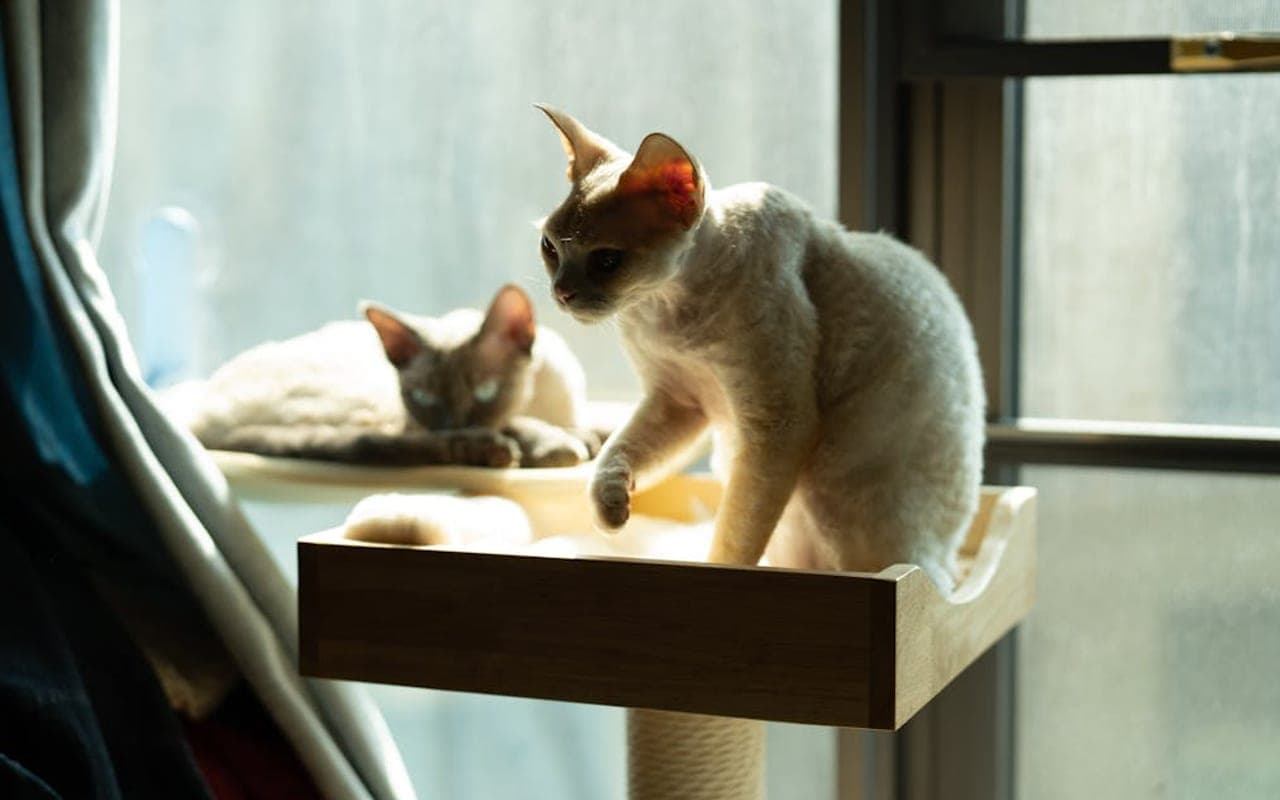
The Selkirk Rex is the curly-coated cat that looks less like a rex and more like a plush toy — its nickname is "the cat in sheep's clothing," and it earns it. The breed traces to a single kitten found in Montana in the 1980s: a rescued female with curly whiskers and a coat that looked, in the Cat Fanciers' Association's own words, as if it "had had a perm." Persian breeder Jeri Newman adopted her, bred her to a black Persian, and got curly kittens — proving the mutation was dominant. She named the breed after her stepfather's family, Selkirk, making this the only cat breed named after a person (CFA). The CFA accepted it for registration in 1992 and granted championship status in 2000.
What sets the Selkirk apart from the other rex breeds is that the curl affects all three hair types — guard, awn, and down — so the coat is thick, soft, and full rather than thin or close-lying (CFA). The curl is random and unstructured, falling in loose clumps and ringlets instead of a tidy wave, and it comes in both a shorthair and a longhair version. Underneath the coat is a substantial cat: the CFA standard calls for medium-to-large size with heavy boning and a round, full-cheeked head, giving the breed real weight and a powerful, teddy-bear build.
Temperament is the other half of the appeal. Selkirks are patient, tolerant, and famously cuddly — PetMD's veterinary-reviewed profile calls the breed "a living, purring teddy bear." They are people-oriented lap cats that stay playful and interactive without the frantic energy of the finer rex breeds.
Exercise
Play for a laid-back lap cat
Match the effort to the cat. The Selkirk Rex is interactive and easygoing rather than a wall-climber, so its exercise needs are moderate — the CFA describes a cat whose "idea of kitty heaven is a warm lap," playful and responsive without the restless, hyperactive drive of the finer-boned rex cats. Plan for engagement and companionship, not for burning off a fizzing energy supply.
Short, regular play sessions suit this temperament best. Ten to fifteen minutes a couple of times a day with a wand teaser, a ball, or a toy the cat can chase and "catch" keeps a Selkirk mentally satisfied. Because these are heavy-boned, substantial cats (CFA) that love a lap, they can put on weight if play slides and food does not, so treat interactive play as weight management, not just entertainment.
Lean into the breed's sociability. Selkirks are people-oriented and dislike being left alone for long stretches, so the most effective "exercise" is often you: a feather toy after work, a puzzle feeder, or a cat tree by a window. A second pet can help, since the breed generally does well with other animals and gently handled children (CFA). Don't push this cat into high-intensity activity it has no appetite for — meet it where it is, on the sofa, and bring the play to the lap.
Grooming
Grooming a coat you can ruin by fussing over it
The counterintuitive rule for a Selkirk Rex is that more brushing makes the coat worse. Those loose curls are the whole point of the breed, and over-brushing pulls them straight and leaves the coat frizzy — PetMD's vet-reviewed profile warns directly that overbrushing can damage the signature curls. The CFA is gentler still: no special tools are needed, and running your fingers through the coat "in a gentle scratching motion" is often enough.
A light comb-through once or twice a week is plenty to lift dead hair and stop tangles, and the CFA notes a monthly comb helps prevent matting. Skip the daily-brushing habit some longhairs need — this coat wants to be left mostly alone.
Bathing matters more here than the brush does. The dense, curly coat traps oil against the skin, so many Selkirks need an occasional bath every few weeks to stay fresh (PetMD). Let the coat air-dry rather than blow-drying it smooth; heat and a brush together will straighten the curl you just washed in. The whiskers deserve a mention too: the CFA standard notes they are curly, fragile, and prone to breaking off, so short or sparse whiskers are normal — leave them be. Finish with routine nail trims, weekly ear checks, and regular tooth brushing.
Health
Health: what the outcross breeds bring with them
The Selkirk Rex was built by breeding to Persians, Exotic Shorthairs, and British Shorthairs — the foundation female was bred to a Persian (CFA) — and that ancestry, not the curly gene, is where its main health considerations come from. These are risks to screen for, not diagnoses; only your veterinarian can assess an individual cat.
- Polycystic kidney disease (PKD). The concern most tied to the breed's Persian and British Shorthair heritage. PetMD's vet-reviewed profile rates PKD a moderate risk in the Selkirk — a genetic condition in which cysts form in the kidneys, causing permanent damage over time. It is easy to test for: a single DNA test tells a breeder a cat's status, and the CFA lists PKD among the conditions responsible Selkirk breeders screen for. Ask whether both parents were PKD-tested.
- Hypertrophic cardiomyopathy (HCM). HCM thickens the heart muscle and can lead to heart failure, and it appears across many cat breeds (PetMD). No genetic test clears every cat, so detection relies on veterinary exams and, where a vet advises it, a screening echocardiogram (PetMD). The CFA also lists HCM among the conditions Selkirk breeders monitor.
- Inherited eye disease. PetMD notes a lower risk of progressive retinal atrophy (PRA) from Persian lines — a gradual, painless loss of vision — so an annual eye check is sensible.
A note on the Persian face: because Persians are flat-faced, buyers sometimes assume the Selkirk inherits brachycephalic breathing trouble. It generally does not — the standard calls for a round head "with no flat planes" (CFA), and authoritative sources do not flag airway disease as a Selkirk-specific problem. Otherwise, give a Selkirk the usual feline wellness basics, plus portion control to protect these heavy-boned cats from obesity.
This is general information, not medical advice. Always consult your veterinarian for diagnosis and treatment decisions.
Frequently Asked Questions
Is the Selkirk Rex a healthy breed?
Broadly yes, but its Persian and British Shorthair ancestry carries risks worth screening for — chiefly polycystic kidney disease and hypertrophic cardiomyopathy (PetMD). A breeder who DNA-tests for PKD and monitors for HCM is your best route to a healthy kitten.
Do Selkirk Rex cats have breathing problems like Persians?
Generally no. Although Persians are in the background, the Selkirk standard calls for a round head "with no flat planes" (CFA) rather than the flat Persian face, and authoritative sources do not list brachycephalic airway disease as a breed concern. Still have any laboured breathing checked.
Can I test a Selkirk Rex kitten for kidney disease before symptoms show?
Yes. PKD is detectable with a DNA test long before cysts cause illness, and responsible breeders test breeding cats for it (CFA, PetMD). If a breeder can't show the parents' PKD results, keep looking.
Are the curly coat and curly whiskers a health problem?
No. The curl comes from a natural dominant gene affecting all three hair types and is not linked to skin or health issues (CFA). The whiskers are naturally curly, fragile, and prone to breaking off (CFA), so short or sparse whiskers are normal, not a sign of illness.
Sources
This guide draws on the following published references. Each opens in a new tab so you can check it against what you have read here.
Cat Fanciers' Association (CFA)
Selkirk Rex(opens in a new tab)Selkirk Rex Cat Club
Breed Health(opens in a new tab)PetMD
Selkirk Rex Cat Breed Health and Care(opens in a new tab)VCA Animal Hospitals
Selkirk Rex(opens in a new tab)
Affiliate disclosure: We may earn a commission from qualifying purchases. This doesn't affect our recommendations.
Recommended Products
Selkirk Rex Care Guide Book
Breed-focused reading and owner references for Selkirk Rex care, training, grooming, and health planning.
Selkirk Rex Food and Supplies
Helpful supplies for selkirk rex cat supplies routines at home.
Selkirk Rex Grooming Tools
Helpful supplies for selkirk rex grooming tools routines at home.
Get personalized pet care tips
Join our newsletter for breed-specific advice, care guides, and expert tips delivered weekly.
No spam, ever. Unsubscribe anytime.