
Dog Park Etiquette: 12 Rules Every Owner Should Follow
Not individually reviewed by a veterinarian. Read our editorial standards.
Last updated:
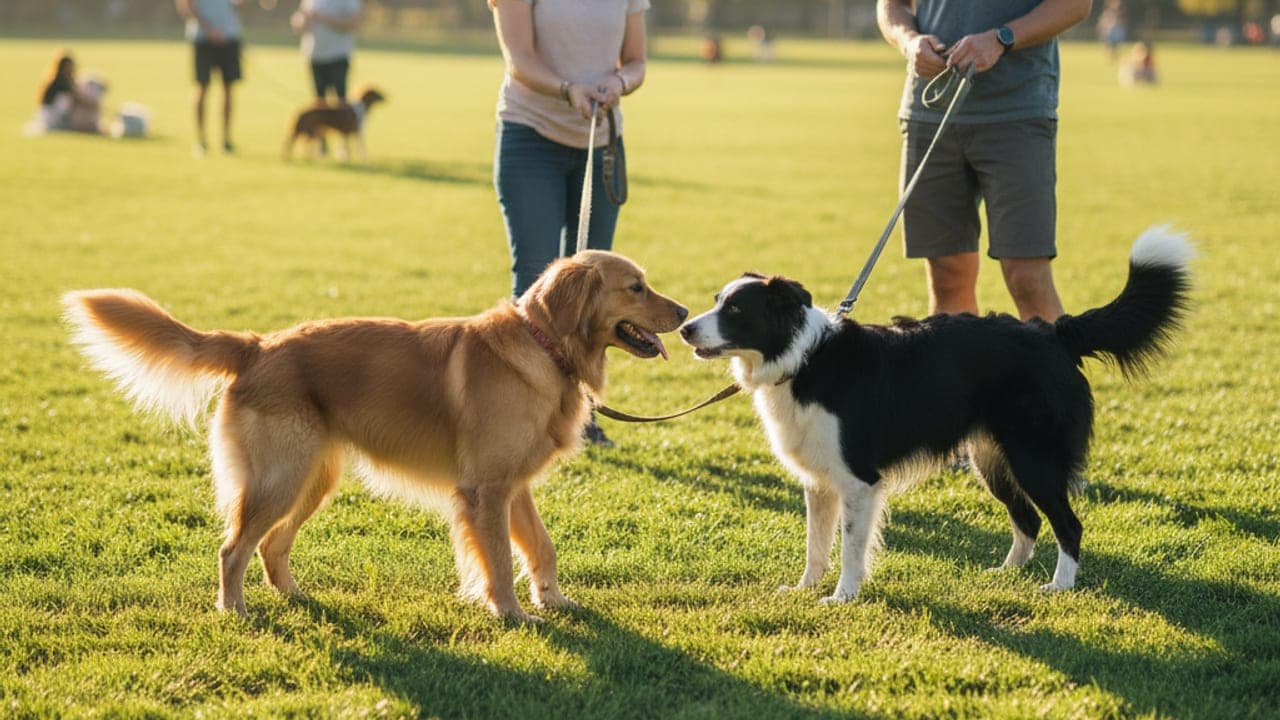
- Always assess your dog's body language before entering — anxious dogs don't benefit from dog parks
- Remove leashes once inside the off-leash area to prevent leash frustration and tangled fights
- Pick up after your dog immediately — every time, no exceptions
- Intervene early when play escalates — don't wait for a fight to "sort itself out"
- Dog parks are not the place for puppies under 4 months or dogs who haven't completed core vaccinations
The dog park should be the highlight of your dog's week — a chance to run, sniff, and socialize in a way that no leashed walk can replicate. But a great dog park experience depends entirely on the humans. One owner ignoring aggressive behavior or bringing an unvaccinated puppy can turn a fun outing into a veterinary emergency.
These 12 rules aren't about being rigid. They're about making the park safe and enjoyable for every dog and every owner who walks through the gate.
1. Know If Your Dog Is Dog-Park Ready
Not every dog belongs at an off-leash dog park, and that's okay. Dog parks require a specific set of social skills that not all dogs have developed.
Your dog is ready for the park if she:
- Responds reliably to recall commands (coming when called)
- Shows appropriate play behavior (play bows, loose body, taking turns)
- Can disengage from other dogs when redirected
- Has completed core vaccinations
- Is spayed or neutered (most parks require this)
Your dog is NOT ready if she:
- Shows signs of anxiety in new environments (panting, tucked tail, lip-licking)
- Resource-guards toys, treats, or water bowls
- Has a history of aggression toward unfamiliar dogs
- Is an unvaccinated puppy under 4 months old
There's no shame in deciding the dog park isn't right for your dog. Structured playdates with known, compatible dogs are a safer alternative for reactive or anxious dogs.
2. Remove the Leash in Off-Leash Areas
This seems counterintuitive, but keeping your dog leashed in an off-leash area is actually dangerous. Leashed dogs can't communicate naturally through body language or create distance when needed. This frustration can trigger leash aggression — even in dogs who are normally friendly.
Additionally, leashes create tangle risks. Two dogs playing on-leash can get wrapped up in seconds, leading to panic, injury, or a fight triggered by sudden restraint.
Enter through the double-gate system (most parks have these), remove the leash inside the airlock, and let your dog enter the park freely.
3. Pick Up After Your Dog — Every. Single. Time.
This is the most violated rule at every dog park, and it's the one that matters most for public health. Dog waste carries parasites (roundworms, hookworms, giardia), bacteria, and viruses that can infect other dogs and, in some cases, humans.
Carry bags. Watch your dog. Pick up immediately. If your dog tends to go in hard-to-find spots, follow her during the first few minutes until she's done.
No excuses: "I didn't see it" and "someone else will get it" are the reasons parks get closed. Be the owner who makes the park better, not worse.
4. Always Ask Before Your Dog Approaches
Not every dog at the park wants to be greeted. Some are working through socialization challenges. Some are elderly and fragile. Some are having an off day.
Before letting your dog charge up to another, make brief eye contact with the other owner and ask: "Is your dog friendly with other dogs?" This takes three seconds and can prevent a traumatic experience.
Breeds with naturally exuberant greeting styles — like Labrador Retrievers and Golden Retrievers — sometimes overwhelm smaller or more reserved dogs. Your dog's friendliness doesn't automatically mean the other dog wants the attention.
5. Watch Your Dog — Not Your Phone
The single most important rule. You are your dog's advocate, safety net, and recall command. If you're scrolling your phone, you'll miss the subtle body language shifts that precede every fight: stiffening, hard staring, mounting, cornering, or ganging up.
Active supervision means:
- Eyes on your dog at all times
- Staying within voice range for recall
- Reading body language of dogs your dog is interacting with
- Being ready to intervene immediately
6. Learn to Read Play vs. Escalation
Healthy dog play looks rough to humans but follows predictable rules:
- Play bows (front end down, rear end up) = "I'm playing, not fighting"
- Role reversal (taking turns chasing, pinning) = balanced, consensual play
- Loose, wiggly bodies = relaxed and having fun
- Frequent pauses = dogs are self-regulating
Concerning signals that play is escalating:
- One dog always on top/chasing = bullying, not playing
- Stiff body, closed mouth, hard stare = tension building
- Yelping without the other dog backing off = boundaries being violated
- Pinning and not releasing = dominance, not play
When you see escalation, calmly call your dog away. Don't yell or run — that adds excitement to an already tense situation.
7. Don't Bring Treats or High-Value Toys
Treats and special toys create resource-guarding situations. A dog who's perfectly friendly may become aggressive when a stranger's dog approaches her prized ball or the treat bag on your hip.
Save treats for training in controlled environments. At the park, let dogs entertain each other — that's the whole point.
8. Separate Big Dogs and Small Dogs
If your park has separate areas for large and small dogs, use them correctly. A 70-pound Labrador playing with a 7-pound Chihuahua can cause serious injury — not from aggression, but from sheer size difference. One playful body slam can break a small dog's leg.
If your park doesn't have separate areas, be especially vigilant about size-mismatched play interactions.
9. Leave Intact Dogs at Home
Unspayed females in heat and intact males create tension at dog parks. Intact males produce hormones that can trigger aggressive responses from neutered males, and a female in heat will attract every male in the park and create conflict.
Most dog parks explicitly require spaying/neutering in their posted rules. Follow them.
10. Don't Bring Puppies Under 4 Months
Puppies who haven't completed their core vaccination series are vulnerable to parvovirus, distemper, and other potentially fatal diseases. Dog parks — with their concentration of dogs from unknown backgrounds — are high-risk environments for unvaccinated puppies.
Wait until your puppy has completed her vaccination series (typically at 14-16 weeks) before visiting the dog park. In the meantime, arrange controlled playdates with known, vaccinated dogs for socialization.
11. Know When to Leave
Sometimes the best thing you can do at the dog park is leave. Signs your dog has had enough:
- Hiding behind you or under benches
- Excessive lip-licking, yawning, or panting (stress signals)
- Snapping at dogs who approach
- Refusing to engage or standing frozen
- Mounting other dogs repeatedly (often a stress behavior, not dominance)
A good park visit lasts 30-60 minutes for most dogs. Longer isn't necessarily better — many dogs get overstimulated after an hour.
12. Clean Up Any Mess You See
Even if it's not yours. Dog parks survive because of community effort. If you see an unclaimed pile, a knocked-over water bowl, or a broken fence section, address what you can and report what you can't. Being that person makes the park better for everyone.
FAQ
Are dog parks good for socialization?
Dog parks can be excellent for socialization — but only for dogs who are already reasonably social. A poorly socialized or fearful dog thrown into a chaotic off-leash environment often becomes more fearful, not less. For dogs who enjoy other dogs and can read social cues, parks provide irreplaceable off-leash interaction. For tips on managing your dog's walking behavior, start with structured leash work first.
What should I do if my dog gets into a fight?
Stay calm. Do NOT reach between fighting dogs — you'll get bitten. Instead, try to break the fight by: (1) making a loud, sharp noise, (2) using a water bottle to spray both dogs, or (3) grabbing the aggressor's rear legs and pulling backward (the "wheelbarrow" technique). After separation, leash both dogs immediately, check for injuries, and leave the park.
How often should I take my dog to the dog park?
2-3 visits per week is a healthy frequency for most social dogs. Daily visits can lead to overstimulation, and the novelty can wear off. Mix dog park visits with other forms of exercise — walks, hikes, swimming, fetch in your yard — for a well-rounded activity schedule.
Can I bring my dog's food to the park?
No. Food is the most common trigger for resource guarding and fights at dog parks. Feed your dog before or after the visit, and leave all food, treats, and chew items at home or in the car.
Want to learn more about your dog's social behavior? Explore our guide on what your dog's tail position means or check out our dog breed guides for breed-specific socialization tips.
Mr Pet Lover Team
The Mr Pet Lover team is dedicated to providing warm, accurate, and practical pet care advice backed by veterinary research and real-world experience.
Related Articles

How to Introduce a New Cat to Your Existing Cats
Introducing a new cat to your resident cats takes patience, structure, and the right timeline. Here's how to do it without territory wars.

The 10 Best Dog Breeds for First-Time Owners
The best first-dog breeds are forgiving, trainable, and healthy. Five breeds that set new owners up for success.

5 Simple Ways to Keep Your Labrador Happy and Healthy
Labradors thrive with the right mix of exercise, nutrition, grooming, and mental stimulation. Five practical habits that make a real difference.