
Shorthair group
Devon Rex
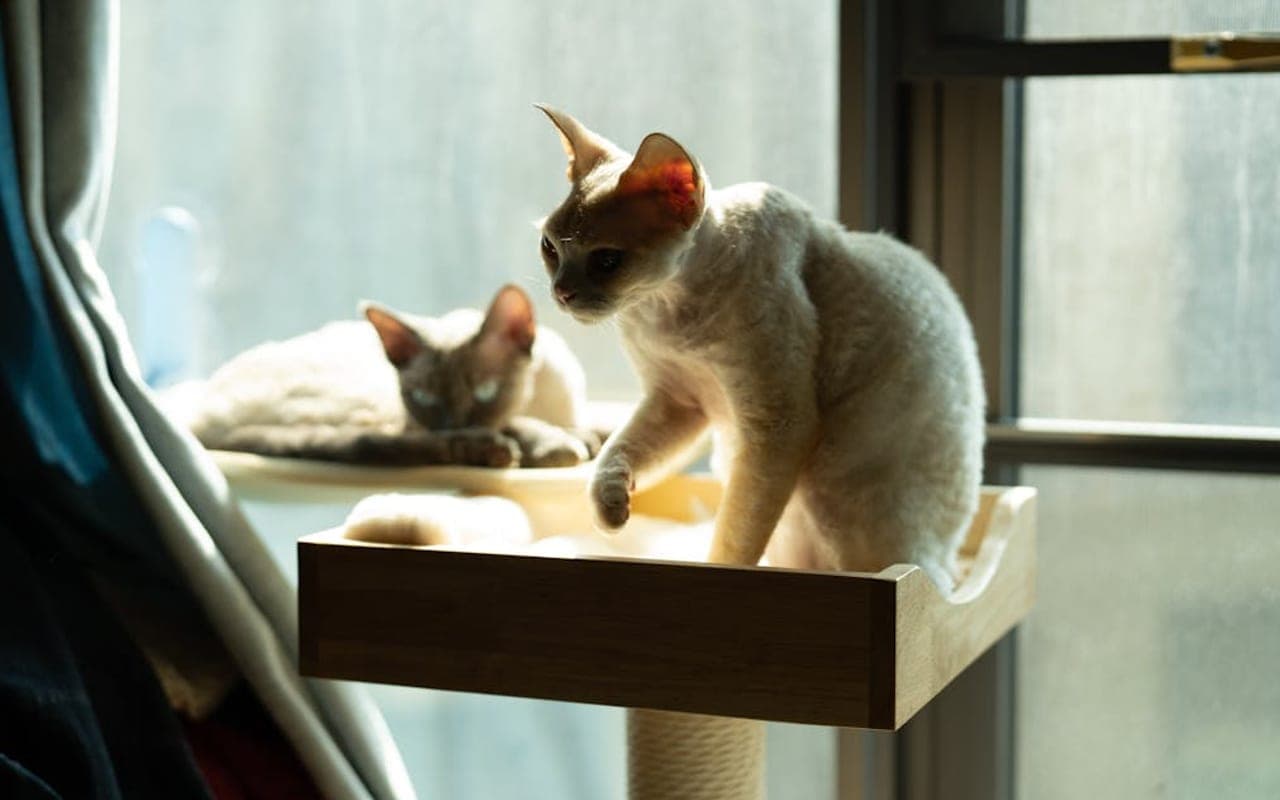
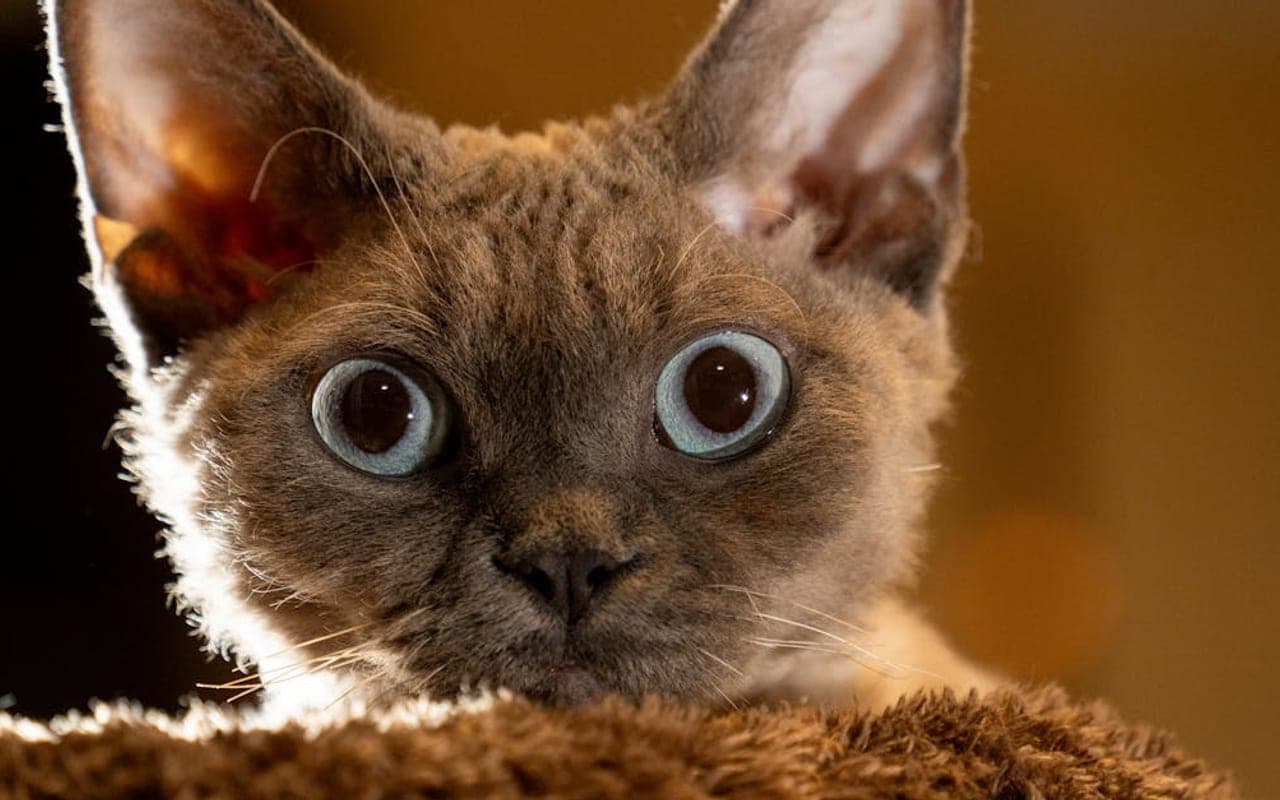
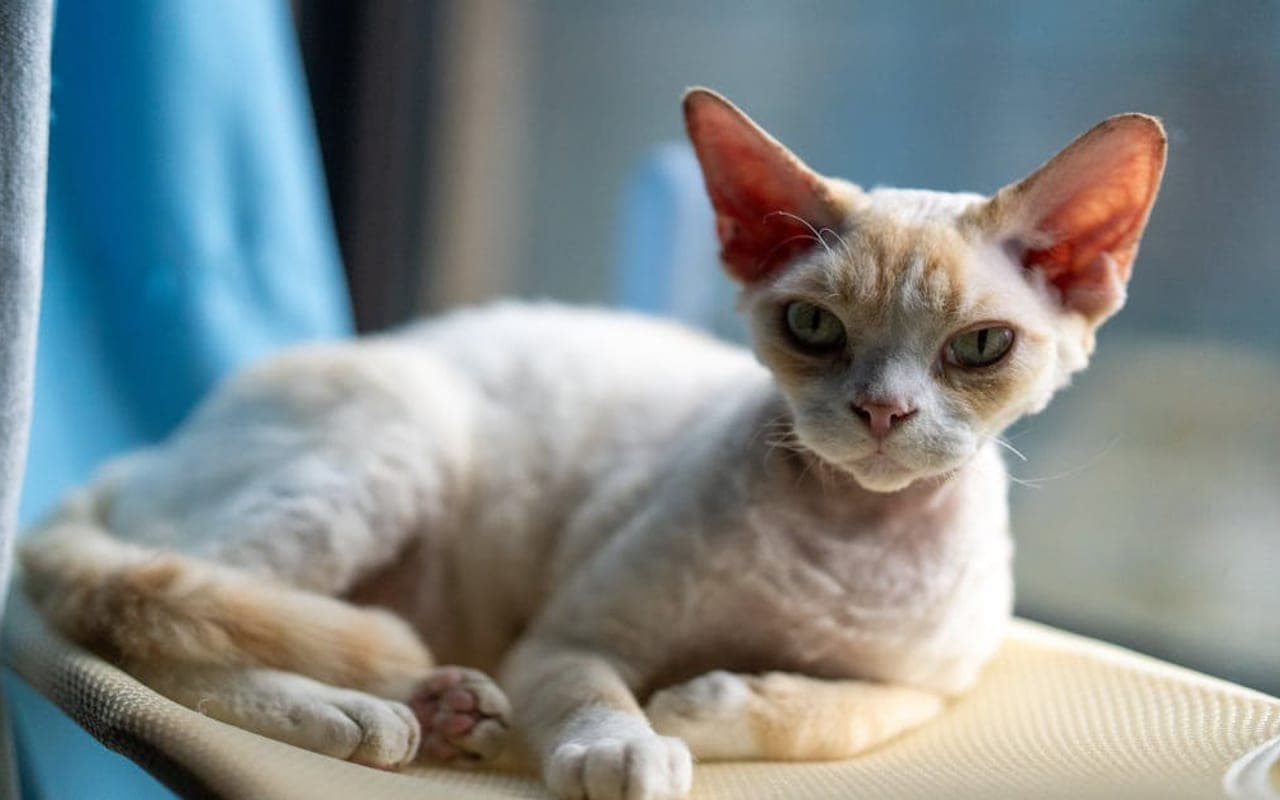
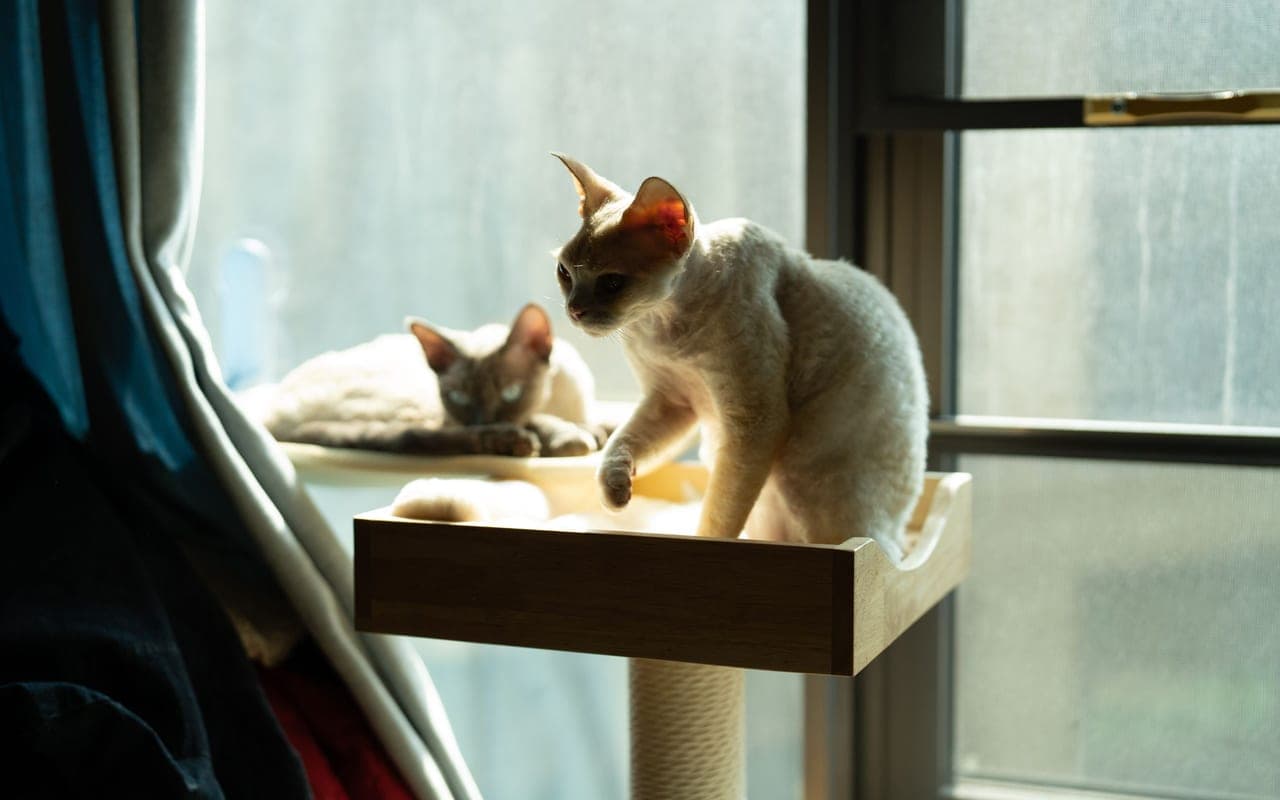
The Devon Rex is a small, light cat (2-5 kg) with an unmistakable look — huge low-set ears, large eyes, a pixie-like face, and a soft, loosely-waved, sparse coat that owners describe as suede or crushed velvet.
Size
5-10 lb
Lifespan
10-15 years
Play
30-60 minutes
Shedding
Low
Experience
Match to owner routine
Decision first
Is a Devon Rex right for you?
Start with fit before history or trivia. These are ownership signals, not guarantees about any individual cat.
Best suited for
- Households with children.
- Homes with other compatible pets.
- Apartment homes with a consistent routine.
- Owners who can provide daily play, climbing space, and enrichment.
Think carefully if
- You cannot provide daily play, climbing space, or mental enrichment.
- You cannot keep up with grooming and preventive care.
- The cat will spend most days without interaction or enrichment.
Conditional fit
Apartment fit depends on vertical space, litter setup, play, enrichment, and noise tolerance.
Daily reality
Devon Rex commitment snapshot
Daily play
30-60 minutes
Match play and enrichment to age, health, appetite, and household routine.
Coat care
Low
Grooming needs vary by coat, shedding, and lifestyle.
Social needs
Needs planning
Most cats still need predictable contact, enrichment, litter care, and monitoring.
Structured facts
Devon Rex at a glance
The measurements and traits that most affect day-to-day life with this breed.
Origin
United Kingdom
Group
Shorthair
Weight
5-10 lb
Height
10-12 in
Lifespan
10-15 years
Temperament
Highly interactive | Mischievous | Loyal | Social | Playful
View all characteristics and methodology
Lifestyle fit
- Apartment suitabilityWorks best with clean litter setup, vertical space, and daily enrichment.
- Likely fit
- Child friendliness
- Often good, with socialisation and supervision
- Other-pet fit
- Often compatible with careful introductions
- Adaptability
- Very high
Owner commitment
- Daily play
- 30-60 minutes
- Grooming
- Low
- Shedding
- Low
- Indoor enrichment
- High
Behavior
- Affection
- Very high
- Energy
- Very high
- Vocalization
- Low
- Social needs
- Very high
Environment and health
- Intelligence
- Very high
- Health risk
- Needs planning
- Weight sensitivity
- Routine monitoring
Ratings combine structured breed data, visible breed fields, and editorial context. They are planning aids, not predictions for an individual cat.
Daily life
Devon Rex temperament and behavior
The Devon Rex is a small, light cat (2-5 kg) with an unmistakable look — huge low-set ears, large eyes, a pixie-like face, and a soft, loosely-waved, sparse coat that owners describe as suede or crushed velvet. That coat is the breed's signature and the source of several of its quirks: it provides little insulation, sheds very little, and in some cats is so thin it leaves bald patches. Buyers drawn purely to the elfin appearance need to understand that the same mutation shaping the look also makes this a cat with specific, non-trivial maintenance and health considerations. Temperament is the breed's real selling point. The Devon Rex is intensely people-oriented, mischievous, and dog-like: it rides on shoulders, follows you everywhere, learns tricks, wedges itself against you for warmth, and is genuinely poor at being ignored or left alone. It stays playful and clownish for life and is often called a 'monkey in a cat suit.' This is a companion cat in the fullest sense — affectionate and entertaining, but demanding of attention. The practical realities owners underestimate: the sparse coat means a Devon gets cold easily and seeks heat (laps, radiators, sunny spots), and the same skin produces excess oil that the thin coat cannot wick away, so Devons need routine bathing and ear cleaning that most cats never require. The breed also carries serious inherited conditions — notably a hereditary muscle disease and the same heart disease seen in many pedigreed cats — which makes breeder screening essential, not optional. Who the Devon Rex is right for: someone home often who wants a highly interactive, warmth-seeking, low-shedding companion and will commit to routine bathing/ear care and source from a breeder who screens for HCM and Devon Rex myopathy. Who it is wrong for: a household gone all day, anyone expecting a hands-off cat, or a buyer who treats the unusual coat as zero-maintenance.
Highly interactive | Mischievous | Loyal | Social | Playful
Highly interactive
A common Devon Rex temperament descriptor that should be interpreted alongside enrichment, handling, and household fit.
Mischievous
A common Devon Rex temperament descriptor that should be interpreted alongside enrichment, handling, and household fit.
Loyal
A common Devon Rex temperament descriptor that should be interpreted alongside enrichment, handling, and household fit.
Social
A common Devon Rex temperament descriptor that should be interpreted alongside enrichment, handling, and household fit.
Owner note
Temperament labels are starting points, not guarantees. Meet the individual cat and ask about behavior history whenever possible.
Care essentials
How to care for a Devon Rex
What looking after one actually involves: play, grooming, food, litter, and routine health.
ExerciseAs needed
- Active and playful breed requiring daily interactive play sessions with toys, climbing structures, and mental stimulation.
GroomingAs needed
- Low-maintenance coat requiring weekly brushing. Occasional bathing as needed.
NutritionAs needed
- Feed a high-quality cat food appropriate for their age and activity level. Maintain fresh water at all times. Monitor weight to prevent obesity.
SocializationAs needed
- Highly social breed that thrives on companionship. Does not do well left alone for extended periods. Consider a companion pet.
Veterinary CareAs needed
- Annual wellness exams, vaccinations, dental checkups, and parasite prevention. Spay/neuter recommended if not breeding.
Health planning
Devon Rex health risks and screening
Every cat breed has individual health variation. Use this profile for planning and discuss medical decisions with a veterinarian.
Ownership cost
How much does a Devon Rex cost?
Cost figures are structured so first-year and lifetime estimates do not conflict with the underlying line items.
| Acquisition | $600-$2,500 |
|---|---|
| Routine monthly | About $70/month |
| Routine annual | About $840/year |
| First-year estimate | $1,440-$3,340 |
| Lifetime routine estimate | $8,400-$12,600 routine costs |
Currency: USD. Region: United States. Typical ranges for this breed. Equipment, insurance, emergency veterinary care, boarding and training are NOT included: we hold no sourced figures for them, and estimating them would be a guess presented as data.
Responsible ownership
Finding a Devon Rex responsibly
What to ask a breeder or rescue is the same conversation for every breed, so we keep it in one place and keep it current.
Health documentation, meeting the parents or foster, contracts and return support, and the warning signs worth walking away from.
Original purpose
Devon Rex history
History is useful when it explains today's behavior, coat, exercise needs, and training style.
Read the breed history
The Devon Rex began with a single curly-coated kitten named Kirlee, born in 1960 near a tin mine in Devon, England, to a stray cat. Kirlee's wavy coat resembled that of the Cornish Rex discovered a decade earlier in neighboring Cornwall, and breeders initially attempted to combine the two — but test matings produced only straight-coated kittens, proving the Devon's curl arose from a separate, distinct gene. The breed was therefore developed independently from Kirlee, with the curl carried by a recessive mutation later identified as affecting a different gene than the Cornish Rex. The Devon Rex was recognized in the UK in the late 1960s and by major North American registries through the 1970s and 1980s. Its origin from one founding cat and a small early gene pool is directly relevant to its modern health profile, contributing to the inherited muscle disease (Devon Rex myopathy) and other conditions concentrated in the breed today.
Gallery
Devon Rex photos
Images are cropped consistently and loaded progressively to keep the page responsive.
Lower-page context
Devon Rex cats in culture
Where the breed shows up in film, sport, work and folklore — the enjoyable part, once the practical questions are answered.
Fun facts
- The Devon Rex originated in United Kingdom.
- Devon Rex cats are considered one of the most intelligent cat breeds.
- The Devon Rex is one of the most energetic and playful cat breeds.
- The Devon Rex is considered a hypoallergenic breed, producing fewer allergens than most cats.
- The Devon Rex is a true lap cat that loves to curl up with their owners.
Devon Rex FAQs
Do Devon Rex cats need grooming if they barely have fur?
Yes, but the opposite kind from most cats. You should not brush the fragile sparse coat — it damages easily. Instead, because the thin coat cannot absorb the skin's natural oils, Devons get greasy and need a gentle bath every one to four weeks plus regular ear cleaning every one to two weeks. So this is a low-shedding but high-skin-maintenance breed; the upkeep owners underestimate is bathing and ears, not brushing.
Are Devon Rex cats hypoallergenic?
No cat is truly hypoallergenic, and the Devon Rex is not an exception. It sheds far less than most cats, which means fewer allergen-carrying hairs spread around the home, so some mildly allergic people tolerate a Devon better. But the main cat allergen (Fel d 1) is in saliva and skin, not just hair, and the Devon still produces it. Spend extended time with the breed before committing if allergies are a concern.
How long do Devon Rex cats live?
A healthy Devon Rex typically lives 10-15 years. The factors most likely to shorten that are the breed's inherited conditions — particularly HCM and Devon Rex myopathy — in unscreened lines. The practical takeaway is that lifespan here depends heavily on buying from a breeder who cardiac-screens and tests for the hereditary muscle disease, plus diligent home care of the skin and ears to prevent chronic infections.
Can a Devon Rex be left alone all day?
Poorly. The Devon Rex is one of the most people-dependent cat breeds — intensely social, attention-seeking, and easily bored, becoming destructive or over-vocal when isolated for long days. If your household is empty nine-plus hours daily, the honest recommendation is a second compatible pet for company or a different, more independent breed. This is a companion cat that genuinely needs companionship.
Why does my Devon Rex feel cold and seek heat constantly?
Because the signature sparse, fine coat provides very little insulation, so the cat genuinely loses body heat faster than a normal-coated cat. This is normal Devon behavior, not illness — they wedge against people, seek radiators, and burrow into bedding. Support it with warm bedding, a heated pad, and a reasonably warm home. A persistently cold environment stresses a Devon, so warmth provision is a real care item, not optional pampering.
How much does a Devon Rex cost?
Expect roughly $1,000-$2,500 for a kitten from a registered breeder who cardiac-screens for HCM and tests for Devon Rex myopathy. The recurring hidden costs are the breed-specific ones: routine bathing supplies, frequent ear care, and treatment of recurrent skin or ear infections, plus the potential cost of managing inherited heart or muscle disease. Paying more upfront for fully screened parents is the cheapest insurance against the breed's serious genetic conditions.
Sources
These are the published sources this page draws on. Each opens in a new tab so you can check it yourself.
Cat Fanciers' Association
Devon Rex — breed standard and profile(opens in a new tab)Supports: Breed standard and recognition details.
Similar breeds to consider
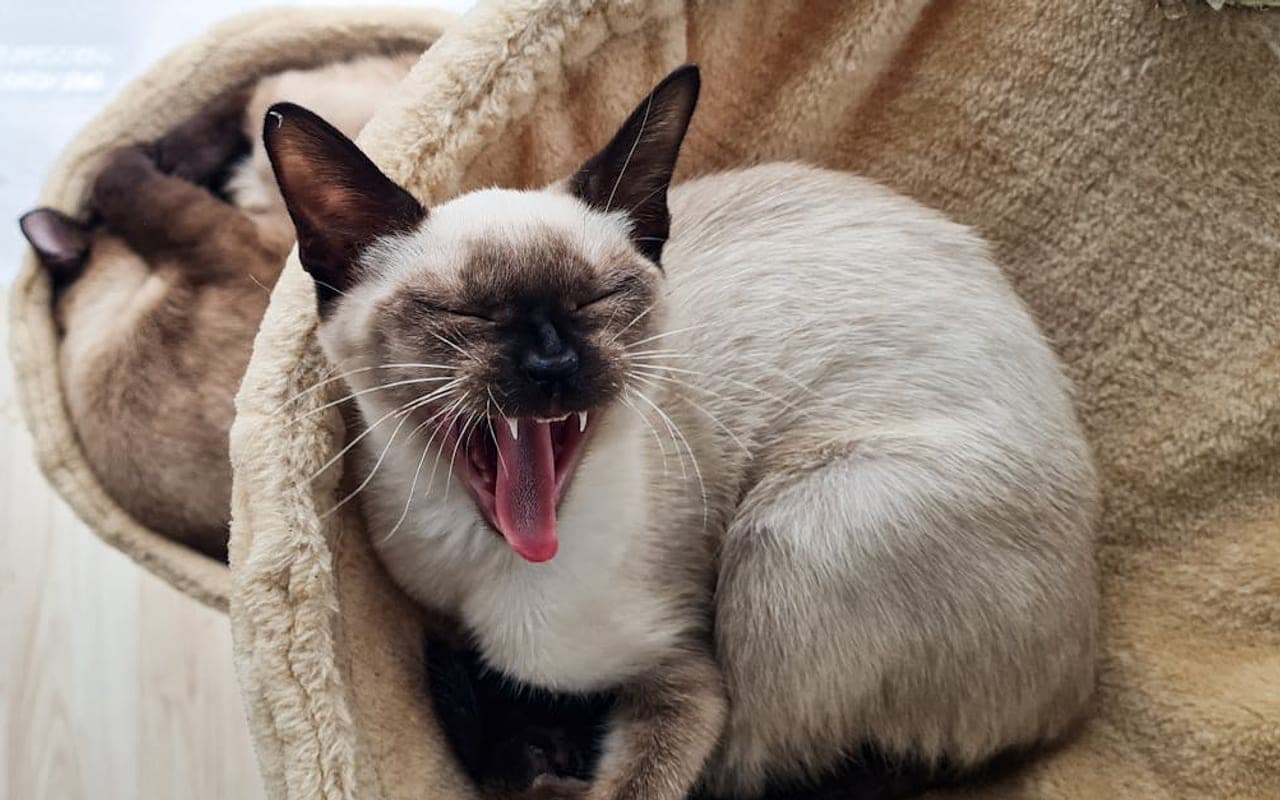
Siamese
Also in the Shorthair group, with different care and temperament tradeoffs.
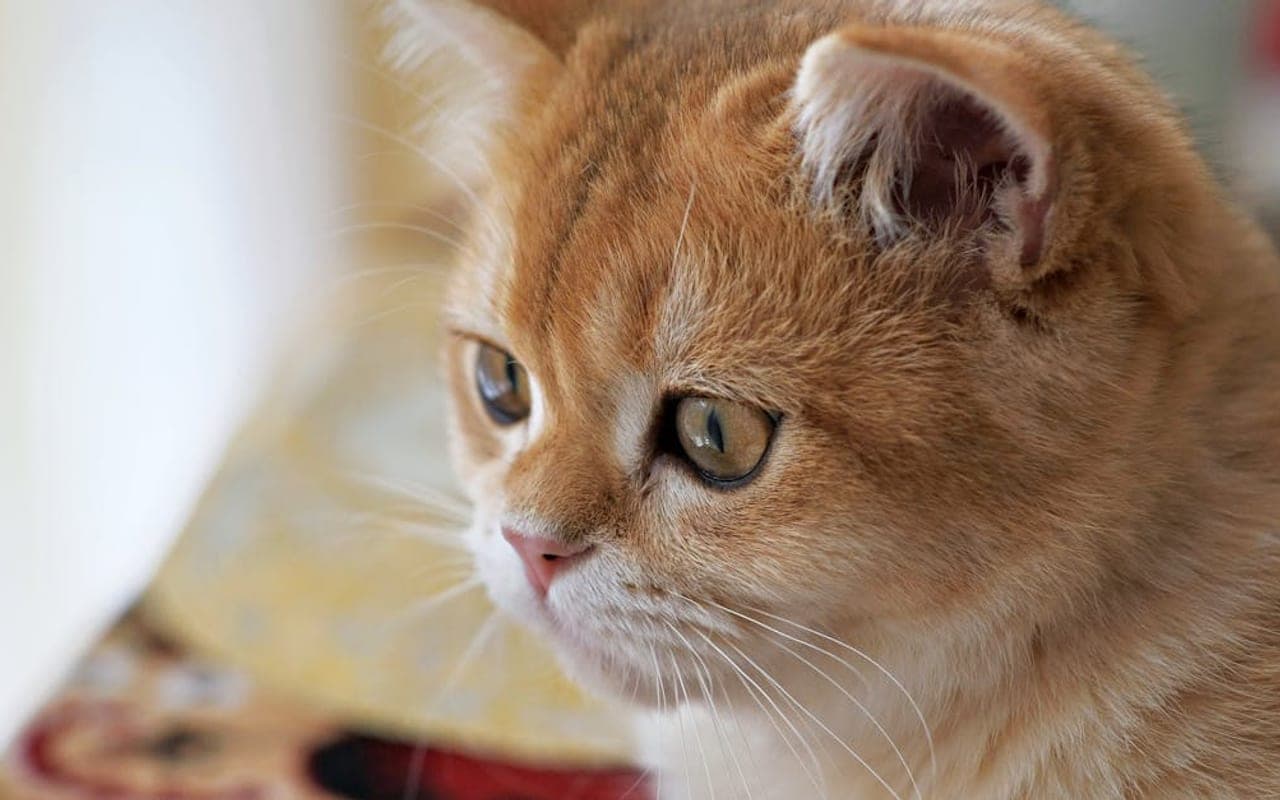
British Shorthair
Also in the Shorthair group, with different care and temperament tradeoffs.
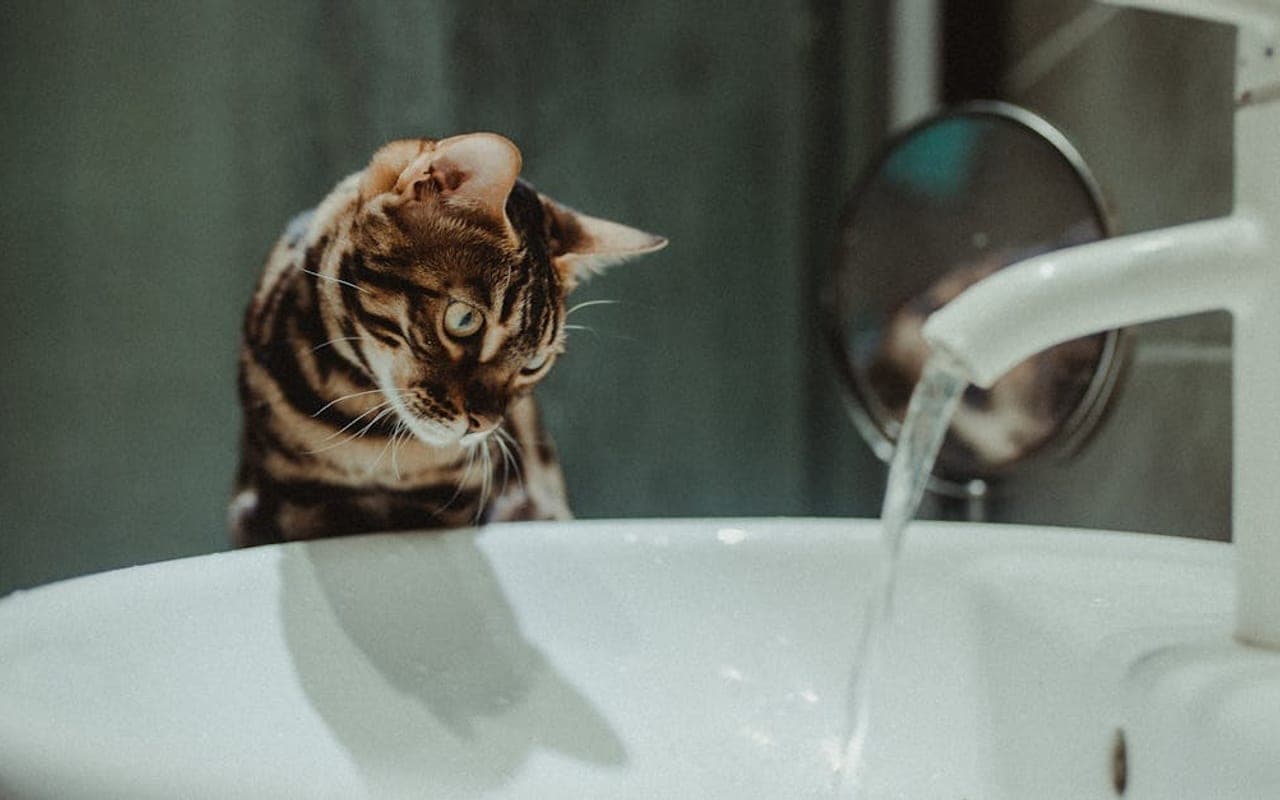
Bengal
Also in the Shorthair group, with different care and temperament tradeoffs.
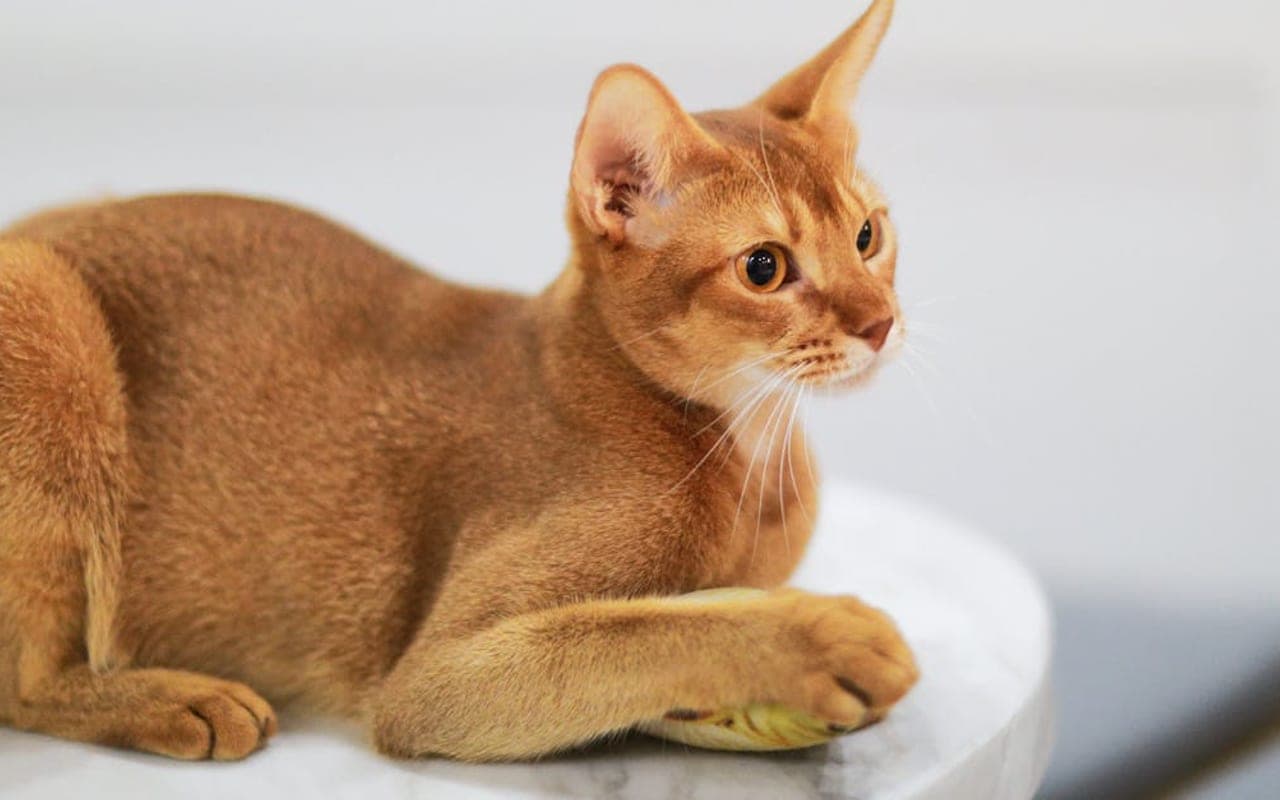
Abyssinian
Also in the Shorthair group, with different care and temperament tradeoffs.
Explore More About Devon Rex
Dive deeper into everything Devon Rex — costs, care, and expert insights.
How Much Does a Devon Rex Cost?
Purchase price, monthly costs, and lifetime expenses
Cat Nutrition Guide: What Cats Actually Need to Eat
Cats are obligate carnivores, which means they are...
Kitten-Proofing Your Home: The Hazards Owners Miss
A single lily leaf — or even the pollen brushed off one — can put a kitten into acute...
Considering a dog instead?
Browse Dogs