
Shorthair group
Russian Blue
The Russian Blue is the rare pedigree cat whose main selling point is genuine hardiness — and being honest about that is what separates a useful breed profile from breeder copy.
Size
7-12 lb
Lifespan
10-16 years
Play
15-30 minutes
Shedding
Moderate
Experience
Match to owner routine
Decision first
Is a Russian Blue right for you?
Start with fit before history or trivia. These are ownership signals, not guarantees about any individual cat.
Best suited for
- Households with children.
- Homes with other compatible pets.
- Apartment homes with a consistent routine.
- Owners seeking a manageable indoor routine with predictable care.
Think carefully if
- You need a cat with almost no daily routine.
- You cannot keep up with grooming and preventive care.
- The cat will spend most days without interaction or enrichment.
Conditional fit
Apartment fit depends on vertical space, litter setup, play, enrichment, and noise tolerance.
Daily reality
Russian Blue commitment snapshot
Daily play
15-30 minutes
Match play and enrichment to age, health, appetite, and household routine.
Coat care
Moderate
Grooming needs vary by coat, shedding, and lifestyle.
Social needs
Needs planning
Most cats still need predictable contact, enrichment, litter care, and monitoring.
Structured facts
Russian Blue at a glance
The measurements and traits that most affect day-to-day life with this breed.
Origin
Russia
Group
Shorthair
Weight
7-12 lb
Height
9-11 in
Lifespan
10-16 years
Temperament
Active | Dependent | Easy Going | Gentle | Intelligent | Loyal | Playful | Quiet
View all characteristics and methodology
Lifestyle fit
- Apartment suitabilityWorks best with clean litter setup, vertical space, and daily enrichment.
- Likely fit
- Child friendliness
- Often good, with socialisation and supervision
- Other-pet fit
- Often compatible with careful introductions
- Adaptability
- Moderate
Owner commitment
- Daily play
- 15-30 minutes
- Grooming
- Moderate
- Shedding
- Moderate
- Indoor enrichment
- Moderate
Behavior
- Affection
- Moderate
- Energy
- Moderate
- Vocalization
- Low
- Social needs
- Moderate
Environment and health
- Intelligence
- Moderate
- Health risk
- Needs planning
- Weight sensitivity
- Routine monitoring
Ratings combine structured breed data, visible breed fields, and editorial context. They are planning aids, not predictions for an individual cat.
Daily life
Russian Blue temperament and behavior
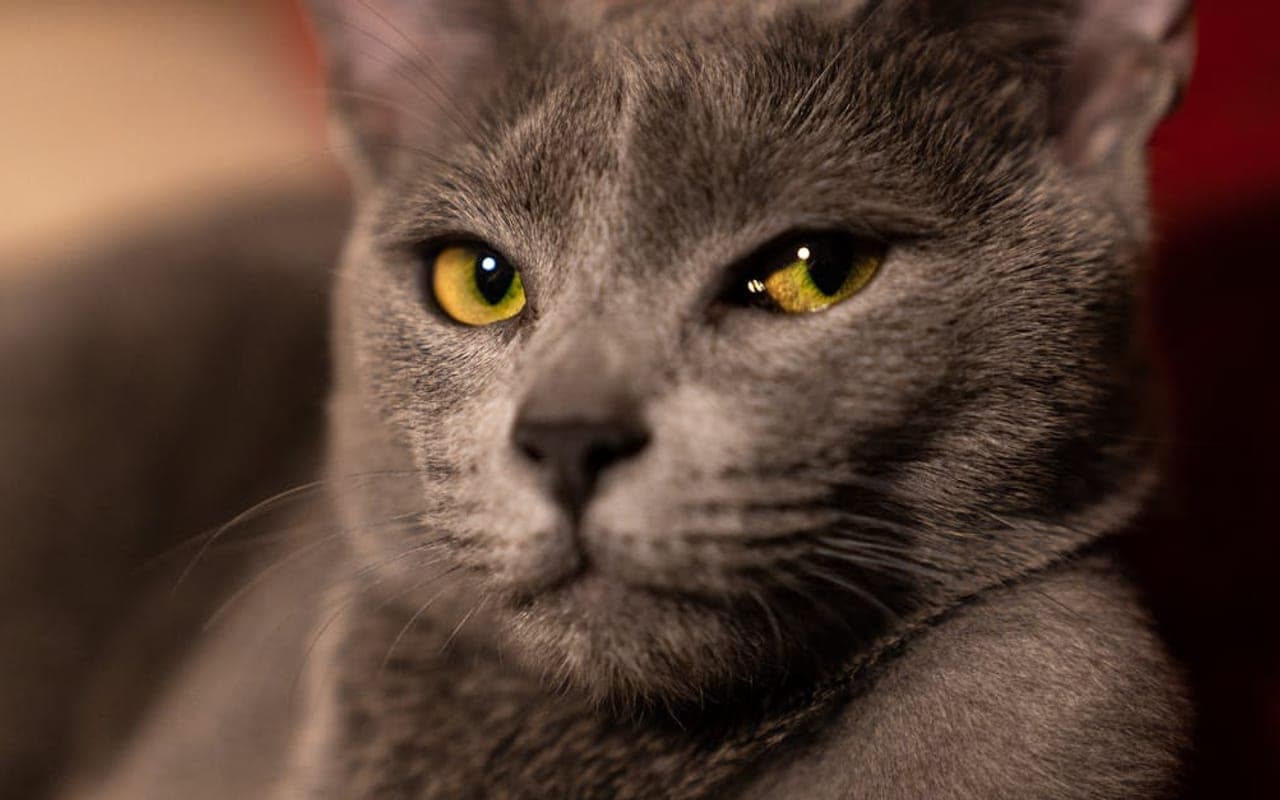
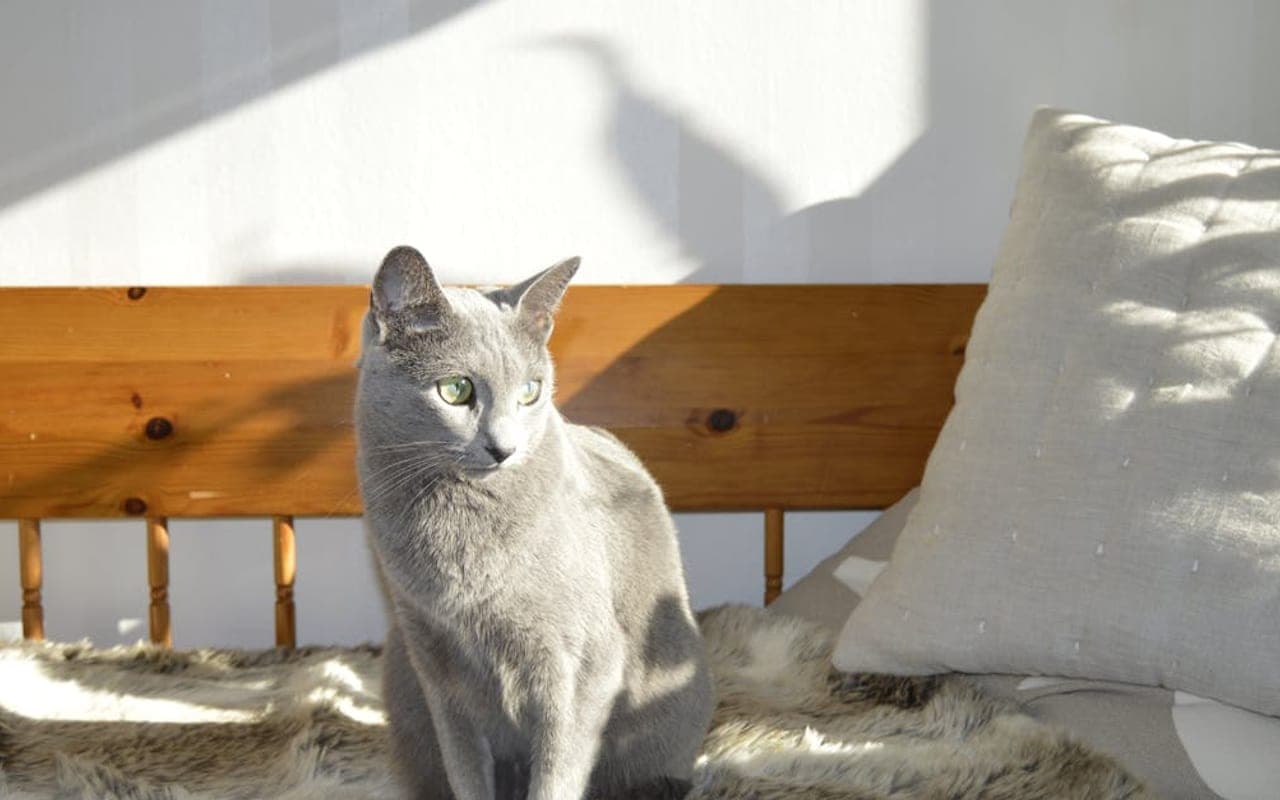
The Russian Blue is the rare pedigree cat whose main selling point is genuine hardiness — and being honest about that is what separates a useful breed profile from breeder copy. This is one of the few purebred cats not defined by a structural defect or a long list of inherited diseases. It is a naturally occurring breed with a sound body, a reserved-but-devoted temperament, and a coat that drives most of the practical decision. If you want a striking, low-fuss, healthy cat and you understand its social nature, the Russian Blue is one of the safest pedigree choices available. Physically, the breed is medium-sized and fine-boned but deceptively muscular — typically 7-12 lb (3-5.5 kg), with males larger. The defining feature is the coat: a short, dense, double 'plush' coat in an even blue-grey with distinctive silver-tipped guard hairs that produce its shimmer, paired with vivid green eyes (kittens' eyes start yellow and green in over the first year). The body is elegant and long-lined, the expression is a slight 'Mona Lisa smile' from the head structure. Temperament is the part owners must self-select on. Russian Blues are intelligent, quiet, and deeply bonded to their chosen people, but they are reserved with strangers and sensitive to change and chaos. They are not antisocial — with their family they are playful, follow people room to room, and can be quite demanding of routine and attention — but they retreat from noise, upheaval, and rough handling. Who the Russian Blue is right for: an owner who wants a healthy, clean, low-shedding, dignified companion, values a calm home, and will keep the cat's routine stable and its weight controlled. Who it is wrong for: someone wanting an instantly gregarious 'party cat,' a household in constant flux, or anyone hoping a robust breed means a maintenance-free pet — the body is sturdy, but the temperament still has clear needs.
Active | Dependent | Easy Going | Gentle | Intelligent | Loyal | Playful | Quiet
Active
A common Russian Blue temperament descriptor that should be interpreted alongside enrichment, handling, and household fit.
Dependent
A common Russian Blue temperament descriptor that should be interpreted alongside enrichment, handling, and household fit.
Easy Going
A common Russian Blue temperament descriptor that should be interpreted alongside enrichment, handling, and household fit.
Gentle
A common Russian Blue temperament descriptor that should be interpreted alongside enrichment, handling, and household fit.
Owner note
Temperament labels are starting points, not guarantees. Meet the individual cat and ask about behavior history whenever possible.
Care essentials
How to care for a Russian Blue
What looking after one actually involves: play, grooming, food, litter, and routine health.
ExerciseAs needed
- Moderately active breed that enjoys regular play sessions and exploration. Provide toys and occasional interactive games.
GroomingAs needed
- Brush 2-3 times per week to maintain coat health and reduce shedding. Monthly bathing may be beneficial.
NutritionAs needed
- Feed a high-quality cat food appropriate for their age and activity level. Maintain fresh water at all times. Monitor weight to prevent obesity.
SocializationAs needed
- Enjoys human company and interaction. Can tolerate some alone time but prefers regular companionship.
Veterinary CareAs needed
- Annual wellness exams, vaccinations, dental checkups, and parasite prevention. Spay/neuter recommended if not breeding.
Health planning
Russian Blue health risks and screening
Every cat breed has individual health variation. Use this profile for planning and discuss medical decisions with a veterinarian.
Ownership cost
How much does a Russian Blue cost?
Cost figures are structured so first-year and lifetime estimates do not conflict with the underlying line items.
| Acquisition | $400-$2,000 |
|---|---|
| Routine monthly | About $60/month |
| Routine annual | About $720/year |
| First-year estimate | $1,120-$2,720 |
| Lifetime routine estimate | $7,200-$11,520 routine costs |
Currency: USD. Region: United States. Typical ranges for this breed. Equipment, insurance, emergency veterinary care, boarding and training are NOT included: we hold no sourced figures for them, and estimating them would be a guess presented as data.
Responsible ownership
Finding a Russian Blue responsibly
What to ask a breeder or rescue is the same conversation for every breed, so we keep it in one place and keep it current.
Health documentation, meeting the parents or foster, contracts and return support, and the warning signs worth walking away from.
Original purpose
Russian Blue history
History is useful when it explains today's behavior, coat, exercise needs, and training style.
Read the breed history
The Russian Blue is a naturally occurring breed believed to have originated in the port city of Arkhangelsk (Archangel) in northern Russia, which is why early specimens were sometimes called the Archangel Cat. The dense, insulating double coat is consistent with a cat that developed in a cold northern climate without human-directed selection. Sailors are traditionally credited with carrying the cats from the White Sea region to Northern Europe and Britain in the 1860s. The breed was exhibited in England as early as 1875 and developed by British and Scandinavian breeders thereafter. Its history bends sharply at the Second World War: numbers collapsed across Europe, and to rebuild the breed, breeders outcrossed to British Blues and Siamese, which is why some lines briefly carried a more Siamese body and voice before later breeding programs restored the original sturdy, quiet, plush-coated type. That natural, climate-shaped origin — rather than a defect-driven breeding program — is the genetic reason the modern Russian Blue is one of the more robust pedigree cats.
Gallery
Russian Blue photos
Images are cropped consistently and loaded progressively to keep the page responsive.
Lower-page context
Russian Blue cats in culture
Where the breed shows up in film, sport, work and folklore — the enjoyable part, once the practical questions are answered.
Fun facts
- The Russian Blue originated in Russia.
- The Russian Blue is considered a hypoallergenic breed, producing fewer allergens than most cats.
- The Russian Blue is a natural breed that developed without human selective breeding.
- The Russian Blue is a true lap cat that loves to curl up with their owners.
Russian Blue FAQs
Is the Russian Blue really a healthy breed, or is that marketing?
It is genuinely one of the more robust pedigree cats. Unlike many breeds defined by a structural defect or a long inherited-disease list, the Russian Blue is a naturally occurring breed with a sound body. That does not mean problem-free — bladder stones and especially obesity-driven diabetes are real — but those are largely management-preventable, so most of the breed's health outcome is in the owner's hands rather than the genes.
Why is weight control emphasized so much for this breed?
Because the Russian Blue is notably food-motivated and a persuasive beggar, and obesity is its single biggest realistic health driver. Excess weight in this breed is the main path to type 2 diabetes and added joint strain. Practically: feed two measured meals rather than free-feeding, keep ribs easily felt and a waist visible, and weigh monthly. Managing the food bowl prevents the breed's most common and most expensive long-term problem.
Are Russian Blues good with children and other pets?
Yes, with the right environment. Russian Blues are gentle and bond closely with their family, but they are reserved, routine-loving, and stress-sensitive, so they do best with calm, respectful children and a stable home rather than a chaotic one. They generally coexist well with other calm pets given proper introductions. Loud, unpredictable, grab-prone households are the poor fit — not other animals or older, gentle kids per se.
How much grooming and shedding should I expect?
Low. The short, dense double coat resists matting, so a weekly five-minute comb is enough for most of the year, rising to 2-3 times weekly during spring and autumn shed. Shedding is modest and steady rather than heavy. The breed is often described as a tidier choice for people sensitive to cat dander, though no cat is truly hypoallergenic; budget grooming as a minor, not major, ongoing task.
How long do Russian Blues live and what should I budget?
Russian Blues commonly live 15-20 years, among the longer-lived cat breeds, largely because the breed lacks the catastrophic inherited conditions seen elsewhere. Routine budgeting should cover preventive care, dental cleanings every 1-2 years, and weight-related monitoring. The realistic larger cost to plan for is urinary care (a bladder-stone or obstruction episode and possible surgery), so a stable preventive routine and prompt response to litter-box changes are the cheapest insurance.
Will a Russian Blue tolerate being left alone while I work?
Better than a Siamese, but not indefinitely. Russian Blues bond intensely with their people and value routine, so long, frequent absences can produce stress behaviors. A single working adult can do well with a Russian Blue by keeping a predictable schedule, providing vertical space and enrichment, and ideally a stable second cat for company. The breed's sensitivity is to chaos and inconsistency more than to ordinary daily separation.
Sources
These are the published sources this page draws on. Each opens in a new tab so you can check it yourself.
Cat Fanciers' Association
Russian Blue — breed standard and profile(opens in a new tab)Supports: Breed standard and recognition details.
Similar breeds to consider
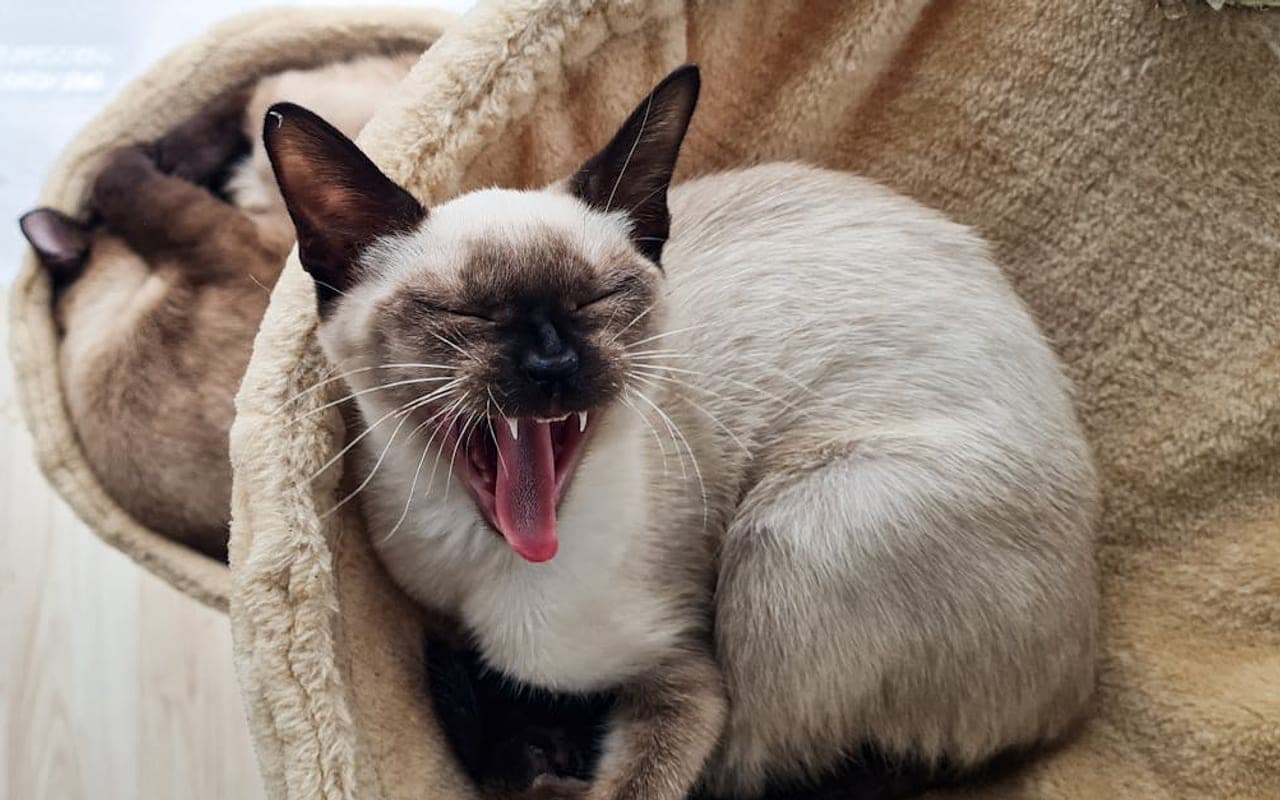
Siamese
Also in the Shorthair group, with different care and temperament tradeoffs.
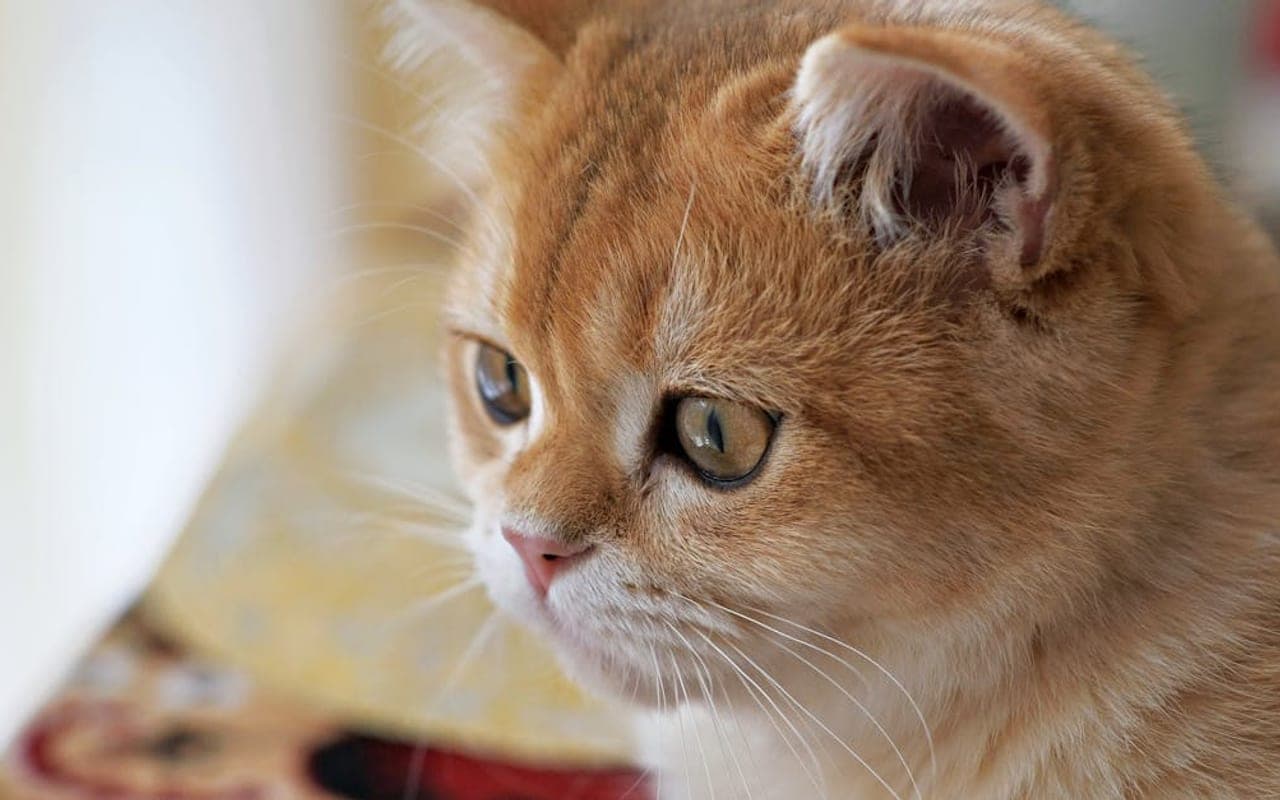
British Shorthair
Also in the Shorthair group, with different care and temperament tradeoffs.
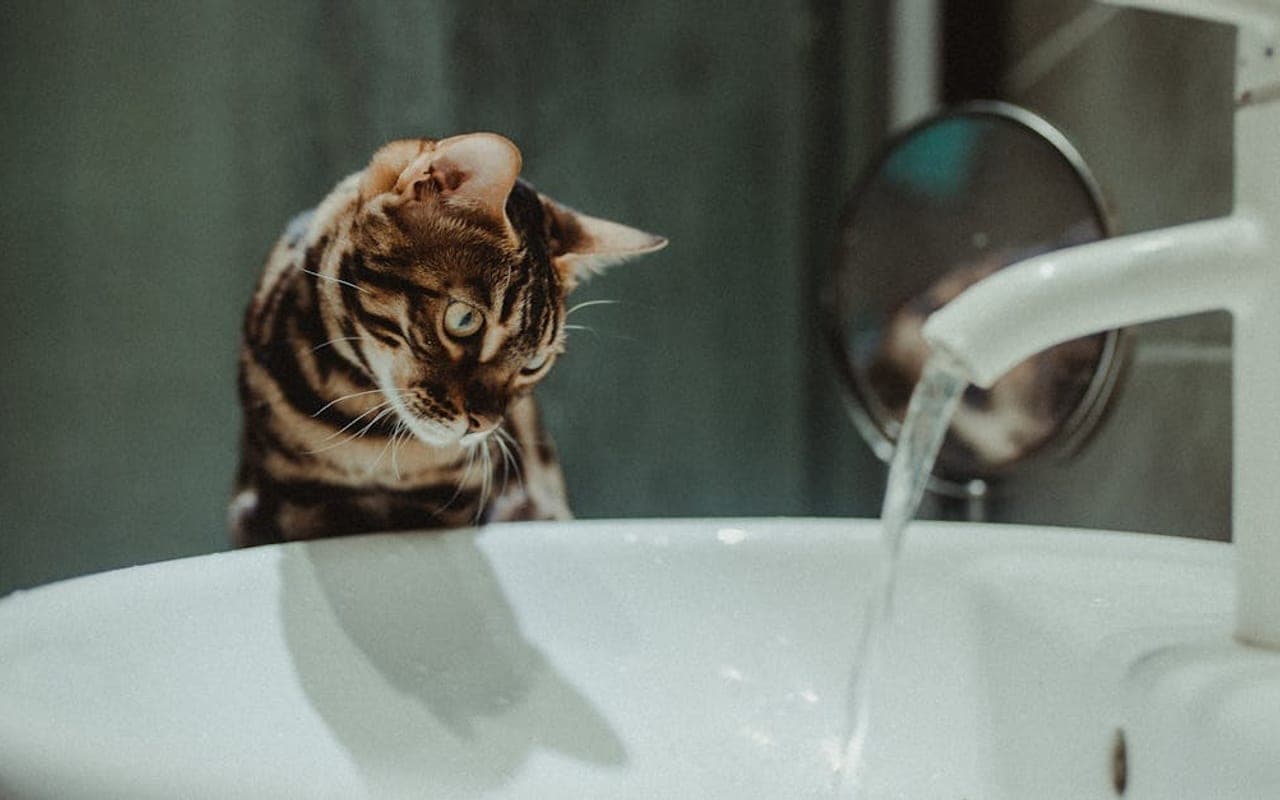
Bengal
Also in the Shorthair group, with different care and temperament tradeoffs.
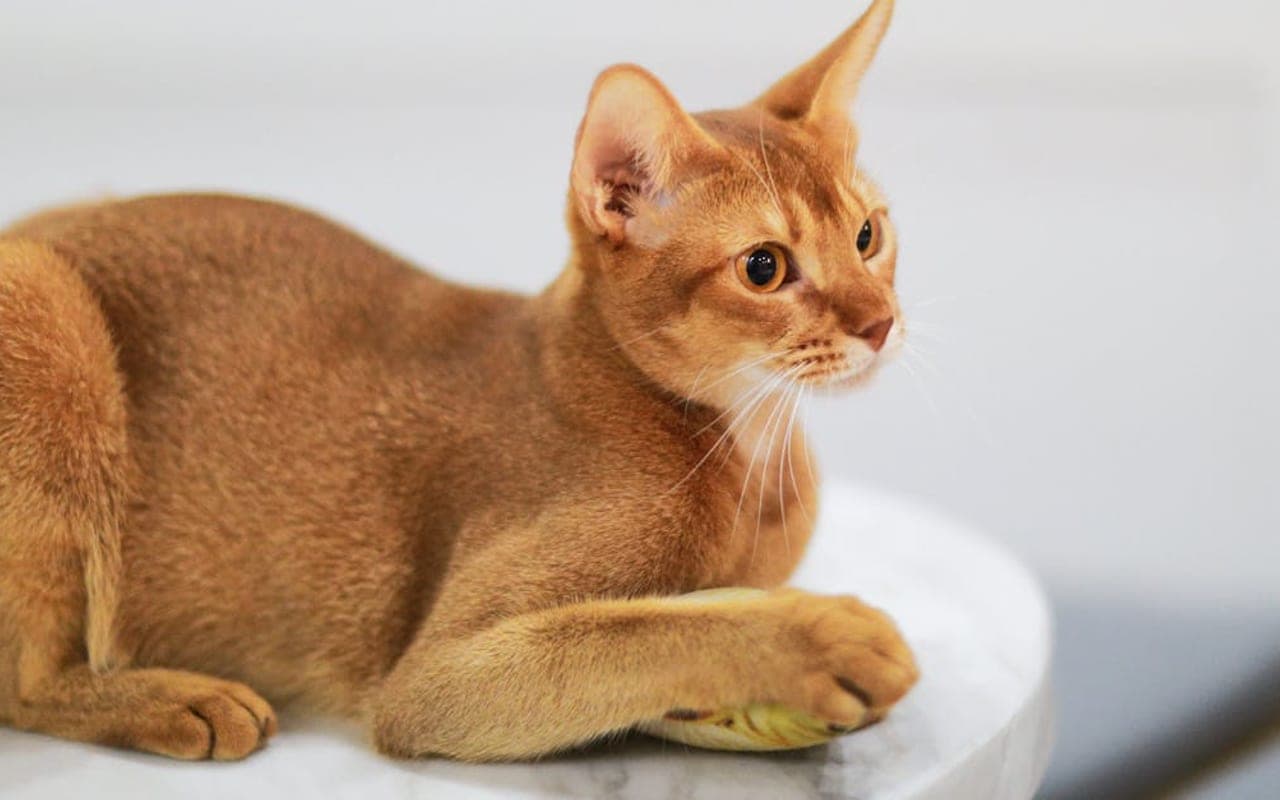
Abyssinian
Also in the Shorthair group, with different care and temperament tradeoffs.
Explore More About Russian Blue
Dive deeper into everything Russian Blue — costs, care, and expert insights.
How Much Does a Russian Blue Cost?
Purchase price, monthly costs, and lifetime expenses
Cat Nutrition Guide: What Cats Actually Need to Eat
Cats are obligate carnivores, which means they are...
Kitten-Proofing Your Home: The Hazards Owners Miss
A single lily leaf — or even the pollen brushed off one — can put a kitten into acute...
Considering a dog instead?
Browse Dogs