
Toy group
Cavalier King Charles Spaniel
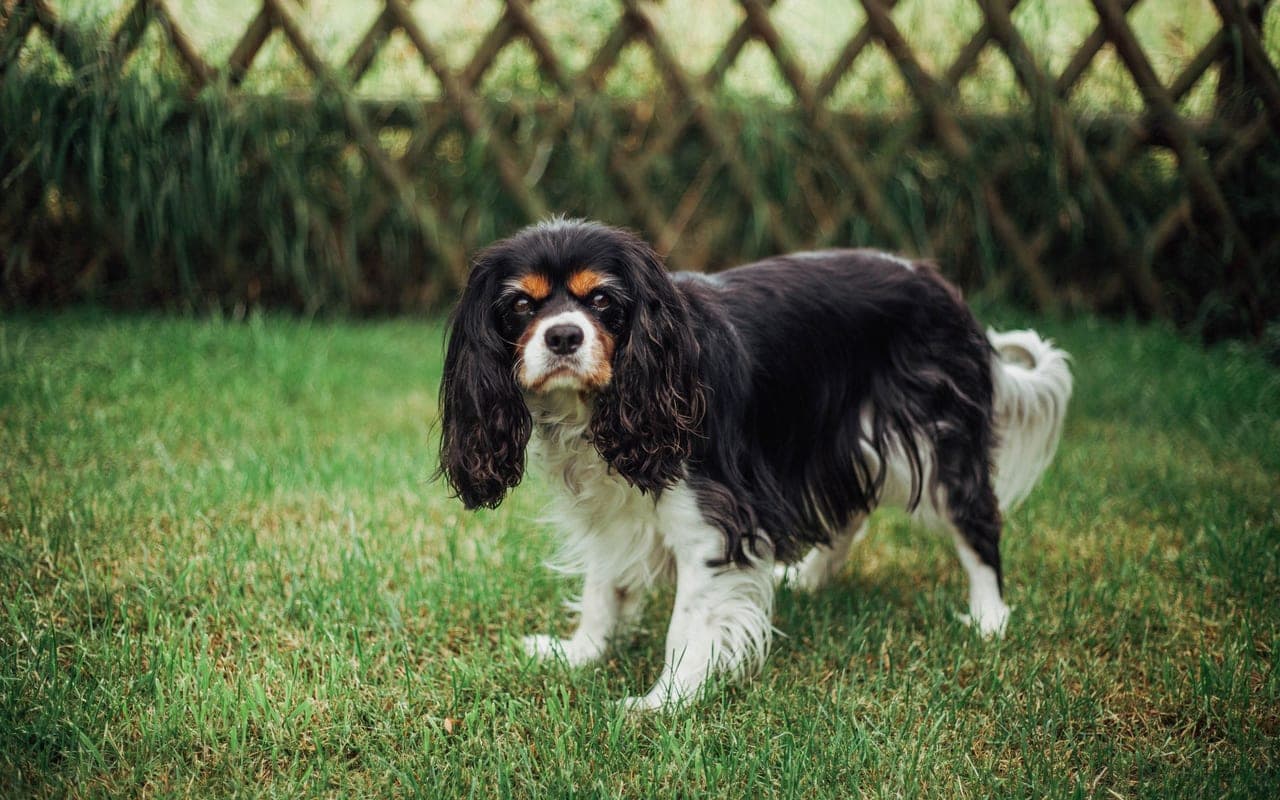
The Cavalier King Charles Spaniel is a 30-36 cm, 6-8 kg English toy spaniel — and any honest profile of this breed has to open with the hardest fact in dogdom: nearly every Cavalier will develop mitral valve disease (MVD) if it lives long enough.



Size
12-18 lb
Lifespan
10-14 years
Exercise
30-60 minutes
Shedding
Moderate
Experience
Match to owner routine
Decision first
Is a Cavalier King Charles Spaniel right for you?
Start with fit before history or trivia. These are ownership signals, not guarantees about any individual dog.
Best suited for
- Households with children.
- Homes with other compatible pets.
- Apartment homes with a consistent routine.
- Owners seeking a manageable daily exercise routine.
Think carefully if
- You need a dog with almost no daily routine.
- You cannot keep up with grooming and preventive care.
- The dog will spend most days alone without support.
Conditional fit
Apartment fit depends on exercise, enrichment, noise management, and outdoor access.
Daily reality
Cavalier King Charles Spaniel commitment snapshot
Daily exercise
30-60 minutes
Match activity to age, health, weather, and training goals.
Coat care
Moderate
Grooming needs vary by coat, shedding, and lifestyle.
Time alone
Needs planning
Most dogs need gradual alone-time conditioning and support.
Structured facts
Cavalier King Charles Spaniel at a glance
The measurements and traits that most affect day-to-day life with this breed.
Origin
England
Group
Toy
Weight
12-18 lb
Height
12-13 in
Lifespan
10-14 years
Temperament
Affectionate | Gentle | Graceful | Patient | Sociable
View all characteristics and methodology
Lifestyle fit
- Apartment suitability
- Likely fit
- Child friendliness
- Often good, with socialisation and supervision
- Other-pet fit
- Often compatible with careful introductions
- Adaptability
- Very high
Owner commitment
- Exercise
- 30-60 minutes
- Grooming
- Moderate
- Shedding
- Moderate
- Training
- High
Environment and health
- Health risk
- Needs planning
Ratings combine structured breed data, visible breed fields, and editorial context. They are planning aids, not predictions for an individual dog.
Daily life
Cavalier King Charles Spaniel temperament and behavior
The Cavalier King Charles Spaniel is a 30-36 cm, 6-8 kg English toy spaniel — and any honest profile of this breed has to open with the hardest fact in dogdom: nearly every Cavalier will develop mitral valve disease (MVD) if it lives long enough. This is not a risk factor among many; it is a near-universal heart condition that is the leading cause of death in the breed and the central reason the average lifespan sits around 10-14 years and often shorter. A second serious neurological condition, syringomyelia, is also markedly over-represented. You can love this breed deeply — and you should still go in knowing the heart is on a clock. With that stated without softening, the Cavalier is one of the most genuinely affectionate dogs that exists. It is gentle, people-bonded, eager to please, calm indoors, and famously good with children, seniors, and other animals. It is a true lap dog that wants to be with its person constantly — which is also its main behavioral caveat: Cavaliers are prone to separation distress and are a poor fit for a home that is empty all day. The affectionate temperament masks a real cost structure. Responsible ownership of this breed implies budgeting for cardiac monitoring from middle age, possible lifelong heart medication, and the elevated likelihood of neurological workups — pet insurance for a Cavalier is priced accordingly and is, frankly, sensible. Buyers who choose on cuteness alone and skip the questions about parental heart-clearance history are making the breed's most expensive mistake. Who the Cavalier is right for: someone home often, who wants a gentle, low-aggression companion and accepts — financially and emotionally — that this is a breed with a near-certain serious heart condition. Who it is wrong for: anyone who wants a long-lived, low-vet-cost dog, or who is away all day. The Cavalier gives you arguably the sweetest temperament in the toy group; it asks you to accept its heart honestly.
Affectionate | Gentle | Graceful | Patient | Sociable
Affectionate
A common Cavalier King Charles Spaniel temperament descriptor that should be interpreted alongside training, exercise, and household fit.
Gentle
A common Cavalier King Charles Spaniel temperament descriptor that should be interpreted alongside training, exercise, and household fit.
Graceful
A common Cavalier King Charles Spaniel temperament descriptor that should be interpreted alongside training, exercise, and household fit.
Patient
A common Cavalier King Charles Spaniel temperament descriptor that should be interpreted alongside training, exercise, and household fit.
Owner note
Temperament labels are starting points, not guarantees. Meet the individual dog and ask about behavior history whenever possible.
Care essentials
How to care for a Cavalier King Charles Spaniel
What looking after one actually involves: exercise, grooming, food, training, and routine health.
HealthAs needed
- Cavaliers are prone to mitral valve disease (MVD), syringomyelia, hip dysplasia, and eye conditions. Annual cardiac screening is strongly recommended starting at age 1. Choose a breeder who tests for these conditions.
ExerciseAs needed
- Cavaliers need about 30-60 minutes of daily exercise. They enjoy leisurely walks, gentle play sessions, and brief romps in a fenced yard. They adapt their energy level to their owner — active with active families, calm with quieter households.
GroomingAs needed
- Brush the silky coat 3-4 times per week to prevent tangles, paying special attention to the ears, chest, and feathering on the legs. Professional grooming every 6-8 weeks keeps the coat in good condition. Clean ears weekly as their floppy ears are prone to infections.
TrainingAs needed
- Cavaliers are eager to please and respond well to positive reinforcement. They are sensitive dogs who do not respond well to harsh corrections. Socialization from an early age helps them develop confidence. Crate training assists with housebreaking.
NutritionAs needed
- Feed a high-quality small-breed food, about 1/2 to 1 cup daily divided into two meals. Cavaliers love food and can easily become overweight, so measure portions carefully. Some may benefit from food formulated for cardiac health given breed predispositions.
Health planning
Cavalier King Charles Spaniel health risks and screening
Every breed has individual health variation. Use this profile for planning and discuss medical decisions with a veterinarian.
Ownership cost
How much does a Cavalier King Charles Spaniel cost?
Cost figures are structured so first-year and lifetime estimates do not conflict with the underlying line items.
| Acquisition | $1,000-$3,500 |
|---|---|
| Routine monthly | About $110/month |
| Routine annual | About $1,320/year |
| First-year estimate | $2,320-$4,820 |
| Lifetime routine estimate | $13,200-$18,480 routine costs |
Currency: USD. Region: United States. Typical ranges for this breed. Equipment, insurance, emergency veterinary care, boarding and training are NOT included: we hold no sourced figures for them, and estimating them would be a guess presented as data.
Responsible ownership
Finding a Cavalier King Charles Spaniel responsibly
What to ask a breeder or rescue is the same conversation for every breed, so we keep it in one place and keep it current.
Health documentation, meeting the parents or foster, contracts and return support, and the warning signs worth walking away from.
Original purpose
Cavalier King Charles Spaniel history
History is useful when it explains today's behavior, coat, exercise needs, and training style.
Read the breed history
The Cavalier King Charles Spaniel descends from the small toy spaniels favored by the English aristocracy and depicted in 16th- and 17th-century court portraiture; they were particularly associated with King Charles II, who was rarely without them. Over the following centuries the type drifted toward a flatter-faced dog, and by the early 20th century the original longer-muzzled, athletic spaniel of the old paintings had largely disappeared. In the 1920s a deliberate effort — spurred by a prize offered to recreate the 'old type' shown in the portraits — reconstructed the longer-nosed dog, which was recognized as a distinct breed, the Cavalier King Charles Spaniel, separate from the flatter-faced English Toy Spaniel (the King Charles Spaniel). The modern Cavalier is therefore a 20th-century reconstruction of a much older courtly companion, which is partly why a relatively small founding population sits behind the breed's well-documented heritable heart and neurological conditions.
Gallery
Cavalier King Charles Spaniel photos
Images are cropped consistently and loaded progressively to keep the page responsive.

Lower-page context
Cavalier King Charles Spaniels in culture
Where the breed shows up in film, sport, work and folklore — the enjoyable part, once the practical questions are answered.
Fun facts
- King Charles II issued a royal decree that the King Charles Spaniel could not be barred from any public place, including the Houses of Parliament
- Cavaliers are often called "comforter spaniels" because they were historically used as lap warmers and believed to attract fleas away from their owners
- They are one of the largest toy breeds, bridging the gap between toy and sporting dogs
- Cavaliers have been featured in paintings by renowned artists like Van Dyck, Gainsborough, and Stubbs
- President Ronald Reagan had a Cavalier King Charles Spaniel named Rex at the White House
Cavalier King Charles Spaniel FAQs
Do all Cavalier King Charles Spaniels get heart disease?
Effectively yes, if they live long enough. Mitral valve disease is near-universal in the breed and is its leading cause of death, often appearing earlier than in other breeds. This is the single most important fact for any prospective owner: budget emotionally and financially for cardiac monitoring from middle age and likely lifelong heart medication. Asking a breeder about the heart-clearance history of the puppy's parents and grandparents is the most useful question you can ask.
How long do Cavalier King Charles Spaniels live?
Typically around 10-14 years, and often toward the lower end because mitral valve disease and, less commonly, syringomyelia shorten and complicate the later years. Lifespan in this breed is driven less by general care and more by heart health, which is why early and ongoing cardiac monitoring matters so much — caught early, heart disease can be medically managed to preserve comfortable, good-quality time rather than lost to it.
What is syringomyelia and how do I spot it?
Syringomyelia is a serious neurological condition, over-represented in Cavaliers, where fluid-filled cavities form in the spinal cord because the skull is too small for the brain. Watch for persistent scratching at the air near the neck or shoulder ('phantom scratching'), yelping when picked up or for no clear reason, sensitivity around the head and neck, and reluctance to be touched there. These signs warrant an MRI-based veterinary workup, not a wait-and-see approach.
Are Cavaliers good for first-time owners and families?
Temperamentally, yes — they are gentle, affectionate, eager to please, and famously good with children, seniors, and other pets, which makes day-to-day handling easy for beginners. The catch is medical, not behavioral: a first-time owner must go in clear-eyed about near-certain heart disease and the associated lifelong cost. They also bond intensely and are prone to separation distress, so they suit a household that is home often, not one empty all day.
How much grooming does a Cavalier need?
Moderate and manageable. The silky coat needs brushing 3-4 times a week, with extra attention to the feathered ears, legs, and feet where mats form fastest, plus weekly ear cleaning because the long pendulous ears trap moisture. Also monitor the eyes — the breed is prone to tear staining and dry eye. It is not a high-maintenance show coat, but it is not wash-and-go either; skipped weeks turn into painful mats behind the ears.
Sources
These are the published sources this page draws on. Each opens in a new tab so you can check it yourself.
American Kennel Club
Cavalier King Charles Spaniel — breed standard and profile(opens in a new tab)Supports: Breed standard and recognition details.
Similar breeds to consider

Poodle (Toy)
Also in the Toy group, with different care and temperament tradeoffs.

Yorkshire Terrier
Also in the Toy group, with different care and temperament tradeoffs.

Havanese
Also in the Toy group, with different care and temperament tradeoffs.

Pomeranian
Also in the Toy group, with different care and temperament tradeoffs.
Explore More About Cavalier King Charles Spaniel
Dive deeper into everything Cavalier King Charles Spaniel — costs, care, and expert insights.
How Much Does a Cavalier King Charles Spaniel Cost?
Purchase price, monthly costs, and lifetime expenses
Large Dog Care Guide: Everything Over 50 lbs
Owning a large or giant breed dog means accepting one of biology's...
Puppy Teething & Biting: Timeline and What Actually Works
A puppy has all 28 deciduous ("baby") teeth by roughly eight weeks of age, and...
Can Dogs and Cats Live Together? A Practical Guide
Dogs and cats can absolutely coexist — with the right introductions, personality matching, and...
Best Dog Breeds for Apartment Living: Top 15 Ranked
The best apartment dogs aren't the smallest — they're the calmest. Six breeds that thrive in...
Adopting a Senior Pet: Why Older Animals Make the Best Companions
Older pets are usually the last to be adopted from shelters. Here's what an older dog or cat can...
Considering a cat instead?
Browse Cats