
Sporting group
Flat-Coated Retriever
The Flat-Coated Retriever is the happiest dog in the Sporting Group and one of the most heartbreaking, and an honest profile has to hold both facts at once.
Size
55-79 lb
Lifespan
8-10 years
Exercise
20-40 minutes
Shedding
Moderate
Experience
Match to owner routine
Decision first
Is a Flat-Coated Retriever right for you?
Start with fit before history or trivia. These are ownership signals, not guarantees about any individual dog.
Best suited for
- Households with children.
- Homes with other compatible pets.
- Apartment homes with a consistent routine.
- Owners seeking a manageable daily exercise routine.
Think carefully if
- You need a dog with almost no daily routine.
- You cannot keep up with grooming and preventive care.
- The dog will spend most days alone without support.
Conditional fit
Apartment fit depends on exercise, enrichment, noise management, and outdoor access.
Daily reality
Flat-Coated Retriever commitment snapshot
Daily exercise
20-40 minutes
Match activity to age, health, weather, and training goals.
Coat care
Moderate
Grooming needs vary by coat, shedding, and lifestyle.
Time alone
Needs planning
Most dogs need gradual alone-time conditioning and support.
Structured facts
Flat-Coated Retriever at a glance
The measurements and traits that most affect day-to-day life with this breed.
Group
Sporting
Weight
55-79 lb
Height
22-24 in
Lifespan
8-10 years
Temperament
Cheerful | Optimistic | Good-Humored
View all characteristics and methodology
Lifestyle fit
- Apartment suitability
- Likely fit
- Child friendliness
- Often good, with socialisation and supervision
- Other-pet fit
- Often compatible with careful introductions
Owner commitment
- Exercise
- 20-40 minutes
- Grooming
- Moderate
- Shedding
- Moderate
- Training
- Low
Environment and health
- Health risk
- Needs planning
Ratings combine structured breed data, visible breed fields, and editorial context. They are planning aids, not predictions for an individual dog.
Daily life
Flat-Coated Retriever temperament and behavior
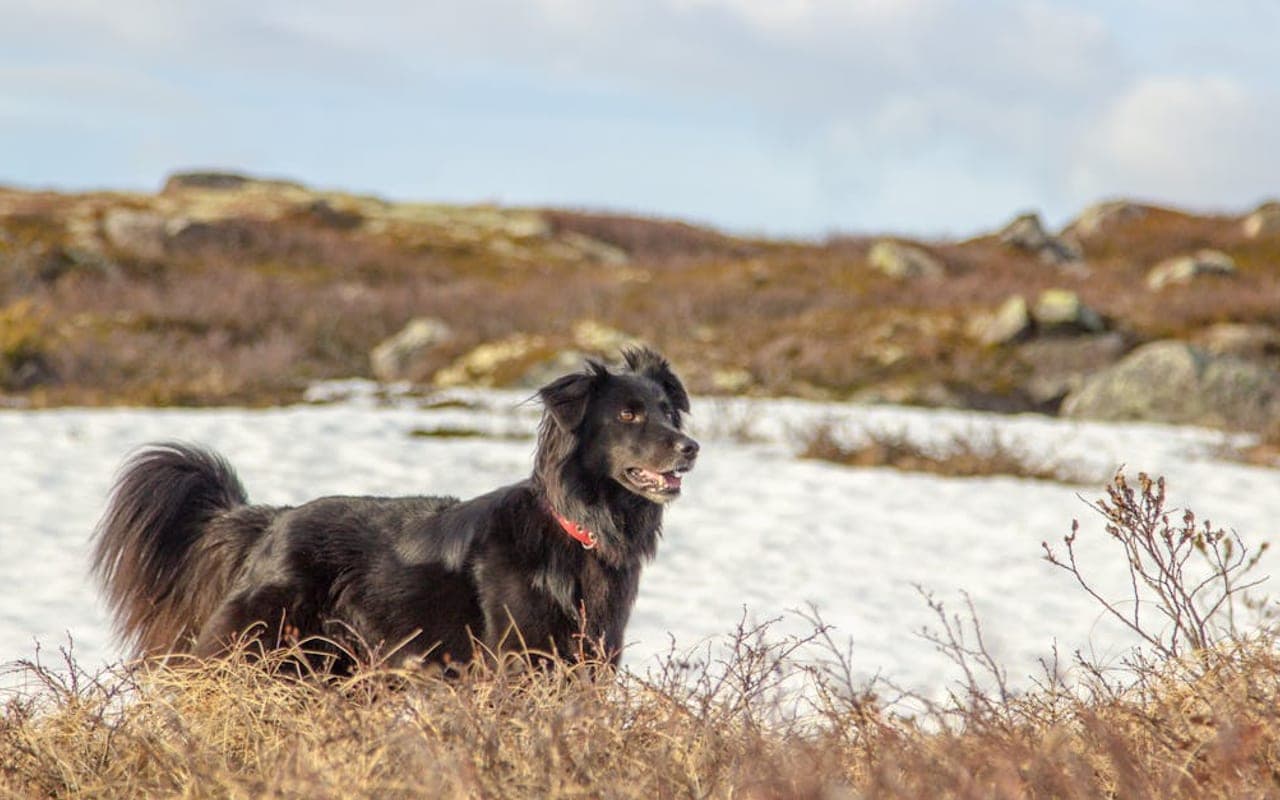
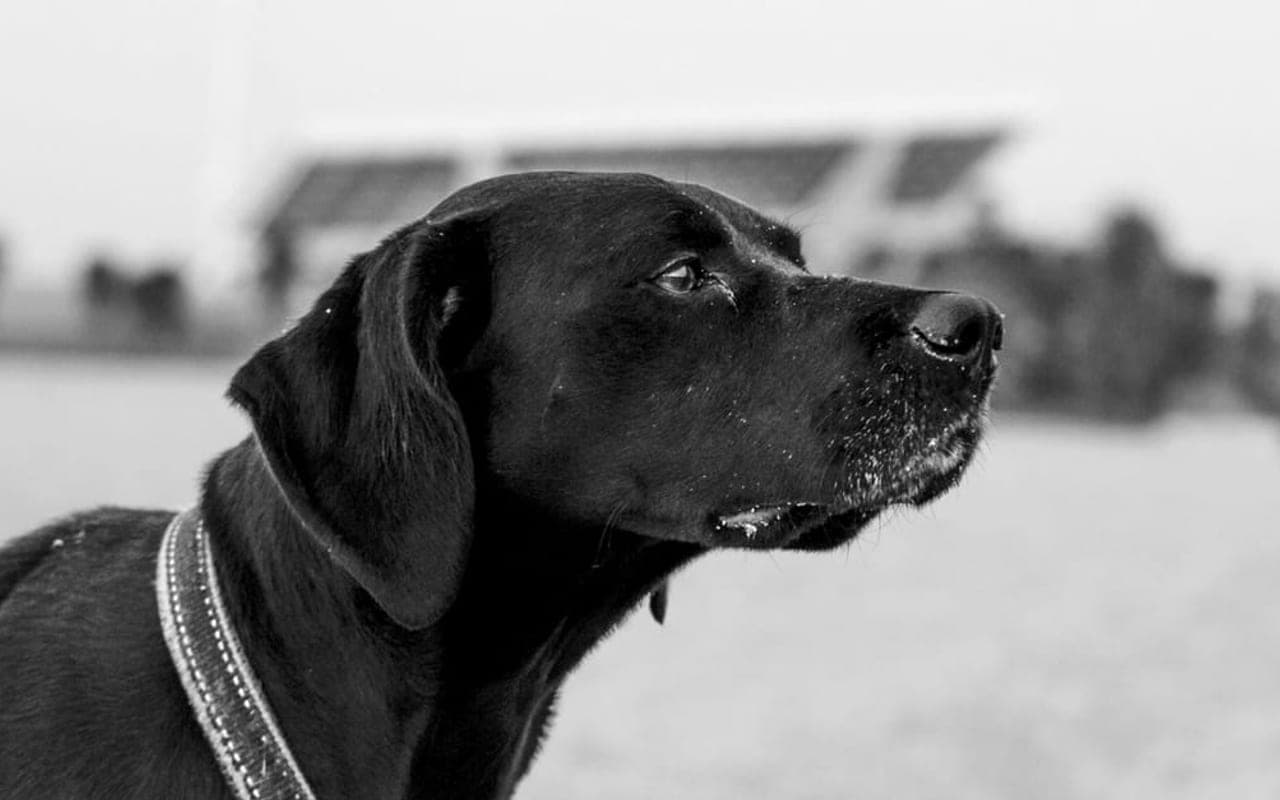
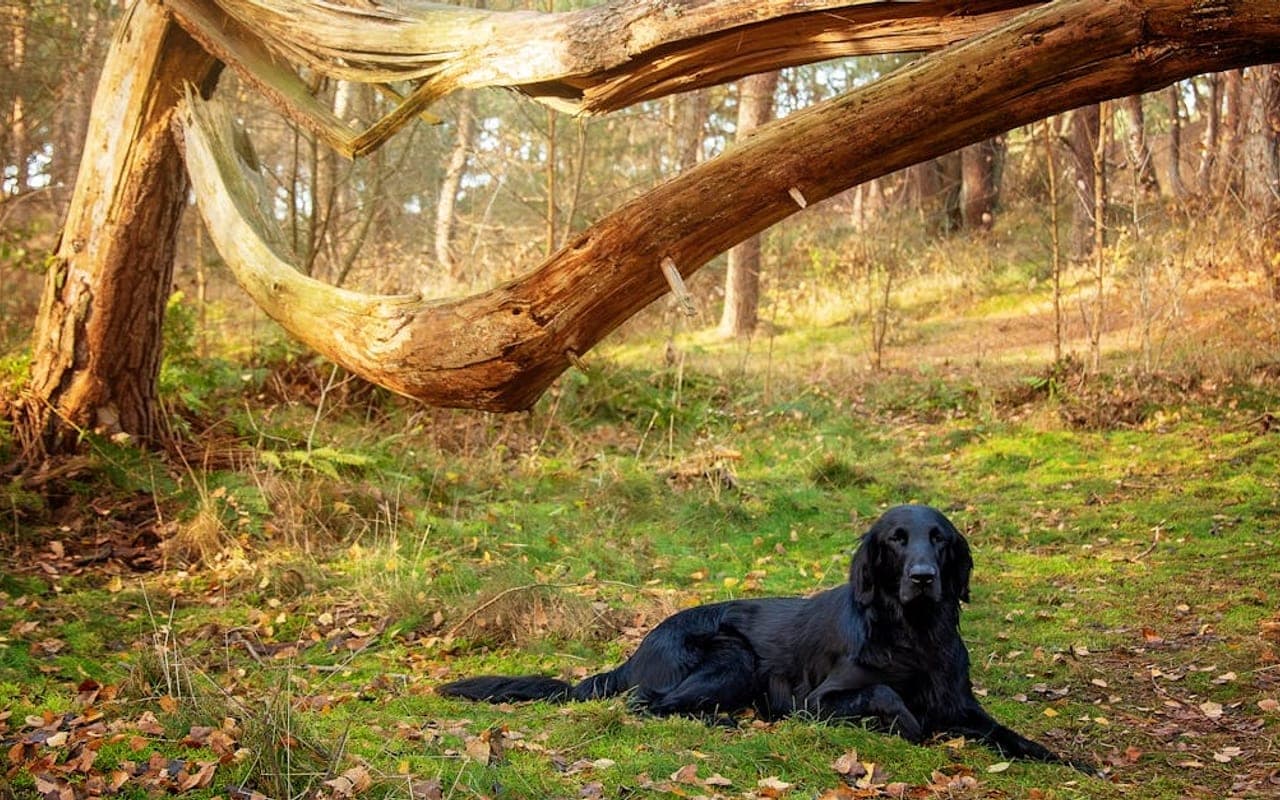
The Flat-Coated Retriever is the happiest dog in the Sporting Group and one of the most heartbreaking, and an honest profile has to hold both facts at once. Physically it is a 55-80 pound, 22-24.5 inch retriever with a glossy black or liver flat-lying coat, light feathering, and a distinctive long, clean head. Temperamentally it is the "Peter Pan" breed: it matures slowly, often staying mentally puppyish into its senior years — exuberant, optimistic, mouthy, and relentlessly tail-wagging. People fall for the personality immediately. The trade-off is brutal and you must understand it before buying: the Flat-Coat has one of the highest cancer rates of any dog breed. Cancer accounts for well over half of all deaths, with histiocytic sarcoma and other aggressive cancers striking many dogs in middle age. The breed's average lifespan is roughly 8-10 years — short for a medium-large dog — and a Flat-Coat that reaches 12 is unusually fortunate. You are choosing a dog whose personality you will adore and whose lifespan you will likely grieve early. In daily life the Flat-Coat is a high-energy, social, family-oriented gundog that needs a job, a lot of exercise, and people around. It is friendly to the point of being a poor guard dog, soft and sensitive to harsh handling, and prone to mouthing and counter-surfing well into adulthood. Who the Flat-Coat is right for: an active family that wants a joyful, biddable retriever for hiking, swimming, and fieldwork, and that goes in clear-eyed about the cancer risk and short average life. Who it is wrong for: anyone wanting a calm, low-energy or independent dog, anyone unprepared emotionally or financially for early cancer, or a household that is gone all day. Choose this breed for who it is, not for how long you wish it lived.
Cheerful | Optimistic | Good-Humored
Cheerful
A common Flat-Coated Retriever temperament descriptor that should be interpreted alongside training, exercise, and household fit.
Optimistic
A common Flat-Coated Retriever temperament descriptor that should be interpreted alongside training, exercise, and household fit.
Good-Humored
A common Flat-Coated Retriever temperament descriptor that should be interpreted alongside training, exercise, and household fit.
Owner note
Temperament labels are starting points, not guarantees. Meet the individual dog and ask about behavior history whenever possible.
Care essentials
How to care for a Flat-Coated Retriever
What looking after one actually involves: exercise, grooming, food, training, and routine health.
ExerciseAs needed
- Lower-energy breed that is content with daily walks and moderate play. Avoid over-exercising.
GroomingAs needed
- Regular grooming needed — brush 2-3 times per week and bathe monthly.
TrainingAs needed
- Independent-minded breed that may require extra patience in training. Short, engaging sessions recommended.
NutritionAs needed
- Feed a high-quality dog food appropriate for their age, size, and activity level. Monitor portions to prevent obesity.
Veterinary CareAs needed
- Annual wellness exams, core vaccinations, dental care, and parasite prevention. Breed-specific health screenings as recommended by your vet.
Health planning
Flat-Coated Retriever health risks and screening
Every breed has individual health variation. Use this profile for planning and discuss medical decisions with a veterinarian.
Responsible ownership
Finding a Flat-Coated Retriever responsibly
What to ask a breeder or rescue is the same conversation for every breed, so we keep it in one place and keep it current.
Health documentation, meeting the parents or foster, contracts and return support, and the warning signs worth walking away from.
Original purpose
Flat-Coated Retriever history
History is useful when it explains today's behavior, coat, exercise needs, and training style.
Read the breed history
The Flat-Coated Retriever was developed in Britain during the mid-to-late 19th century as a practical gamekeeper's and gundog, bred to retrieve shot game on both land and water. Its foundation drew on early retriever and water-dog stock — including Newfoundland-type dogs, setter, and collie-type influence — selected for a willing, soft-mouthed, all-purpose retrieving dog with a tractable temperament. The breed was extremely popular as a working gundog into the early 20th century before being eclipsed in fashion by the Labrador and Golden Retriever, after which a dedicated group of enthusiasts preserved it as primarily a working and companion dog rather than a mass-popular pet. That history explains the modern dog precisely: the slow-maturing, biddable, water-loving, people-oriented working temperament is exactly what the breed was selected for, and the relatively small, preservation-focused gene pool is part of the backdrop to its well-documented cancer burden today.
Gallery
Flat-Coated Retriever photos
Images are cropped consistently and loaded progressively to keep the page responsive.
Lower-page context
Flat-Coated Retrievers in culture
Where the breed shows up in film, sport, work and folklore — the enjoyable part, once the practical questions are answered.
Fun facts
- The Flat-Coated Retriever belongs to the Sporting Group.
- The average lifespan of a Flat-Coated Retriever is 8 to 10 years.
- Flat-Coated Retriever dogs are valued for their cheerful, optimistic, good-humored nature.
Flat-Coated Retriever FAQs
How long do Flat-Coated Retrievers live?
The honest answer is shorter than most retrievers: roughly 8-10 years on average, with cancer causing well over half of all deaths, often in middle age. A Flat-Coat reaching 12-13 is fortunate rather than typical. Sourcing from health-focused lines, keeping the dog lean, and investigating new lumps or lameness quickly can help on the margins, but prospective owners should choose this breed knowing its lifespan is genuinely short for its size.
Why do Flat-Coated Retrievers get cancer so often?
Flat-Coats carry a strong breed predisposition to cancers, especially histiocytic sarcoma and malignant histiocytosis, linked to a relatively small preservation-era gene pool and inherited risk. Cancer accounts for over half of all deaths in the breed, frequently striking around 8 years of age. There is no way to fully prevent it, but buying from breeders who track family cancer history, keeping the dog lean, and pursuing early diagnostics for any new mass or lameness are the meaningful levers an owner has.
Are Flat-Coated Retrievers good family dogs?
Yes, exceptionally so, with one caveat. They are friendly, gentle, patient, and people-oriented, and they stay playful into old age, which makes them wonderful with active children. The caveats are energy and mouthing: a Flat-Coat needs 1-2 hours of daily exercise and tends to mouth and jump well into adulthood, so it can overwhelm toddlers unintentionally. They are too friendly to be guard dogs. Supervise with very young children and channel the energy.
How much exercise does a Flat-Coated Retriever need?
A lot — plan on 1-2 hours of genuine activity daily, not a casual walk. They thrive on running, swimming, fetch, hiking, and fieldwork, and swimming is ideal because they love water and it spares the joints. Under-exercised Flat-Coats become destructive, mouthy, and hard to live with because the slow-to-mature, exuberant temperament has nowhere to go. Mental work — retrieving drills, scent games, training — should be added several times a week alongside the physical exercise.
Are Flat-Coated Retrievers easy to train?
Generally yes — they are intelligent, biddable, and eager to please, which makes them responsive to positive, reward-based training. The two complications are sensitivity and immaturity: they are soft dogs that shut down under harsh correction, and they mature slowly, so adult-level focus arrives late. Keep sessions upbeat and short, start early, and expect a long puppyhood. Counter-surfing and mouthing need consistent, patient management rather than punishment.
How much does a Flat-Coated Retriever cost to own?
Expect roughly $1,500-$3,000 from a health-focused breeder. Routine annual costs (food, preventatives, wellness vet) run around $1,200-$2,000 for a dog this size. The financial reality specific to this breed is cancer: diagnostics, oncology consults, surgery, or chemotherapy for histiocytic sarcoma can run several thousand dollars, often in the dog's middle age. Pet insurance taken out early, before any signs appear, is worth serious consideration for this breed specifically.
Sources
These are the published sources this page draws on. Each opens in a new tab so you can check it yourself.
American Kennel Club
Flat-Coated Retriever — breed standard and profile(opens in a new tab)Supports: Breed standard and recognition details.
Similar breeds to consider

Golden Retriever
Also in the Sporting group, with different care and temperament tradeoffs.
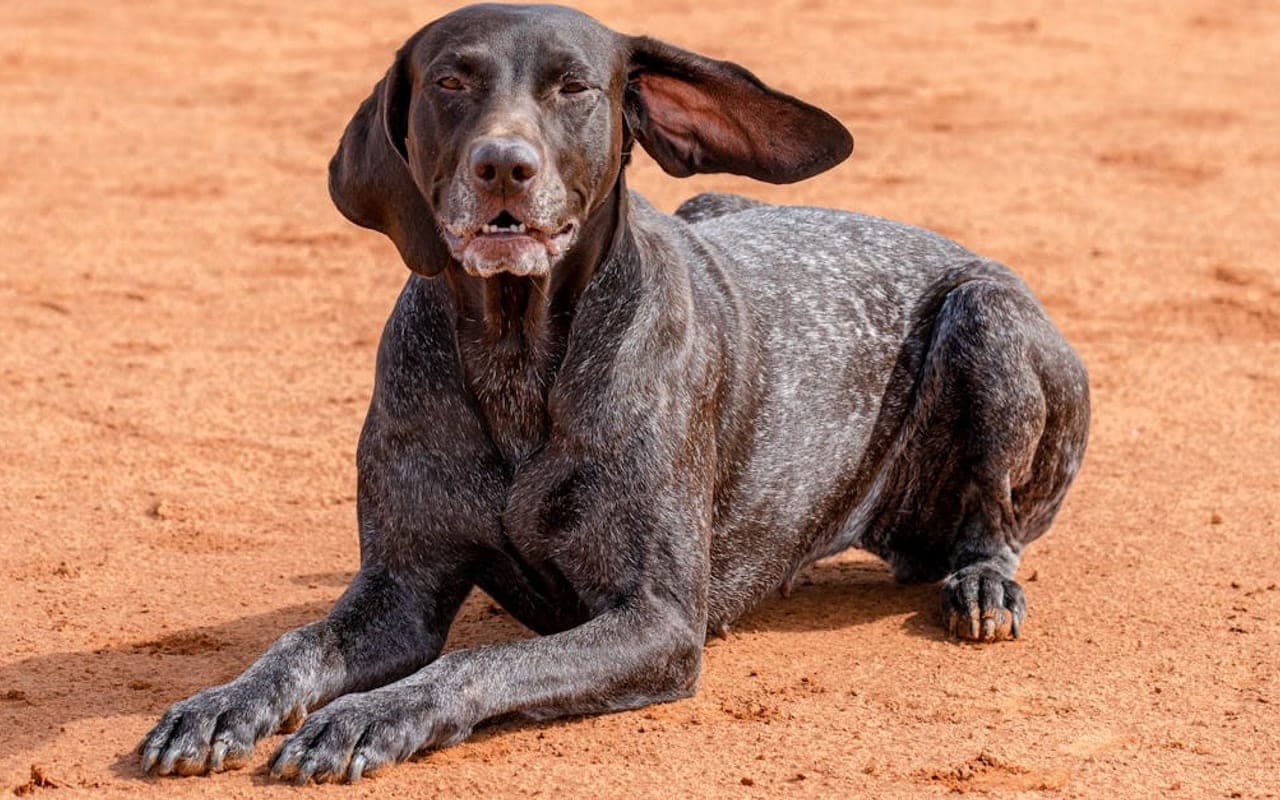
German Shorthaired Pointer
Also in the Sporting group, with different care and temperament tradeoffs.

Labrador Retriever
Also in the Sporting group, with different care and temperament tradeoffs.
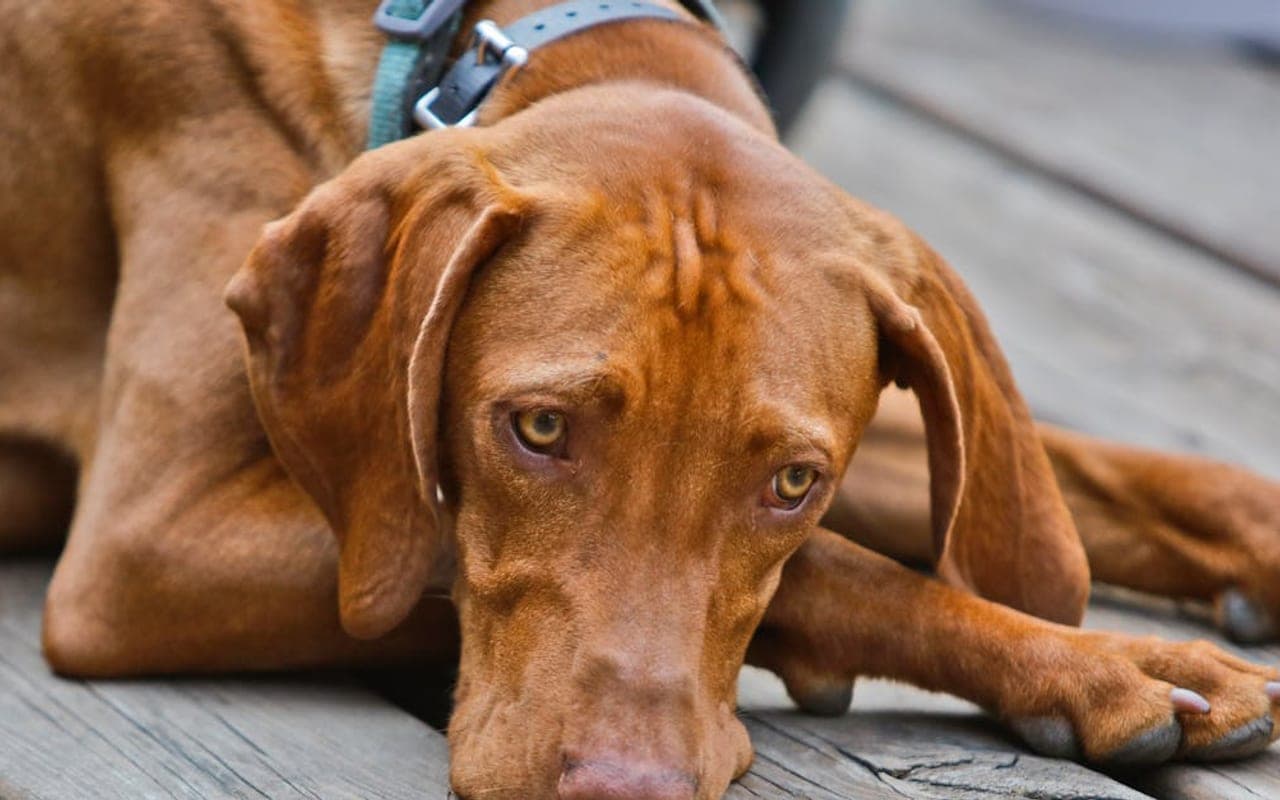
Vizsla
Also in the Sporting group, with different care and temperament tradeoffs.
Explore More About Flat-Coated Retriever
Dive deeper into everything Flat-Coated Retriever — costs, care, and expert insights.
Considering a cat instead?
Browse Cats