
Hound group
Ibizan Hound
The Ibizan Hound is a tall, lean, ancient-type sighthound from Spain's Balearic Islands (chiefly Ibiza) — about 22.
Size
44-55 lb
Lifespan
11-14 years
Exercise
20-40 minutes
Shedding
Moderate
Experience
Match to owner routine
Decision first
Is a Ibizan Hound right for you?
Start with fit before history or trivia. These are ownership signals, not guarantees about any individual dog.
Best suited for
- Households with children.
- Homes with other compatible pets.
- Owners seeking a manageable daily exercise routine.
Think carefully if
- You need a dog with almost no daily routine.
- You cannot keep up with grooming and preventive care.
- The dog will spend most days alone without support.
Conditional fit
Apartment living may be difficult unless the owner can meet the breed's exercise, training, and space needs.
Daily reality
Ibizan Hound commitment snapshot
Daily exercise
20-40 minutes
Match activity to age, health, weather, and training goals.
Coat care
Moderate
Grooming needs vary by coat, shedding, and lifestyle.
Time alone
Needs planning
Most dogs need gradual alone-time conditioning and support.
Structured facts
Ibizan Hound at a glance
The measurements and traits that most affect day-to-day life with this breed.
Group
Hound
Weight
44-55 lb
Height
22-28 in
Lifespan
11-14 years
Temperament
Family-Oriented | Even-Tempered | Polite
View all characteristics and methodology
Lifestyle fit
- Apartment suitability
- Needs caution
- Child friendliness
- Often good, with socialisation and supervision
- Other-pet fit
- Often compatible with careful introductions
Owner commitment
- Exercise
- 20-40 minutes
- Grooming
- Moderate
- Shedding
- Moderate
- Training
- Moderate
Environment and health
- Health risk
- Needs planning
Ratings combine structured breed data, visible breed fields, and editorial context. They are planning aids, not predictions for an individual dog.
Daily life
Ibizan Hound temperament and behavior
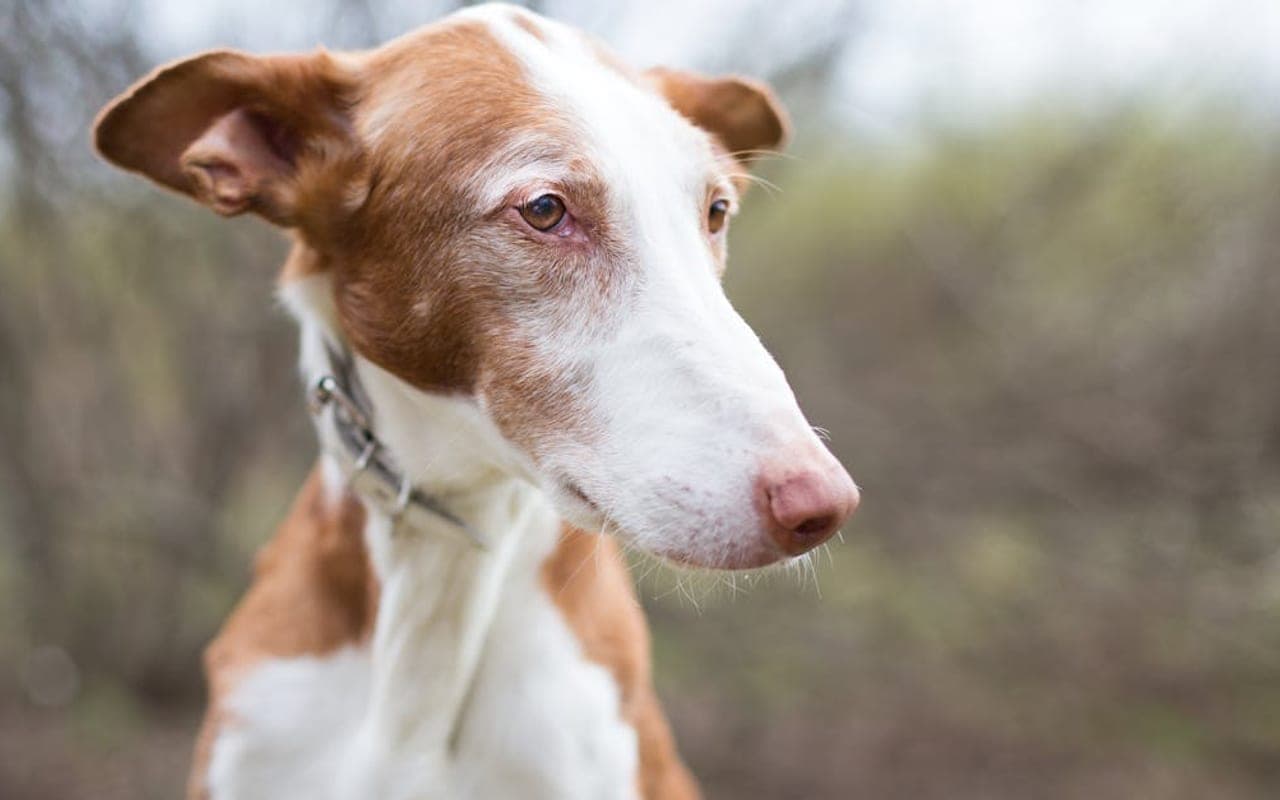
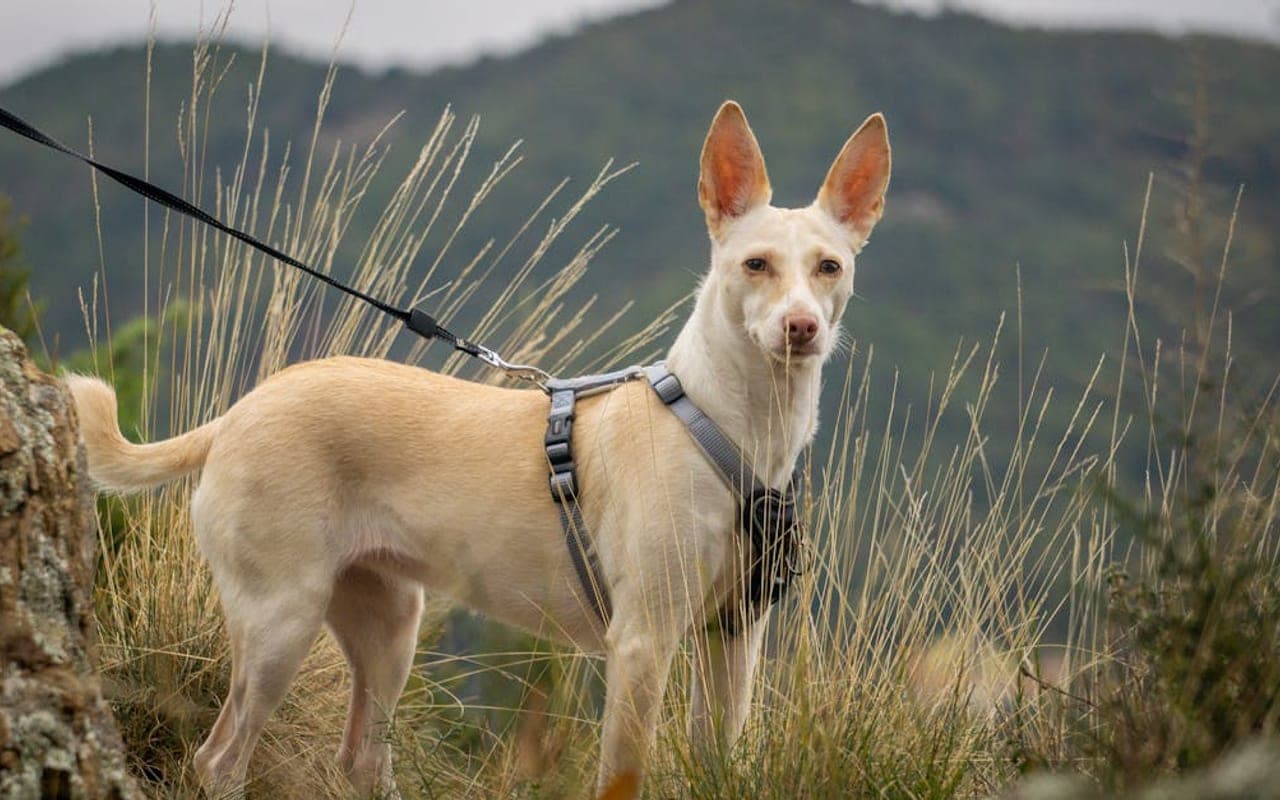
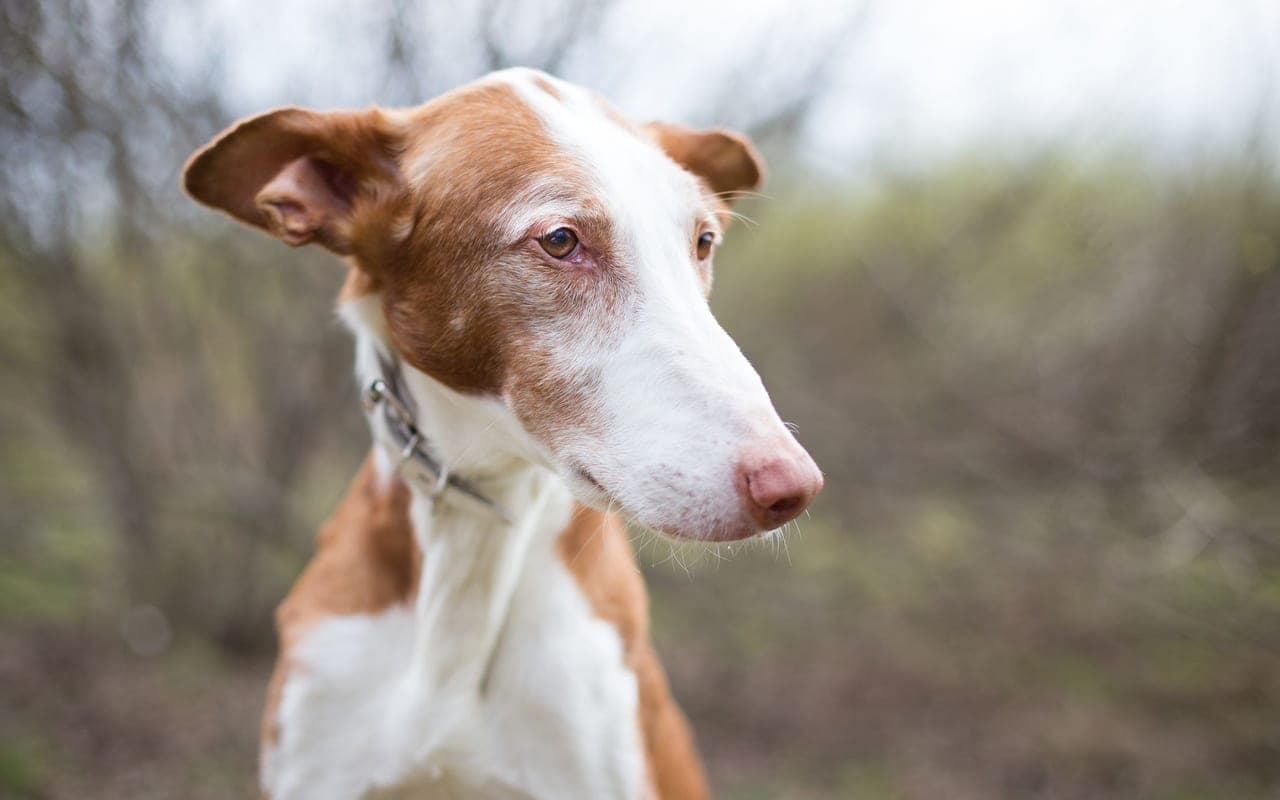
The Ibizan Hound is a tall, lean, ancient-type sighthound from Spain's Balearic Islands (chiefly Ibiza) — about 22.5-27.5 inches at the shoulder and roughly 45-65 pounds — bred to course rabbits across rocky island terrain by sight, scent, and sound, and to leap obstacles from a standstill. That hunting design is the whole decision: this is an athletic, independent prey-driven hound, not a biddable obedience dog, and the most common owner mistake is treating its high jumping ability and prey drive as trainable away rather than as fixed traits to be managed. What the coursing heritage means day to day: a strong, fast-triggering prey drive toward cats, small dogs, rabbits, and anything fleeing; a remarkable vertical and standing jump that makes a standard 4-foot fence inadequate (6 feet is the working minimum, often more); and an independent, sensitive temperament that responds to gentle, reward-based training and resents harsh handling. Off-leash reliability in open ground is poor by breed design — a sighting Ibizan in pursuit does not hear recall. Indoors they are typically clean, quiet, gentle, even-tempered, and devoted to their family, often described as catlike and reserved with strangers. They are deer-like and elegant but physically and emotionally sensitive: thin-coated, lean-bodied, and intolerant of cold and hard surfaces. Who the Ibizan Hound is right for: an owner with a securely high-fenced yard who accepts leash-only freedom outside it, wants a quiet sensitive housemate, and trains with patience and rewards. Who it is wrong for: a household with free-roaming cats or small pets, a low fence, or an expectation of off-leash recall and conventional obedience.
Family-Oriented | Even-Tempered | Polite
Family-Oriented
A common Ibizan Hound temperament descriptor that should be interpreted alongside training, exercise, and household fit.
Even-Tempered
A common Ibizan Hound temperament descriptor that should be interpreted alongside training, exercise, and household fit.
Polite
A common Ibizan Hound temperament descriptor that should be interpreted alongside training, exercise, and household fit.
Owner note
Temperament labels are starting points, not guarantees. Meet the individual dog and ask about behavior history whenever possible.
Care essentials
How to care for a Ibizan Hound
What looking after one actually involves: exercise, grooming, food, training, and routine health.
ExerciseAs needed
- Lower-energy breed that is content with daily walks and moderate play. Avoid over-exercising.
GroomingAs needed
- Regular grooming needed — brush 2-3 times per week and bathe monthly.
TrainingAs needed
- Moderately trainable — consistent, patient training with positive methods works best.
NutritionAs needed
- Feed a high-quality dog food appropriate for their age, size, and activity level. Monitor portions to prevent obesity.
Veterinary CareAs needed
- Annual wellness exams, core vaccinations, dental care, and parasite prevention. Breed-specific health screenings as recommended by your vet.
Health planning
Ibizan Hound health risks and screening
Every breed has individual health variation. Use this profile for planning and discuss medical decisions with a veterinarian.
Responsible ownership
Finding a Ibizan Hound responsibly
What to ask a breeder or rescue is the same conversation for every breed, so we keep it in one place and keep it current.
Health documentation, meeting the parents or foster, contracts and return support, and the warning signs worth walking away from.
Original purpose
Ibizan Hound history
History is useful when it explains today's behavior, coat, exercise needs, and training style.
Read the breed history
The Ibizan Hound is an ancient sighthound type long associated with the Balearic Islands off the Spanish coast, where it was used by island farmers and hunters to course rabbits across harsh, rocky ground for food — a practical working hound, often hunted in packs, prized for stamina, sight, scent, sound, and an extraordinary jumping ability used to clear walls and obstacles after game. Its elongated head and large upright ears closely resemble figures in ancient Egyptian art, which fueled long-standing claims of Egyptian or Phoenician antiquity; modern genetic studies indicate the breed is not as ancient as the artwork resemblance suggests and is better understood as a recreated or regionally developed sighthound landrace, but the rabbit-coursing island function is well documented and is what shaped the dog. The breed reached the United States in the 1950s and was recognized by the AKC in 1979. That lean, leaping, prey-driven coursing design is the direct explanation for the modern dog's fencing needs and independence.
Gallery
Ibizan Hound photos
Images are cropped consistently and loaded progressively to keep the page responsive.
Lower-page context
Ibizan Hounds in culture
Where the breed shows up in film, sport, work and folklore — the enjoyable part, once the practical questions are answered.
Fun facts
- The Ibizan Hound belongs to the Hound Group.
- The average lifespan of a Ibizan Hound is 11 to 14 years.
- Ibizan Hound dogs are valued for their family-oriented, even-tempered, polite nature.
Ibizan Hound FAQs
How long do Ibizan Hounds live?
An Ibizan Hound typically lives 11-14 years, good longevity for a dog of its size, and the breed is generally considered relatively healthy. The factors most within an owner's control are keeping the dog at its naturally lean weight, ensuring any anesthesia is done with a sighthound-appropriate protocol, and buying from a breeder who screens for the breed's inherited eye and neurological conditions. Trauma from escaping a too-low fence in pursuit of prey is a real, preventable risk to lifespan in this breed.
Why does an Ibizan Hound need such a tall fence?
Ibizans were bred to clear walls and obstacles from a standstill while coursing rabbits, so they have an exceptional vertical and standing jump that a typical 4-foot fence does not contain. The working minimum is a 6-foot fence, taller for athletic or motivated individuals, with no climbable footholds. This is fixed breed wiring, not a behavior you train away, and combined with a strong prey drive that overrides recall, it is the single most important infrastructure decision before bringing one home.
Are Ibizan Hounds good with children and other pets?
They are typically gentle, even-tempered, and good with considerate children, though their reserve with strangers and sensitivity mean they prefer calm handling to rough play. The serious caveat is small pets: as a prey-driven coursing sighthound, an Ibizan may chase and harm free-roaming cats, rabbits, or small dogs, especially anything that runs. Some can coexist with a confident cat raised alongside them indoors, but loose small animals are at real risk, so honest assessment of your household matters.
Can Ibizan Hounds be let off leash?
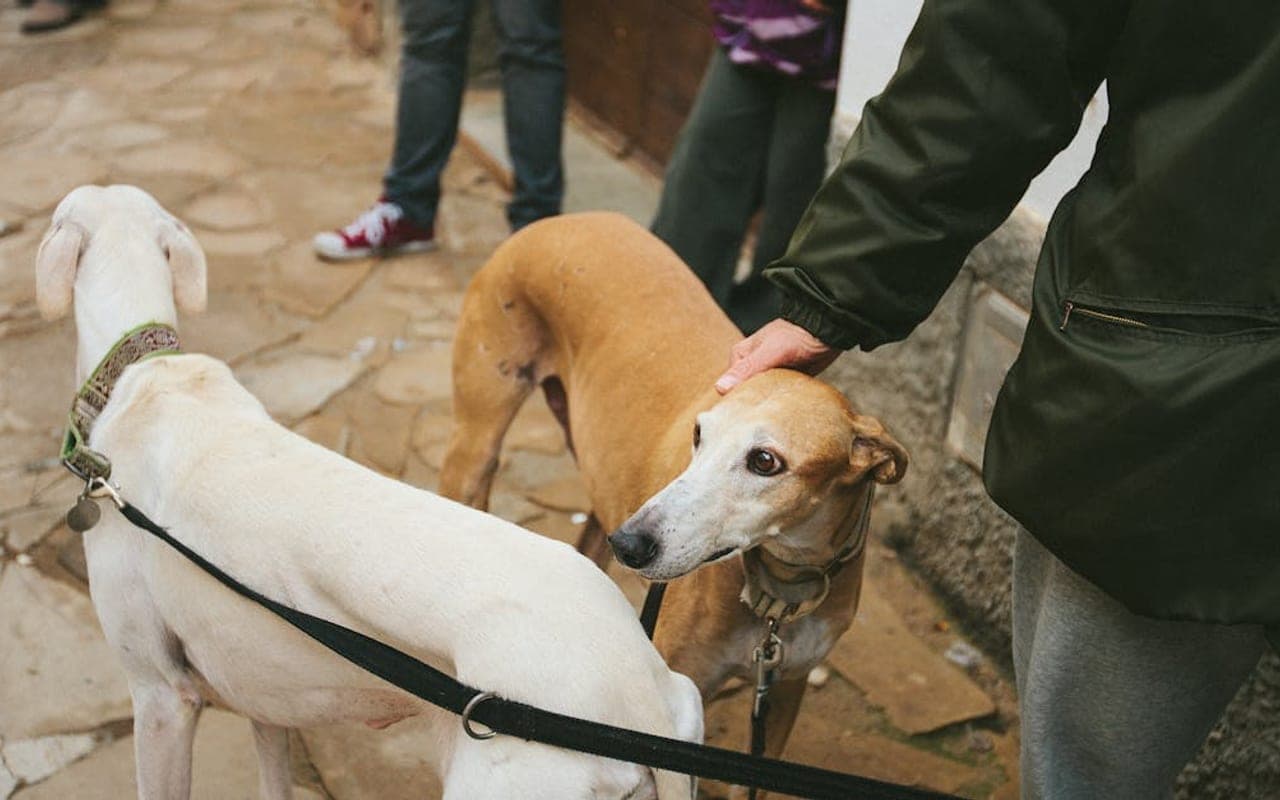
Only inside fully enclosed, secure space. As a sighthound bred to pursue moving game at speed, an Ibizan that sights prey in open ground will run and will not respond to recall mid-chase — this is design, not disobedience or a training shortfall. Off-leash freedom belongs in a securely fenced yard or a sighthound-safe enclosed field. In any open or unfenced area the dog should be leashed, every time, because the failure mode here is a lost or traffic-injured dog.
Why is anesthesia a concern for Ibizan Hounds?
Like other lean sighthounds, the Ibizan has low body fat and a different drug-metabolism profile, so standard anesthetic dosing can produce prolonged or exaggerated effects, and the breed can also react adversely to some sedatives, insecticides, and flea products. This is a well-recognized, avoidable risk: tell every veterinarian the dog is a sighthound before any sedation or surgery, and confirm a sighthound-appropriate anesthesia protocol is being used rather than generic dosing.
How much grooming and comfort care does an Ibizan Hound need?
Coat grooming is minimal — the short, thin coat needs only occasional brushing and sheds modestly. The real care load is comfort: the thin coat and low body fat mean Ibizans chill easily and need a coat in cold or wet weather, and their lean bony frame develops pressure sores on hard floors, so they require soft padded bedding and indoor living. This is an indoor housemate, not an outdoor dog, and budgeting for warmth and bedding is part of owning the breed honestly.
Sources
These are the published sources this page draws on. Each opens in a new tab so you can check it yourself.
American Kennel Club
Ibizan Hound — breed standard and profile(opens in a new tab)Supports: Breed standard and recognition details.
Similar breeds to consider
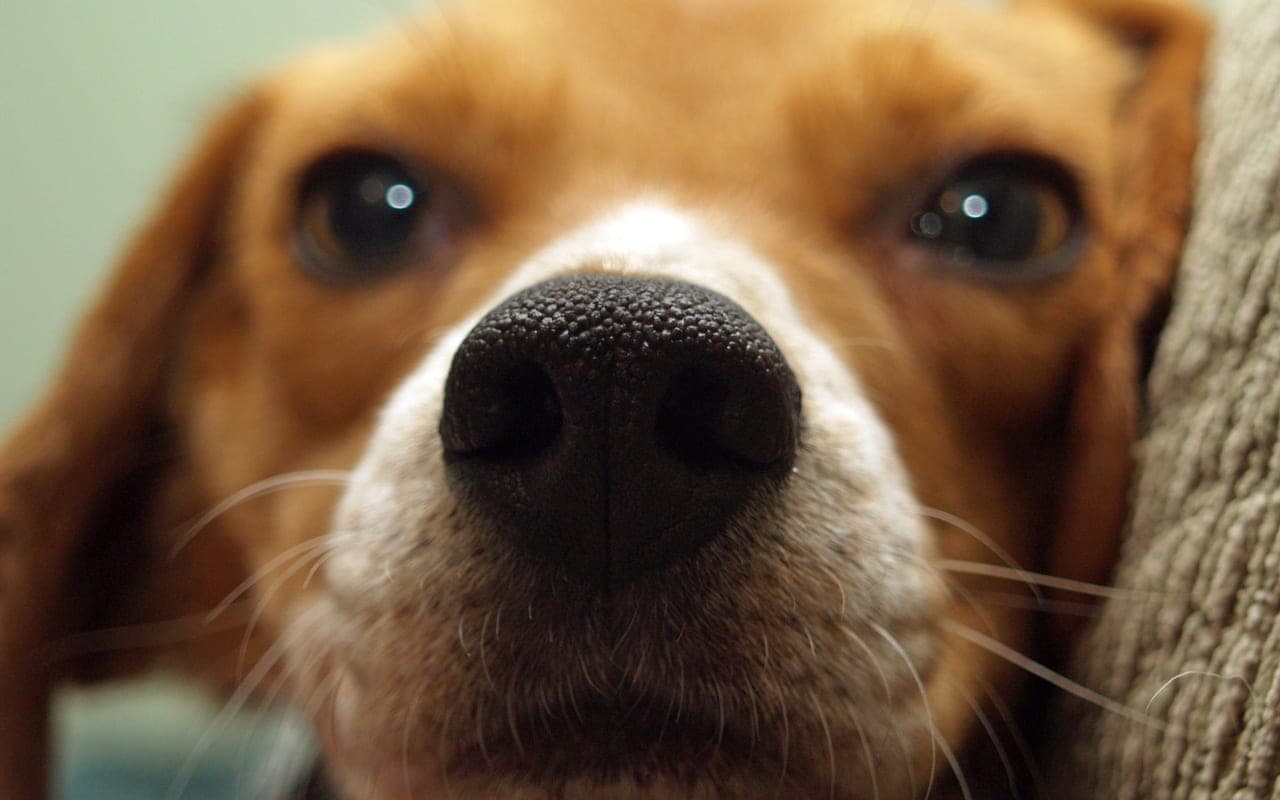
Beagle
Also in the Hound group, with different care and temperament tradeoffs.

Dachshund
Also in the Hound group, with different care and temperament tradeoffs.
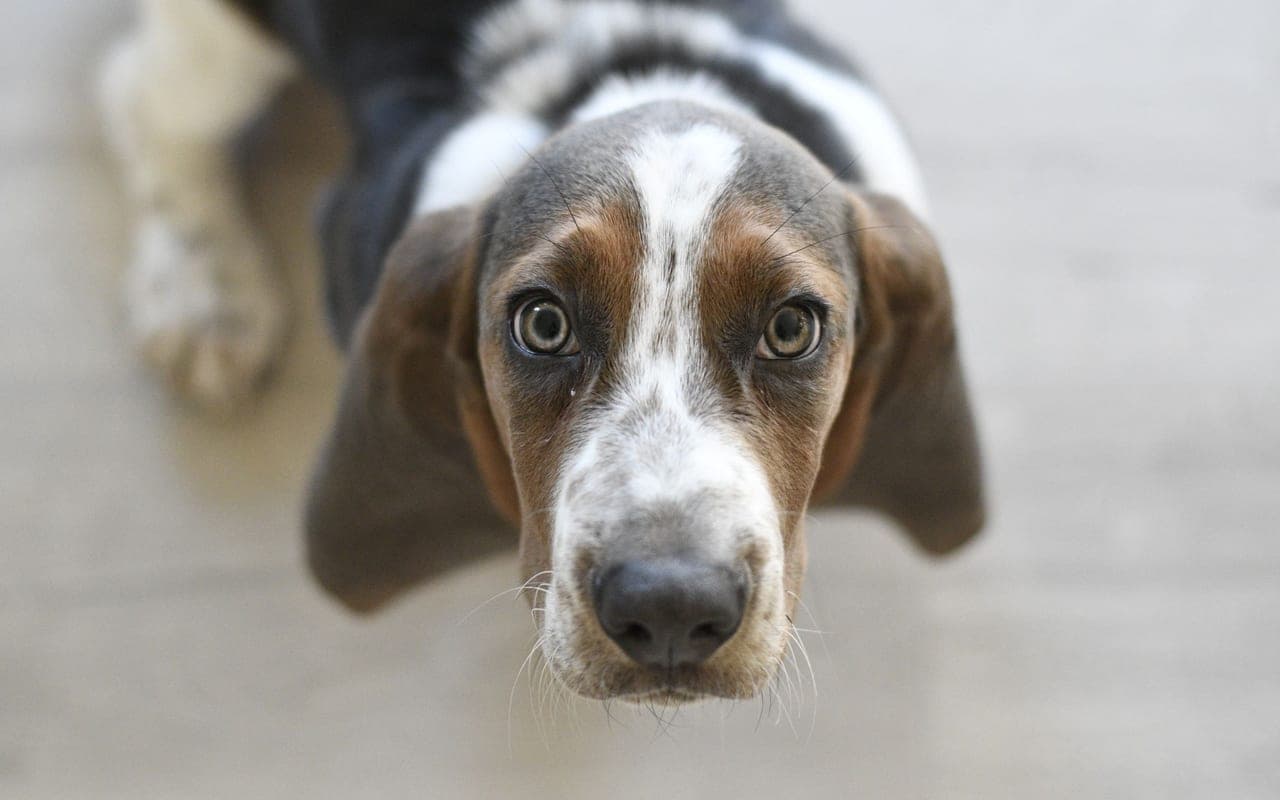
Basset Hound
Also in the Hound group, with different care and temperament tradeoffs.
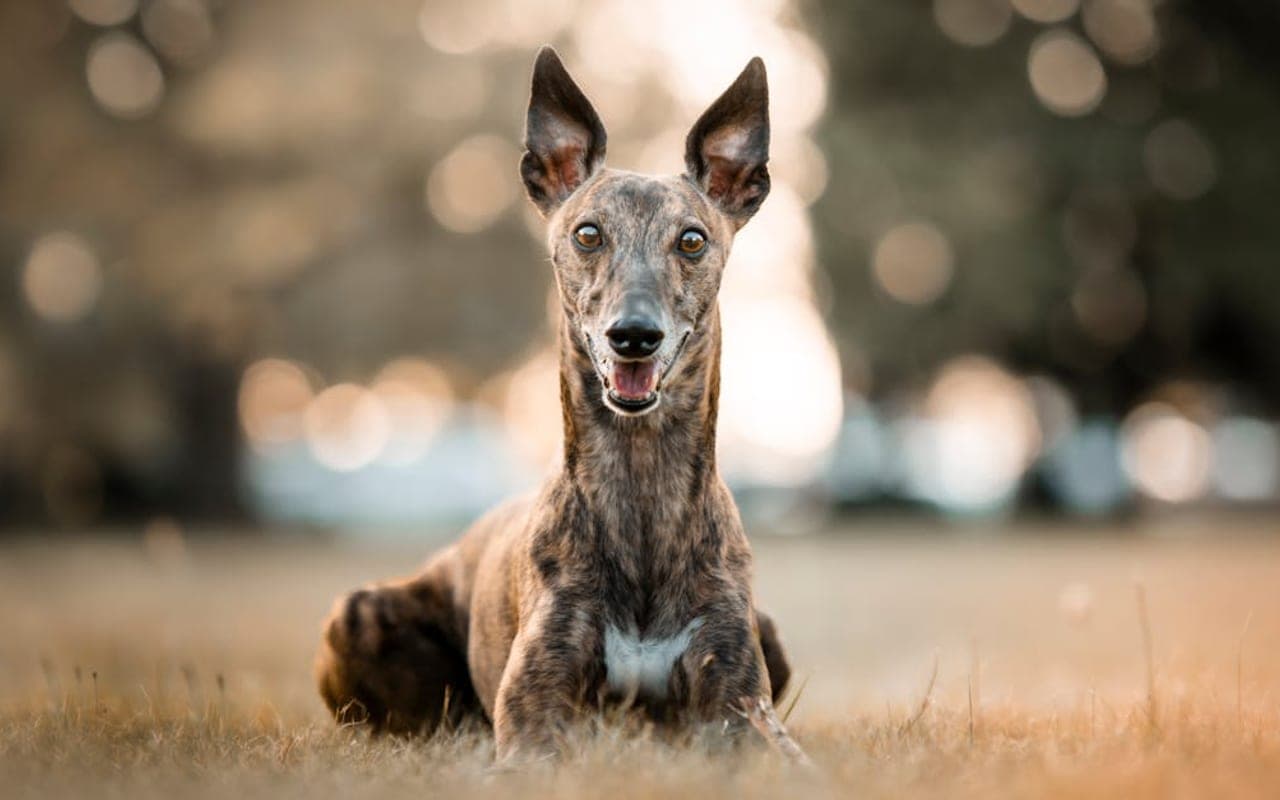
Greyhound
Also in the Hound group, with different care and temperament tradeoffs.
Explore More About Ibizan Hound
Dive deeper into everything Ibizan Hound — costs, care, and expert insights.
Large Dog Care Guide: Everything Over 50 lbs
Owning a large or giant breed dog means accepting one of biology's...
Puppy Teething & Biting: Timeline and What Actually Works
A puppy has all 28 deciduous ("baby") teeth by roughly eight weeks of age, and...
Considering a cat instead?
Browse Cats