
Sporting group
Irish Setter
The Irish Setter is the flashy red gundog that wins on looks and loses owners on energy.


Size
53-71 lb
Lifespan
12-15 years
Exercise
90+ minutes
Shedding
Moderate
Experience
Match to owner routine
Decision first
Is a Irish Setter right for you?
Start with fit before history or trivia. These are ownership signals, not guarantees about any individual dog.
Best suited for
- Households with children.
- Homes with other compatible pets.
- Active owners who enjoy daily outdoor exercise.
Think carefully if
- You cannot provide substantial daily exercise.
- You cannot keep up with grooming and preventive care.
- The dog will spend most days alone without support.
Conditional fit
Apartment living may be difficult unless the owner can meet the breed's exercise, training, and space needs.
Daily reality
Irish Setter commitment snapshot
Daily exercise
90+ minutes
Match activity to age, health, weather, and training goals.
Coat care
High
Grooming needs vary by coat, shedding, and lifestyle.
Time alone
Needs planning
Most dogs need gradual alone-time conditioning and support.
Structured facts
Irish Setter at a glance
The measurements and traits that most affect day-to-day life with this breed.
Origin
Ireland
Group
Sporting
Weight
53-71 lb
Height
24-26 in
Lifespan
12-15 years
Temperament
Outgoing | Energetic | Playful | Sweet-Natured | Independent | Affectionate
View all characteristics and methodology
Lifestyle fit
- Apartment suitability
- Needs caution
- Child friendliness
- Often good, with socialisation and supervision
- Other-pet fit
- Often compatible with careful introductions
- Adaptability
- Moderate
Owner commitment
- Exercise
- 90+ minutes
- Grooming
- High
- Shedding
- Moderate
- Training
- High
Environment and health
- Health risk
- Needs planning
Ratings combine structured breed data, visible breed fields, and editorial context. They are planning aids, not predictions for an individual dog.
Daily life
Irish Setter temperament and behavior
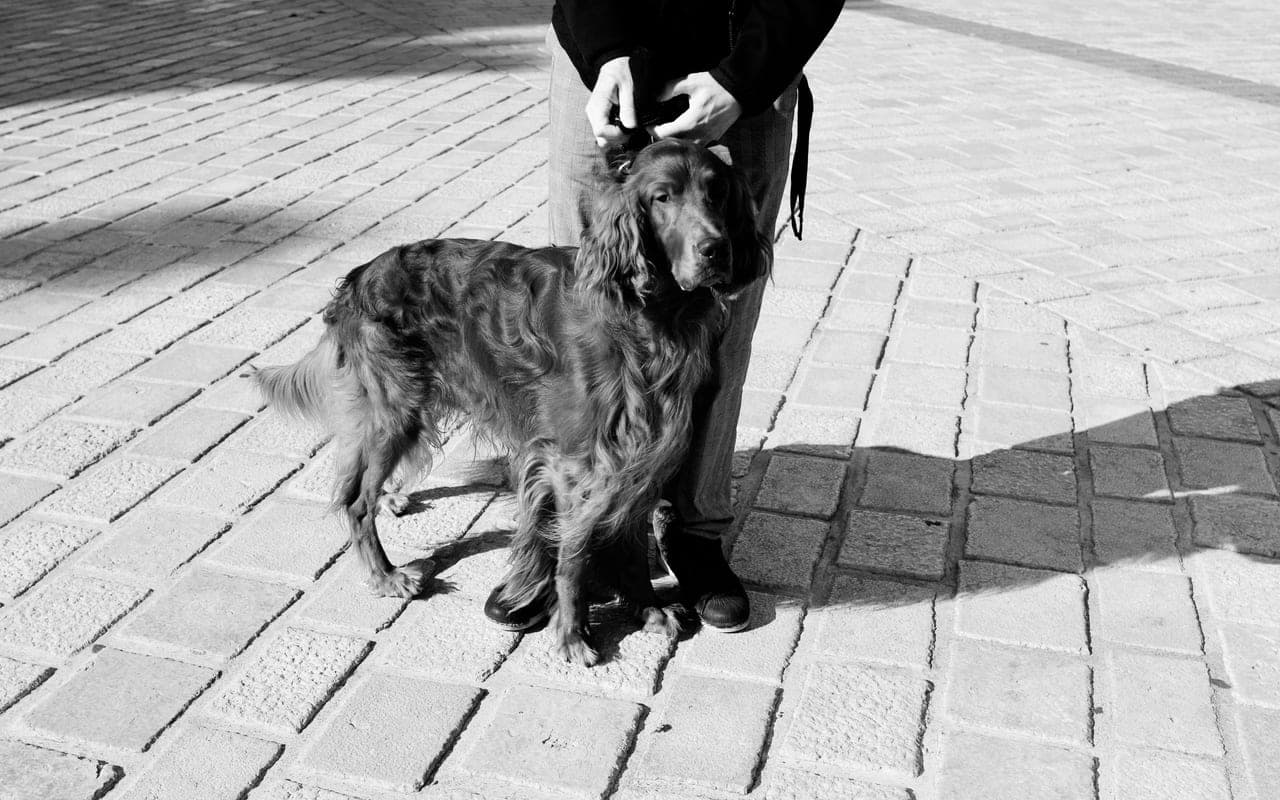
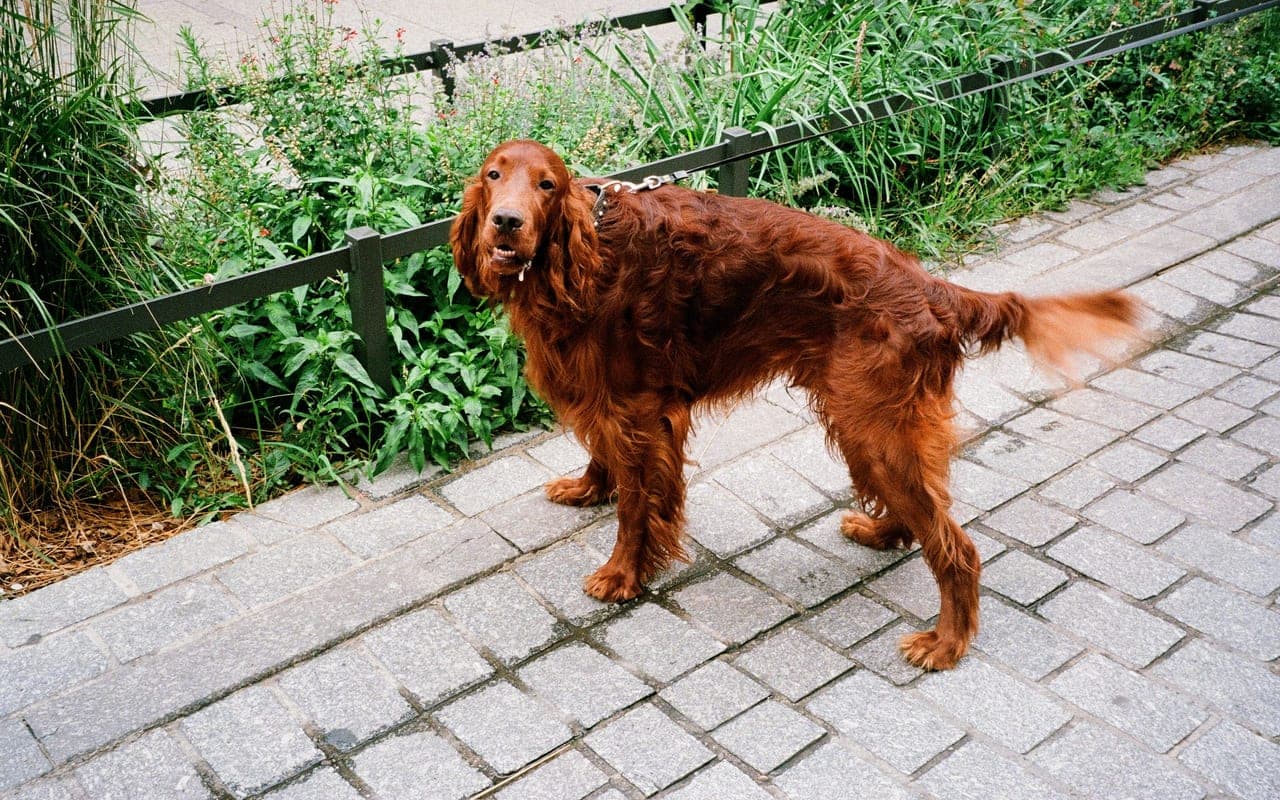
The Irish Setter is the flashy red gundog that wins on looks and loses owners on energy. That mahogany-to-chestnut coat and elegant outline sell the breed instantly; what the photos never convey is that this is a high-drive sporting dog bred to quarter open ground for hours, and it stays mentally young — some would say adolescent — well into its third or fourth year. Males stand about 27 inches and weigh 65-75 pounds; females stand around 25 inches and weigh 55-65 pounds. The silky feathered coat is the breed's signature and its maintenance cost. Temperament is the breed's gift and its trap. Irish Setters are outgoing, affectionate, people-bonded, playful, and famously gentle with children and other dogs. They are also exuberant, easily distracted, slow to mature, and prone to inventing destructive hobbies when bored or under-exercised. They are sensitive and respond to upbeat, consistent, reward-based training; harsh correction shuts them down. Independent on a scent line, they need recall trained early and reinforced for life. Who the Irish Setter is right for: an active household — runners, hikers, bird-dog owners, dog-sport competitors — that wants a soft-natured, sociable companion and will commit to 60-90 minutes of real exercise every day plus daily coat care. Who it is wrong for: the sedentary owner who picked the breed from a calendar, anyone expecting a calm dog before age three, owners who leave a dog alone all day, or anyone unprepared to brush feathering several times a week. Choose this breed for the engine, not the paint — the coat is the reward you earn after the exercise hours are done, not the reason to own the dog in the first place.
Outgoing | Energetic | Playful | Sweet-Natured | Independent | Affectionate
Outgoing
A common Irish Setter temperament descriptor that should be interpreted alongside training, exercise, and household fit.
Energetic
A common Irish Setter temperament descriptor that should be interpreted alongside training, exercise, and household fit.
Playful
A common Irish Setter temperament descriptor that should be interpreted alongside training, exercise, and household fit.
Sweet-Natured
A common Irish Setter temperament descriptor that should be interpreted alongside training, exercise, and household fit.
Owner note
Temperament labels are starting points, not guarantees. Meet the individual dog and ask about behavior history whenever possible.
Care essentials
How to care for a Irish Setter
What looking after one actually involves: exercise, grooming, food, training, and routine health.
HealthAs needed
- Irish Setters generally enjoy good health with a lifespan of 12-15 years, but they're predisposed to several conditions that potential owners should be aware of. Hip dysplasia affects some Irish Setters, potentially leading to arthritis and mobility issues as they age. Gastric dilatation-volvulus (bloat) is a life-threatening condition that occurs more frequently in deep-chested breeds like the Irish Setter. Progressive retinal atrophy (PRA) is a genetic eye condition that appears in some lines, causing gradual vision loss. Hypothyroidism is among the conditions seen in the breed; diagnosis and any ongoing treatment are decisions for a veterinarian. Irish Setters have an above-average risk for certain cancers, with osteosarcoma (bone cancer) appearing more frequently than in many other breeds. Some lines are prone to epilepsy, requiring careful management with medication. A condition specific to Irish Setters is globoid cell leukodystrophy (GCL), though genetic testing has significantly reduced its occurrence. Responsible breeders conduct health testing for hips, eyes, thyroid function, and breed-specific genetic conditions. Regular veterinary care, dental maintenance, appropriate nutrition, and sufficient exercise are crucial for maximizing Irish Setter health and longevity. Bloat risk can be reduced by feeding smaller meals, preventing exercise around mealtimes, and considering preventative gastropexy surgery.
ExerciseAs needed
- Irish Setters require substantial daily exercise—at least 1-2 hours—due to their high energy levels and sporting heritage. These athletic dogs thrive with vigorous activities like running, hiking, and fetch games that allow them to move at full speed. Their endurance level is exceptional; many Irish Setters can exercise for hours without tiring. Without adequate exercise, they commonly develop behavioral problems stemming from pent-up energy, including destructive chewing, excessive barking, and hyperactivity. Irish Setters excel at and enjoy dog sports including agility, flyball, field trials, and obedience competitions. Their love of running makes them excellent jogging companions, though they should be kept on leash in unfenced areas as they may chase birds due to their hunting instincts. Mental stimulation through training exercises and interactive play is also important for this intelligent breed. While puppies are naturally energetic, their exercise should be moderate to protect developing joints. Senior Irish Setters still need regular activity but may require adjustments for joint health. The breed's exercise needs make them best suited to active families with yards rather than apartment living.
GroomingAs needed
- Irish Setters have moderate to high grooming needs due to their beautiful, silky coat of medium length that requires regular care to maintain its condition. Brushing 2-3 times weekly with a pin brush and metal comb prevents tangles and removes loose hair, with special attention to the feathering on legs, chest, tail, and ears, which is prone to matting. Their distinctive coat naturally repels dirt somewhat, meaning they don't need frequent bathing—every 4-8 weeks is typically sufficient unless they get particularly dirty. Their ears need regular checking and cleaning to prevent infections, as the floppy ear design limits air circulation. Nails should be trimmed every 3-4 weeks, and teeth should be brushed several times weekly for optimal dental health. Show dogs require more intensive grooming, but pet Irish Setters can be maintained in a more natural state. Seasonal shedding occurs twice yearly, increasing grooming requirements during these periods. Irish Setters used for hunting or with active outdoor lifestyles need more frequent checking for burrs, ticks, and debris caught in their coat. While professional grooming isn't strictly necessary, many owners schedule periodic professional grooming to maintain coat health and appearance.
TrainingAs needed
- Irish Setters are intelligent but somewhat independent dogs that require consistent, positive training methods and plenty of patience. Training should begin early, with puppy classes providing important socialization and basic obedience foundations. They respond best to positive reinforcement using treats, praise, and play as rewards, while harsh methods can damage their sensitive nature. Irish Setters have a reputation for being somewhat slow to mature mentally, often maintaining puppy-like behavior until 2-3 years of age, which can make training a longer process than with some breeds. Consistency is crucial, as they quickly learn which rules are firmly enforced and which can be ignored. Training sessions should be kept short (10-15 minutes) and engaging to maintain their interest, as they can become bored with repetitive exercises. Their hunting heritage means they have strong instincts to chase birds and other small animals, making reliable recall training particularly important for off-leash safety. Intelligence and natural athleticism make them excellent candidates for dog sports including agility, obedience, rally, tracking, and field work, which also provide valuable mental stimulation. Crate training benefits this breed, providing them with a secure space and preventing destructive behaviors when unsupervised during their extended adolescence.
NutritionAs needed
- Irish Setters require high-quality nutrition to support their energetic lifestyle, with careful attention to portion control as they can be prone to bloat. Adult Irish Setters typically need 2-3 cups of premium dry food daily, divided into two meals rather than one large serving to reduce the risk of gastric torsion. As an active sporting breed, they benefit from performance formulations with higher protein (around 25-30%) and moderate fat levels (15-18%) when regularly engaged in vigorous exercise. Foods containing glucosamine and chondroitin may support joint health in this athletic breed. Irish Setter puppies should be fed a large-breed puppy formula to support proper growth rates and reduce orthopedic problems. Some lines are prone to food allergies or sensitivities, which may require specialized diets. Fresh, clean water should always be available, especially important for this active breed. To prevent bloat, avoid exercise immediately before and after meals, and consider using elevated feeding dishes. Senior Irish Setters often need adjusted nutrition as their activity levels and metabolism change. Weight management through proper nutrition is important for maintaining the breed's characteristic athletic build and ensuring joint health.
Health planning
Irish Setter health risks and screening
Every breed has individual health variation. Use this profile for planning and discuss medical decisions with a veterinarian.
Ownership cost
How much does a Irish Setter cost?
Cost figures are structured so first-year and lifetime estimates do not conflict with the underlying line items.
| Acquisition | $700-$2,500 |
|---|---|
| Routine monthly | About $120/month |
| Routine annual | About $1,440/year |
| First-year estimate | $2,140-$3,940 |
| Lifetime routine estimate | $17,280-$21,600 routine costs |
Currency: USD. Region: United States. Typical ranges for this breed. Equipment, insurance, emergency veterinary care, boarding and training are NOT included: we hold no sourced figures for them, and estimating them would be a guess presented as data.
Responsible ownership
Finding a Irish Setter responsibly
What to ask a breeder or rescue is the same conversation for every breed, so we keep it in one place and keep it current.
Health documentation, meeting the parents or foster, contracts and return support, and the warning signs worth walking away from.
Original purpose
Irish Setter history
History is useful when it explains today's behavior, coat, exercise needs, and training style.
Read the breed history
The Irish Setter was developed in Ireland over the 18th and 19th centuries as a 'setting' bird dog — bred to range across open country, locate game birds by air scent, and freeze on point so hunters could net or shoot. Early Irish setters were often red-and-white (now preserved as the separate Irish Red and White Setter); the solid rich red dog was refined and popularized through the 1800s, with kennels selecting heavily for the striking mahogany coat. The breed reached the United States in the early 19th century and was among the first breeds registered by the American Kennel Club. A surge of mid-20th-century popularity, driven largely by the breed's beauty and by Disney's 'Big Red,' pulled many dogs into pet homes that were not equipped for a high-energy field breed — a mismatch that still shapes how the breed is recommended today.
Gallery
Irish Setter photos
Images are cropped consistently and loaded progressively to keep the page responsive.

Lower-page context
Irish Setters in culture
Where the breed shows up in film, sport, work and folklore — the enjoyable part, once the practical questions are answered.
Movies and TV
- Big Red (1962)
Disney film based on the novel by Jim Kjelgaard about a boy and his Irish Setter.
- Irish Red (1976)
Sequel to Big Red, continuing the story of the Irish Setter.
Fun facts
- Irish Setters were one of President Nixon's favorite dog breeds; his Irish Setter 'King Timahoe' lived in the White House.
- The breed's stunning red coat takes up to 3 years to fully develop its rich color and texture.
- Irish Setters once commonly worked in pairs with hunters, with one dog pointing and the other retrieving.
- The famous children's novel 'Big Red' by Jim Kjelgaard features an Irish Setter as its main character.
- Despite their elegant appearance, Irish Setters were primarily developed as working gundogs with exceptional endurance.
Irish Setter FAQs
How much exercise does an Irish Setter really need?
A lot — plan on 60-90 minutes of vigorous daily activity, meaning running, retrieving, swimming, or field work, not a leisurely walk. This is a bird dog bred to cover ground for hours. An Irish Setter that gets only a short walk becomes destructive, mouthy, and hard to live with, and owners routinely misread that as a behavior problem when it is simply unmet exercise. Add 10-15 minutes of training or puzzle work daily to drain mental energy too.
Are Irish Setters good family dogs?
Yes, on temperament — they are affectionate, gentle, sociable, and reliably good with children and other dogs, which is a big part of their appeal. The honest caveat is energy and maturity: a young Irish Setter is bouncy enough to knock a small child over by accident and stays adolescent in behavior until about age three. They suit active families who can meet the exercise demand, less so quiet households expecting a calm dog quickly.
Do Irish Setters need a lot of grooming?
Moderate to high. The silky feathered coat on the ears, chest, belly, and legs mats and collects debris if neglected, so brush and line-comb 3-4 times a week, bathe every 4-6 weeks, and trim feet and sanitary areas. Budget a weekly ear check as a non-negotiable grooming task — the heavy drop ear traps moisture and is this breed's most frequent and avoidable vet visit, especially in dogs that swim.
How long do Irish Setters live?
Typically 12 to 15 years, which is good longevity for a medium-large sporting breed. Lifespan is most affected by bloat (an acute killer the chest shape predisposes the dog to) and by managing hip arthritis, thyroid disease, and weight over the years. Buying from a breeder who screens hips and DNA-tests for CLAB and PRA, keeping the dog lean, and feeding split meals are the levers that most affect both span and quality of those years.
Are Irish Setters easy to train?
They are intelligent and eager to please but slow to mature and easily distracted, so 'easy' is misleading. They learn quickly with upbeat, consistent, reward-based training in short sessions, but harsh corrections cause them to shut down or get silly rather than comply. Recall is the priority command — a scenting sighthound-adjacent breed will follow its nose, so train and proof recall from puppyhood and keep reinforcing it through the long adolescence.
What is canine leukocyte adhesion deficiency and should I worry about it?
CLAB is an inherited immune disease historically specific to the Irish Setter: a gene defect stops white blood cells from reaching infections, so affected puppies suffer severe, recurrent, life-threatening infections and rarely survive. The reason it should reassure rather than scare a buyer is that a DNA test exists — ask the breeder for proof that both parents are tested clear or are a tested non-affected pairing. A documented CLAB-clear litter takes this off the table entirely.
Sources
These are the published sources this page draws on. Each opens in a new tab so you can check it yourself.
American Kennel Club
Irish Setter — breed standard and profile(opens in a new tab)Supports: Breed standard and recognition details.
Similar breeds to consider

Golden Retriever
Also in the Sporting group, with different care and temperament tradeoffs.

German Shorthaired Pointer
Also in the Sporting group, with different care and temperament tradeoffs.

Labrador Retriever
Also in the Sporting group, with different care and temperament tradeoffs.

Vizsla
Also in the Sporting group, with different care and temperament tradeoffs.
Explore More About Irish Setter
Dive deeper into everything Irish Setter — costs, care, and expert insights.
How Much Does a Irish Setter Cost?
Purchase price, monthly costs, and lifetime expenses
Large Dog Care Guide: Everything Over 50 lbs
Owning a large or giant breed dog means accepting one of biology's...
Puppy Teething & Biting: Timeline and What Actually Works
A puppy has all 28 deciduous ("baby") teeth by roughly eight weeks of age, and...
Considering a cat instead?
Browse Cats