
Working group
Leonberger
The Leonberger is a giant working breed, and "giant" here is a planning constraint, not a compliment.
Size
90-170 lb
Lifespan
9 years
Exercise
30-60 minutes
Shedding
Moderate
Experience
Match to owner routine
Decision first
Is a Leonberger right for you?
Start with fit before history or trivia. These are ownership signals, not guarantees about any individual dog.
Best suited for
- Households with children.
- Homes with other compatible pets.
- Apartment homes with a consistent routine.
- Owners seeking a manageable daily exercise routine.
Think carefully if
- You need a dog with almost no daily routine.
- You cannot keep up with grooming and preventive care.
- The dog will spend most days alone without support.
Conditional fit
Apartment fit depends on exercise, enrichment, noise management, and outdoor access.
Daily reality
Leonberger commitment snapshot
Daily exercise
30-60 minutes
Match activity to age, health, weather, and training goals.
Coat care
Moderate
Grooming needs vary by coat, shedding, and lifestyle.
Time alone
Needs planning
Most dogs need gradual alone-time conditioning and support.
Structured facts
Leonberger at a glance
The measurements and traits that most affect day-to-day life with this breed.
Group
Working
Weight
90-170 lb
Height
26-31 in
Lifespan
9 years
Temperament
Friendly | Gentle | Playful
View all characteristics and methodology
Lifestyle fit
- Apartment suitability
- Likely fit
- Child friendliness
- Often good, with socialisation and supervision
- Other-pet fit
- Often compatible with careful introductions
Owner commitment
- Exercise
- 30-60 minutes
- Grooming
- Moderate
- Shedding
- Moderate
- Training
- Low
Environment and health
- Health risk
- Needs planning
Ratings combine structured breed data, visible breed fields, and editorial context. They are planning aids, not predictions for an individual dog.
Daily life
Leonberger temperament and behavior
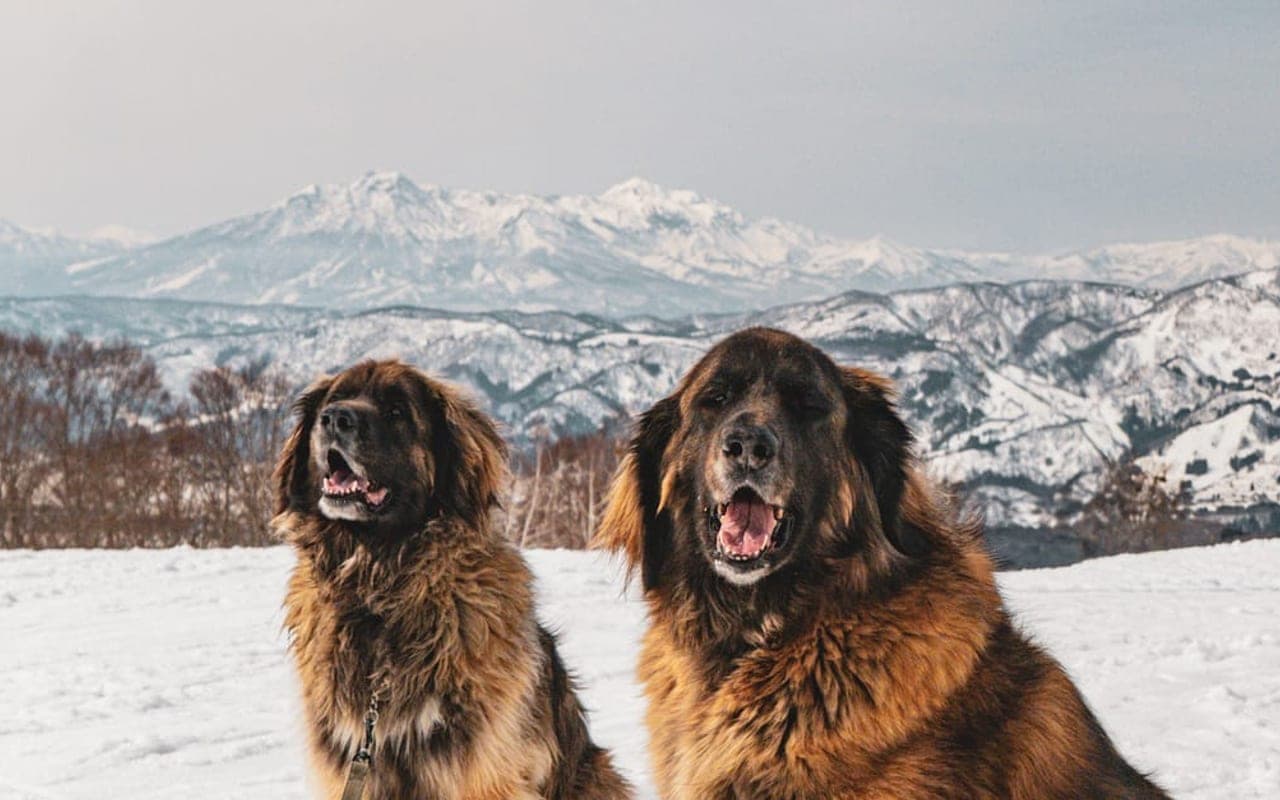
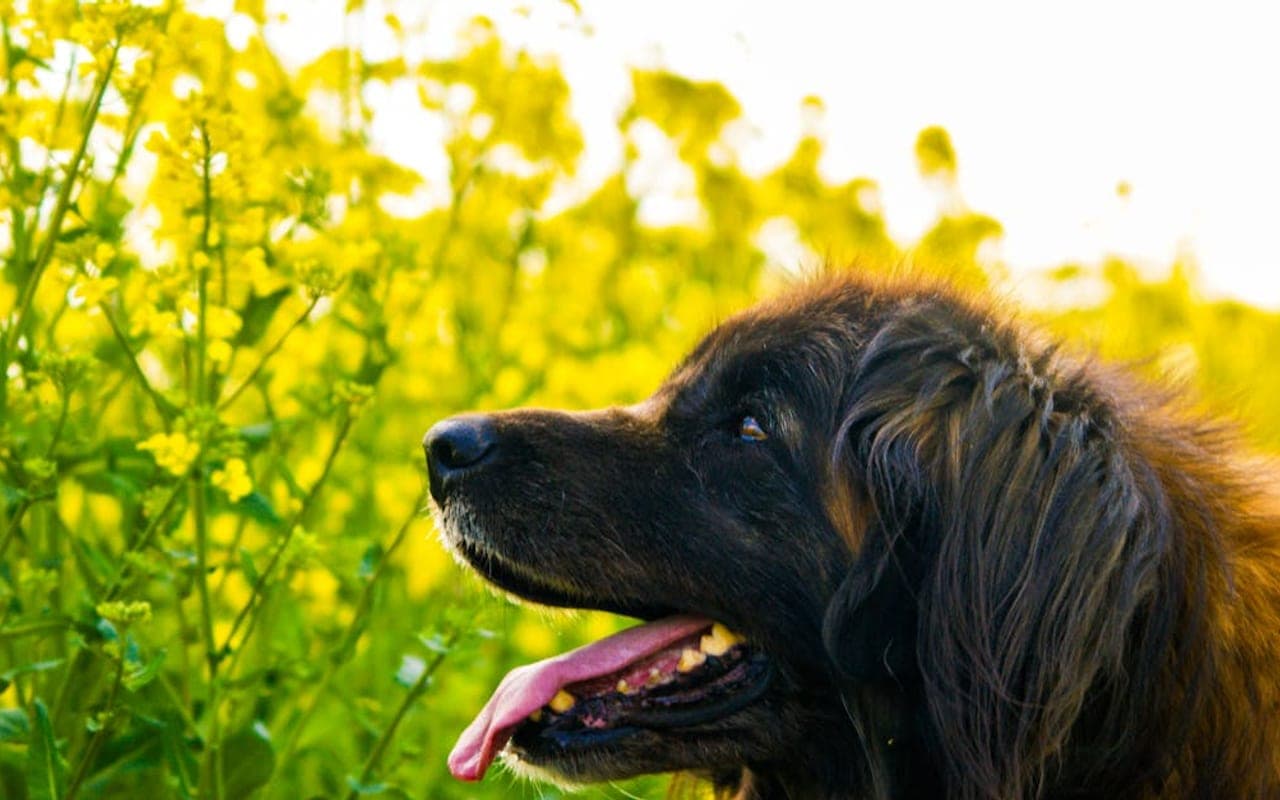
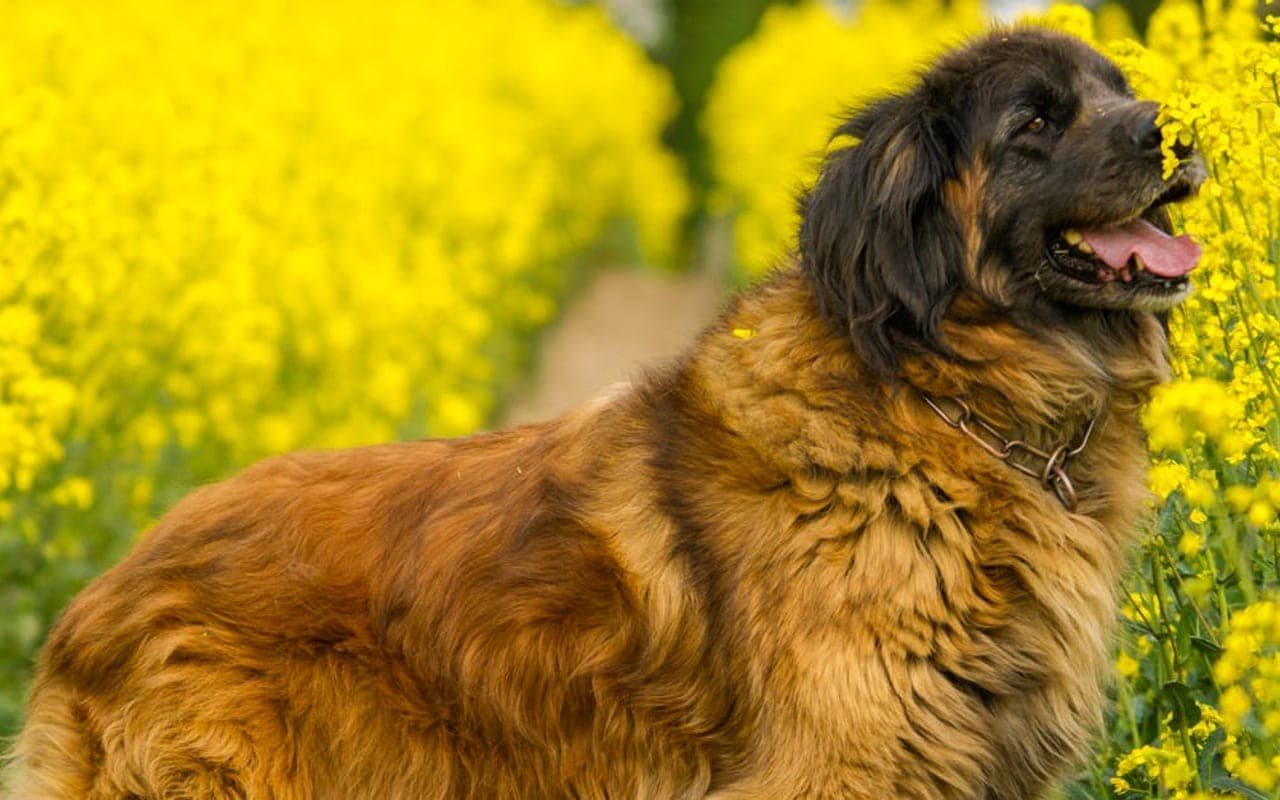
The Leonberger is a giant working breed, and "giant" here is a planning constraint, not a compliment. Males stand about 28-31.5 inches and weigh roughly 110-170 pounds; females are 25.5-29.5 inches and 90-140 pounds. They carry a long, water-resistant double coat with a lion-like mane, a black mask, and a calm, friendly, family-oriented temperament. The personality is the breed's great strength — gentle, patient, people-bonded, and famously good with children. The size and lifespan are the trade-offs you must accept up front. A Leonberger is a Velcro dog: it wants to be with its family, indoors, in the middle of things, all day. It is not an outdoor kennel dog and does poorly isolated. It is generally calm and not hyperactive, but it is large enough that a knock or a lean is significant, and it sheds and drools enough to reshape your housekeeping. The hard reality is lifespan and health. Like most giant breeds the Leonberger is short-lived, averaging only about 7-9 years, and it carries breed-specific neurological and cancer risks — notably inherited polyneuropathy and a high rate of osteosarcoma. You are signing up for a magnificent companion you will likely lose young. Who the Leonberger is right for: a family with space, a solid budget for giant-breed food and vet care, time to be home with the dog, and the emotional readiness for a short life with a large animal. Who it is wrong for: apartment dwellers, people away all day, anyone houseproud about drool and hair, first-time owners underestimating giant-breed cost, or anyone unprepared to grieve a dog at 8. Choose it for the temperament with eyes open about the rest.
Friendly | Gentle | Playful
Friendly
A common Leonberger temperament descriptor that should be interpreted alongside training, exercise, and household fit.
Gentle
A common Leonberger temperament descriptor that should be interpreted alongside training, exercise, and household fit.
Playful
A common Leonberger temperament descriptor that should be interpreted alongside training, exercise, and household fit.
Owner note
Temperament labels are starting points, not guarantees. Meet the individual dog and ask about behavior history whenever possible.
Care essentials
How to care for a Leonberger
What looking after one actually involves: exercise, grooming, food, training, and routine health.
ExerciseAs needed
- Moderately active breed needing 30-60 minutes of daily exercise through walks, play, and mental stimulation.
GroomingAs needed
- Regular grooming needed — brush 2-3 times per week and bathe monthly.
TrainingAs needed
- Independent-minded breed that may require extra patience in training. Short, engaging sessions recommended.
NutritionAs needed
- Feed a high-quality dog food appropriate for their age, size, and activity level. Monitor portions to prevent obesity.
Veterinary CareAs needed
- Annual wellness exams, core vaccinations, dental care, and parasite prevention. Breed-specific health screenings as recommended by your vet.
Health planning
Leonberger health risks and screening
Every breed has individual health variation. Use this profile for planning and discuss medical decisions with a veterinarian.
Responsible ownership
Finding a Leonberger responsibly
What to ask a breeder or rescue is the same conversation for every breed, so we keep it in one place and keep it current.
Health documentation, meeting the parents or foster, contracts and return support, and the warning signs worth walking away from.
Original purpose
Leonberger history
History is useful when it explains today's behavior, coat, exercise needs, and training style.
Read the breed history
The Leonberger was developed in the town of Leonberg in southwestern Germany in the mid-19th century, created as a large, impressive companion and all-purpose farm and water dog from crosses of Newfoundland, large mountain dogs of the Saint Bernard type, and Pyrenean Mountain Dog stock. The goal was a stately giant with a lion-like appearance suited to estate, draft, water-rescue, and family-guardian roles. The breed nearly disappeared during both World Wars, surviving through a handful of dedicated breeders who rebuilt it from a very small number of dogs — a genetic bottleneck that is part of the context for the breed's well-documented inherited neurological conditions today. That ancestry explains the modern dog directly: the calm, water-loving, people-bonded, draft-capable temperament reflects its Newfoundland and mountain-dog roots, while the giant size that makes it striking is also the source of its short lifespan and orthopedic burden.
Gallery
Leonberger photos
Images are cropped consistently and loaded progressively to keep the page responsive.
Lower-page context
Leonbergers in culture
Where the breed shows up in film, sport, work and folklore — the enjoyable part, once the practical questions are answered.
Fun facts
- The Leonberger belongs to the Working Group.
- The average lifespan of a Leonberger is 9 to 9 years.
- Leonberger dogs are valued for their friendly, gentle, playful nature.
Leonberger FAQs
How long do Leonbergers live?
Leonbergers average roughly 7-9 years, which is short even by giant-breed standards. The limiting factors are cancer — especially osteosarcoma — and the cumulative orthopedic load of a 100-170 pound body, with inherited polyneuropathy affecting quality of life in some lines. Buying from DNA- and OFA-screened parents, keeping the dog lean, and controlling puppy growth help, but prospective owners should choose this breed fully accepting that they will likely lose a magnificent dog young.
Are Leonbergers good with children?
Yes — gentleness with children is one of the breed's signature traits. Leonbergers are typically calm, patient, and tolerant, and they bond closely to the whole family rather than one person. The realistic caution is purely physical: a 130-pound dog can knock over a small child without any aggression simply by turning or leaning. Supervise interactions with toddlers, and teach the dog not to bump or lean. Temperament is excellent; the management issue is size, not character.
How much exercise does a Leonberger need?
Moderate — about 45-60 minutes of daily walking plus space and, ideally, swimming, which they love and which spares the joints. They are calm rather than high-drive and do not need extreme exercise; in fact, over-exercising a growing puppy permanently harms its joints. Exercise in the cool part of the day, because the heavy double coat causes them to overheat easily. Mental engagement and being included in family life matter as much to a Leonberger as the physical activity.
Do Leonbergers shed and drool a lot?
Yes to both, and prospective owners should plan for it. The heavy double coat sheds year-round and "blows" dramatically twice a year, requiring thorough brushing 2-3 times weekly and daily during the seasonal shed. They are also a drooling breed, though usually less extreme than a Saint Bernard or Mastiff. If a hair-free, drool-free house is important to you, the Leonberger's otherwise wonderful temperament will not compensate — this is a high-maintenance coat in a large package.
Are Leonbergers easy to train?
Reasonably — they are intelligent, people-pleasing, and sensitive, responding well to calm, consistent, positive methods and poorly to harsh handling. The practical issue is not willingness but size and maturity: a slow-maturing giant must learn manners, leash skills, and not to jump or lean before it is large, because correcting a 130-pound adult is far harder than shaping a puppy. Early socialization and obedience are essential, and they are best treated as a long, patient project.
How much does a Leonberger cost to own?
Purchase price from a health-testing breeder is typically around $2,000-$4,000. The ongoing cost is where giant breeds surprise owners: food can run $100-$200+ a month, and everything dosed or sized by weight — medications, anesthesia, joint care, surgery — costs more. Add likely orthopedic and cancer-related veterinary expenses given the breed's risks. Budget realistically for giant-breed food and a substantial vet fund, and consider early pet insurance before any signs appear.
Sources
These are the published sources this page draws on. Each opens in a new tab so you can check it yourself.
American Kennel Club
Leonberger — breed standard and profile(opens in a new tab)Supports: Breed standard and recognition details.
Similar breeds to consider
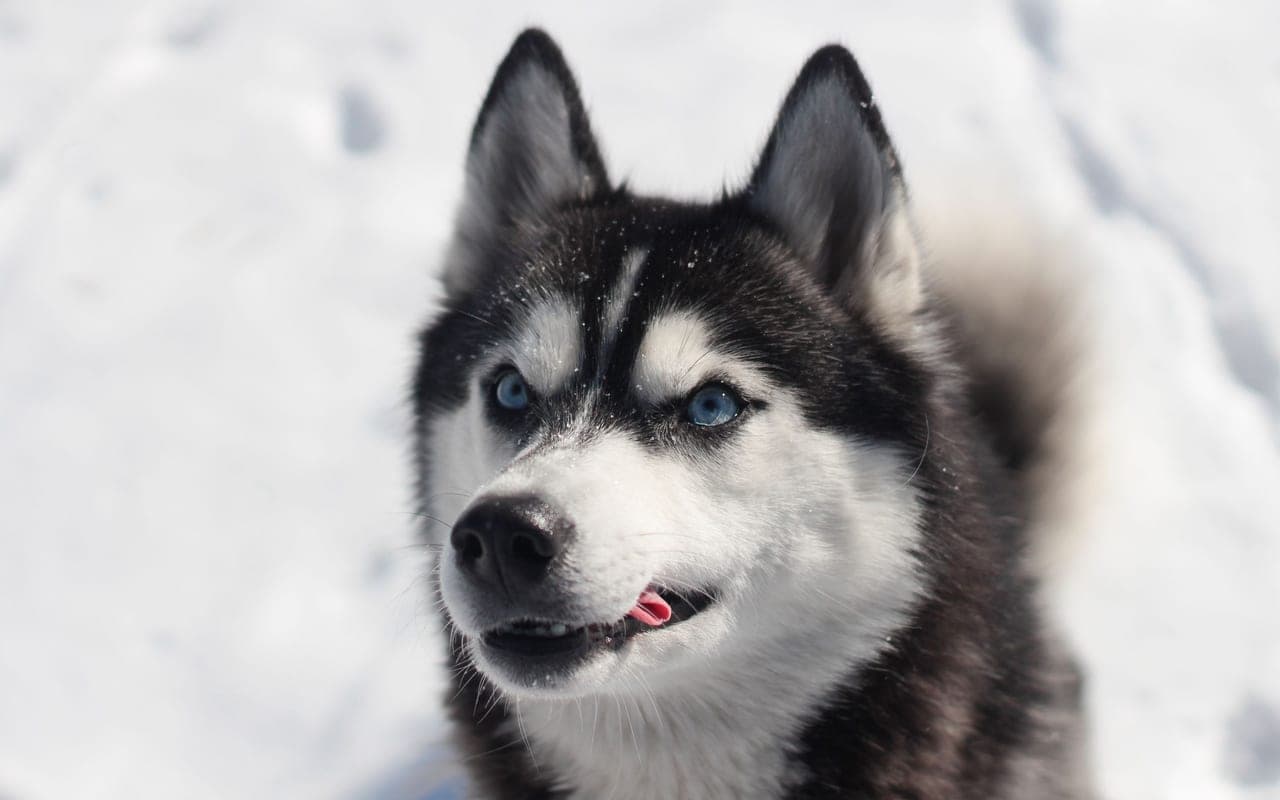
Siberian Husky
Also in the Working group, with different care and temperament tradeoffs.
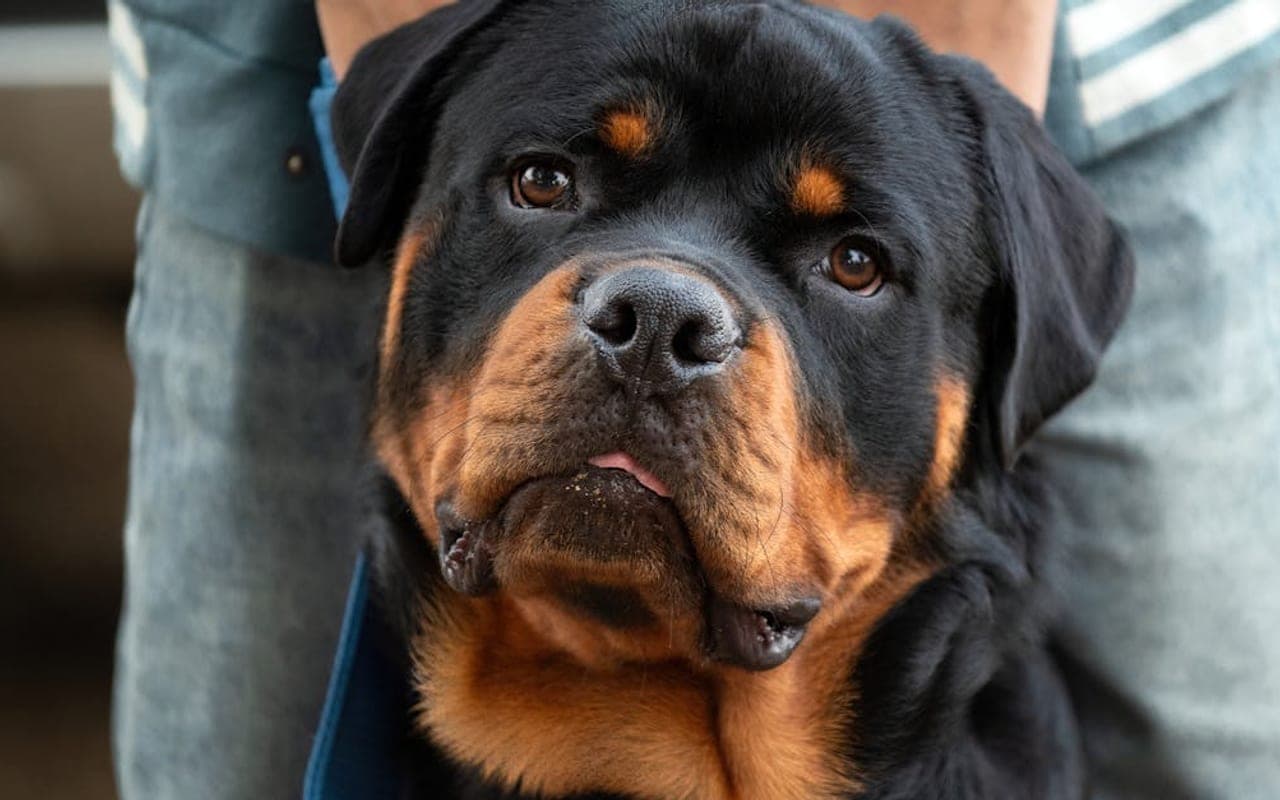
Rottweiler
Also in the Working group, with different care and temperament tradeoffs.
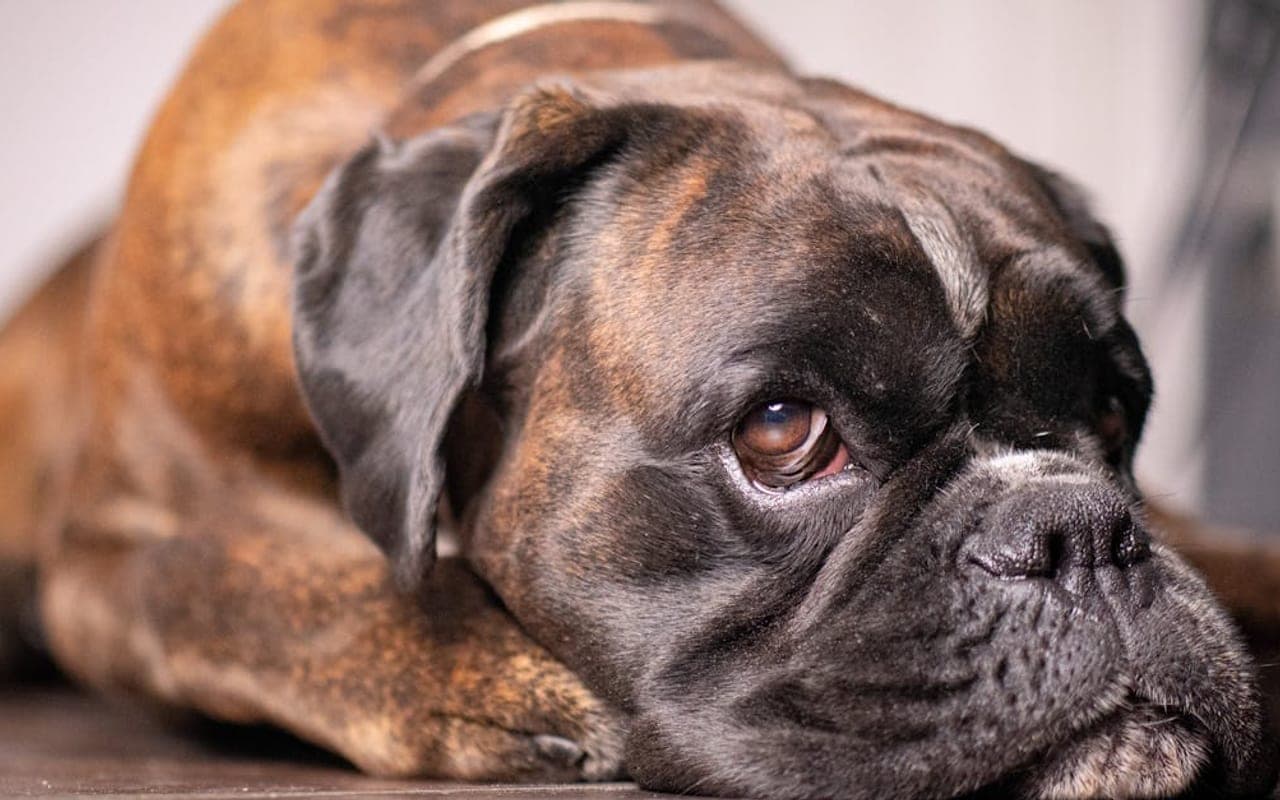
Boxer
Also in the Working group, with different care and temperament tradeoffs.
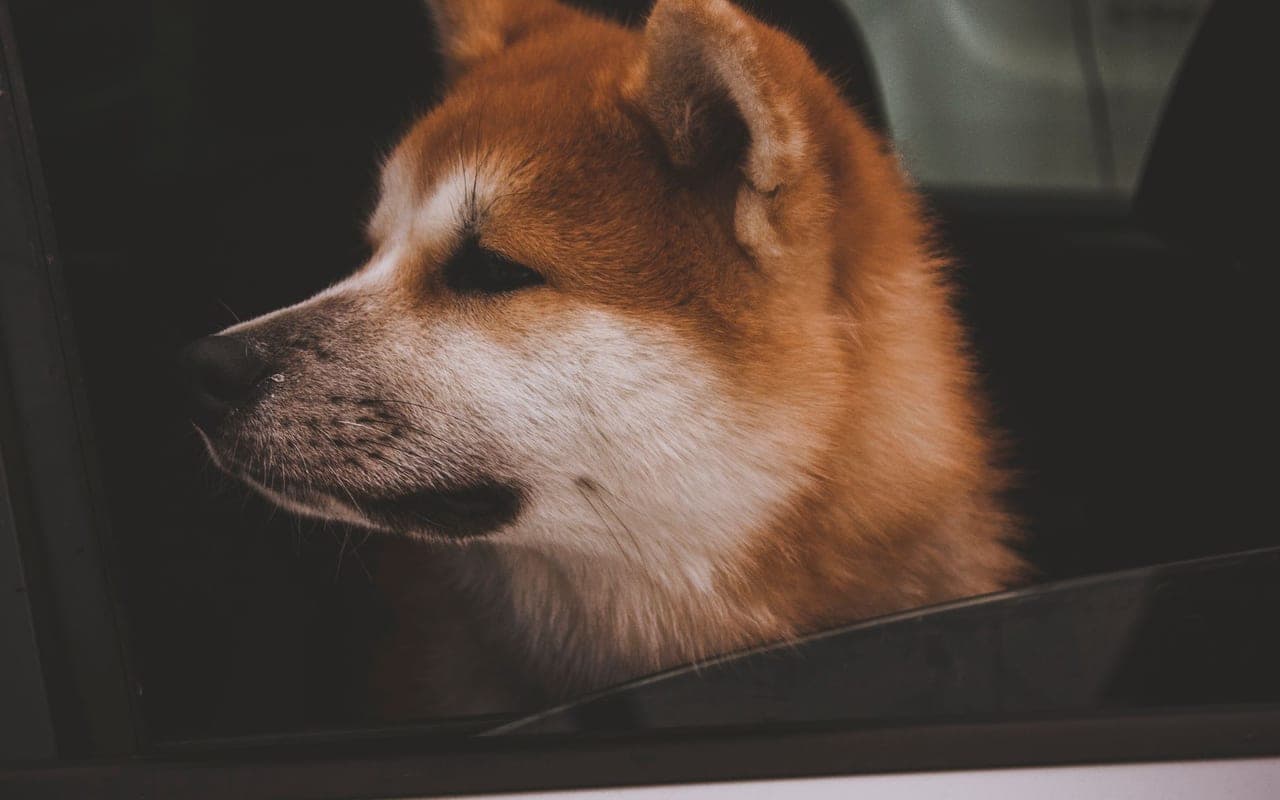
Akita
Also in the Working group, with different care and temperament tradeoffs.
Explore More About Leonberger
Dive deeper into everything Leonberger — costs, care, and expert insights.
Considering a cat instead?
Browse Cats