
Hound group
Plott Hound
The Plott Hound is a hard-driving American scenthound — roughly 20 to 25 inches at the shoulder and 40 to 60 pounds — bred for one demanding job: trailing and baying big, dangerous game (historically bear and wild boar) over rough terrain for hours.
Size
40-75 lb
Lifespan
12-14 years
Exercise
30-60 minutes
Shedding
Moderate
Experience
Match to owner routine
Decision first
Is a Plott Hound right for you?
Start with fit before history or trivia. These are ownership signals, not guarantees about any individual dog.
Best suited for
- Households with children.
- Homes with other compatible pets.
- Apartment homes with a consistent routine.
- Owners seeking a manageable daily exercise routine.
Think carefully if
- You need a dog with almost no daily routine.
- You cannot keep up with grooming and preventive care.
- The dog will spend most days alone without support.
Conditional fit
Apartment fit depends on exercise, enrichment, noise management, and outdoor access.
Daily reality
Plott Hound commitment snapshot
Daily exercise
30-60 minutes
Match activity to age, health, weather, and training goals.
Coat care
Moderate
Grooming needs vary by coat, shedding, and lifestyle.
Time alone
Needs planning
Most dogs need gradual alone-time conditioning and support.
Structured facts
Plott Hound at a glance
The measurements and traits that most affect day-to-day life with this breed.
Group
Hound
Weight
40-75 lb
Height
21-27 in
Lifespan
12-14 years
Temperament
Loyal | Alert | Intelligent
View all characteristics and methodology
Lifestyle fit
- Apartment suitability
- Likely fit
- Child friendliness
- Often good, with socialisation and supervision
- Other-pet fit
- Often compatible with careful introductions
Owner commitment
- Exercise
- 30-60 minutes
- Grooming
- Moderate
- Shedding
- Moderate
- Training
- Moderate
Environment and health
- Health risk
- Needs planning
Ratings combine structured breed data, visible breed fields, and editorial context. They are planning aids, not predictions for an individual dog.
Daily life
Plott Hound temperament and behavior
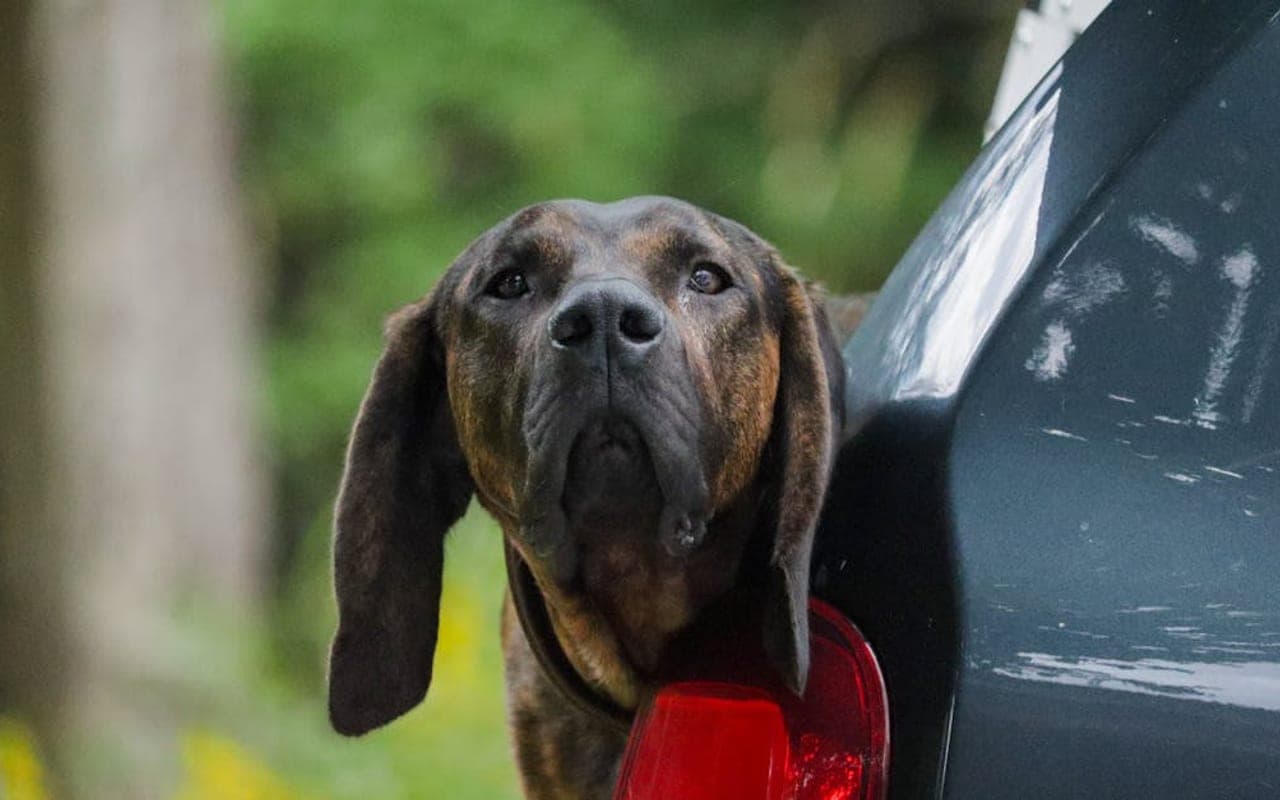
The Plott Hound is a hard-driving American scenthound — roughly 20 to 25 inches at the shoulder and 40 to 60 pounds — bred for one demanding job: trailing and baying big, dangerous game (historically bear and wild boar) over rough terrain for hours. It is the state dog of North Carolina and one of the few American hound breeds with a documented, traceable origin. The brindle coat (black, gold, russet, grey-flecked) is striking, but the coat is not why you should think hard before getting one. The drive is. The single most important thing to understand: a Plott is a gentle, affectionate, mellow housemate and a relentless, single-minded hunter, and both are the same dog. At home, well-exercised, they are loyal, people-oriented, good with their family, and calmer than many sporting breeds. On a scent, the working brain switches on — they are bold, tenacious, loud (a deep, carrying bay), and can be deaf to recall while tracking. This is not disobedience; it is 200+ years of selective breeding for exactly that focus. An off-leash Plott on a fresh trail is a Plott you may not see again for hours. They are also vocal by design — bred to bay so a hunter could locate them at distance — and they need substantial daily exercise. Under-exercised, a Plott becomes destructive and noisy; that is the most common reason they end up in rescue. Plotts are generally healthy and not over-bred, with relatively few breed-specific genetic problems compared to many purebreds — but the deep chest brings a serious, specific risk (bloat/GDV) that owners must plan for. Who the Plott Hound is right for: an active owner who will provide 60+ minutes of vigorous daily exercise, secure fencing, leash discipline, and tolerance for a loud, scent-driven dog. Who it is wrong for: anyone wanting an off-leash-reliable, quiet, low-energy companion, or anyone in noise-restricted housing — the bay is loud and instinctive.
Loyal | Alert | Intelligent
Loyal
A common Plott Hound temperament descriptor that should be interpreted alongside training, exercise, and household fit.
Alert
A common Plott Hound temperament descriptor that should be interpreted alongside training, exercise, and household fit.
Intelligent
A common Plott Hound temperament descriptor that should be interpreted alongside training, exercise, and household fit.
Owner note
Temperament labels are starting points, not guarantees. Meet the individual dog and ask about behavior history whenever possible.
Care essentials
How to care for a Plott Hound
What looking after one actually involves: exercise, grooming, food, training, and routine health.
ExerciseAs needed
- Moderately active breed needing 30-60 minutes of daily exercise.
GroomingAs needed
- Brush 2-3 times per week.
TrainingAs needed
- Consistent, patient training works best.
NutritionAs needed
- Feed high-quality dog food appropriate for age, size, and activity level.
Veterinary CareAs needed
- Annual wellness exams, vaccinations, dental care, and parasite prevention.
Health planning
Plott Hound health risks and screening
Every breed has individual health variation. Use this profile for planning and discuss medical decisions with a veterinarian.
Responsible ownership
Finding a Plott Hound responsibly
What to ask a breeder or rescue is the same conversation for every breed, so we keep it in one place and keep it current.
Health documentation, meeting the parents or foster, contracts and return support, and the warning signs worth walking away from.
Original purpose
Plott Hound history
History is useful when it explains today's behavior, coat, exercise needs, and training style.
Read the breed history
The Plott Hound is one of the few American breeds with a documented founding lineage. It traces to a German immigrant family, the Plotts, who arrived in North Carolina in the mid-1700s bringing Hanoverian-type scenthounds. Over roughly 200 years and several generations of the family, those dogs were bred specifically for big-game work — trailing and baying bear and wild boar through the Appalachian mountains — with very little outcrossing, which is why the breed remained relatively closed and functionally consistent. Unlike most hounds, the Plott was developed for courage and tenacity against dangerous quarry, not just nose. It was recognized by the United Kennel Club in 1946 and the American Kennel Club in 2006, and named the official state dog of North Carolina in 1989. That long, narrow working history is why the breed has comparatively few inherited disorders but an unmistakable, hardwired hunting drive.
Gallery
Plott Hound photos
Images are cropped consistently and loaded progressively to keep the page responsive.
Lower-page context
Plott Hounds in culture
Where the breed shows up in film, sport, work and folklore — the enjoyable part, once the practical questions are answered.
Fun facts
- The Plott Hound belongs to the Hound Group.
- The average lifespan of a Plott Hound is 12 to 14 years.
- Plott Hound dogs are valued for their loyal, alert, intelligent nature.
Plott Hound FAQs
How long do Plott Hounds live?
A healthy Plott Hound typically lives 12 to 14 years, which is solid for a medium-large hound. The breed has comparatively few inherited diseases because of its narrow, working-focused breeding history, so lifespan is driven more by management than genetics: preventing bloat, keeping the dog lean to protect hips, and avoiding serious field injuries. A lean, bloat-managed Plott often lives toward the top of that range.
Can a Plott Hound be trusted off-leash?
Generally no, and this is the most important honest answer for the breed. Plotts were bred for 200+ years to lock onto a scent and pursue it relentlessly, ignoring recall while tracking — that is selected behavior, not a training failure. Even well-trained Plotts can become deaf to commands on a fresh trail and travel miles across roads. Exercise on leash or in securely fenced areas; treat reliable off-leash freedom as the exception, not the plan.
Are Plott Hounds good family dogs?
Yes, with the right household. At home, a well-exercised Plott is affectionate, loyal, mellow, and generally good with its family and children. The caveats are practical: they are loud (bred to bay), they need substantial daily exercise or they become destructive, and their prey drive means caution around small pets and a need for early socialization. An active family that can meet the exercise and containment needs gets an excellent companion; a sedentary one does not.
How much exercise does a Plott Hound need?
Plan 60 to 90 minutes of vigorous daily exercise — long walks, jogging, hiking, or scent and tracking activities. This is a working big-game hound with real stamina; a couple of short potty walks is not enough. The single most common reason Plotts end up in rescue is under-exercise leading to destructiveness and excessive baying. Mental work (scent games, tracking) is as important as physical exercise for satisfying the working brain.
Why does my Plott Hound bay so loudly?
The bay is a hardwired working trait, not a behavior problem. Plotts were bred to bay loudly and continuously so a hunter could locate them and the cornered game at a distance — the volume and persistence are the point of the design. You can reduce nuisance baying with adequate exercise, mental stimulation, and training, but you cannot train it away entirely. In noise-sensitive or shared-wall housing, this is a serious compatibility consideration before buying.
What is bloat and why is it a Plott Hound concern?
Bloat (gastric dilatation-volvulus, GDV) is when the deep-chested dog's stomach fills with gas and twists, cutting blood supply — it is fatal within hours without emergency surgery. Plotts' deep chests put them at elevated risk. Reduce risk by feeding two or three smaller meals, avoiding hard exercise around mealtimes, and using a slow-feeder for gulpers. Discuss prophylactic gastropexy with your vet. Unproductive retching with a swelling belly is a drive-to-the-ER-now emergency.
Sources
These are the published sources this page draws on. Each opens in a new tab so you can check it yourself.
American Kennel Club
Plott Hound — breed standard and profile(opens in a new tab)Supports: Breed standard and recognition details.
Similar breeds to consider
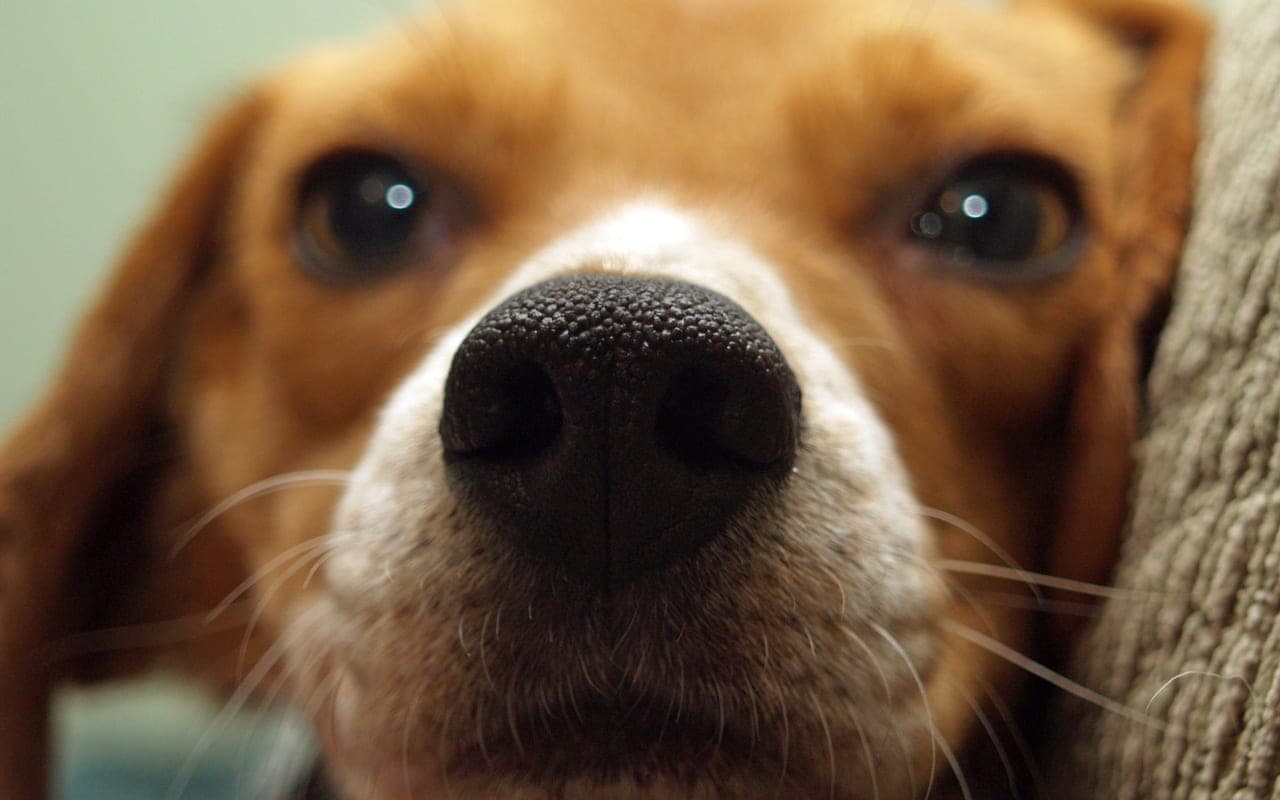
Beagle
Also in the Hound group, with different care and temperament tradeoffs.
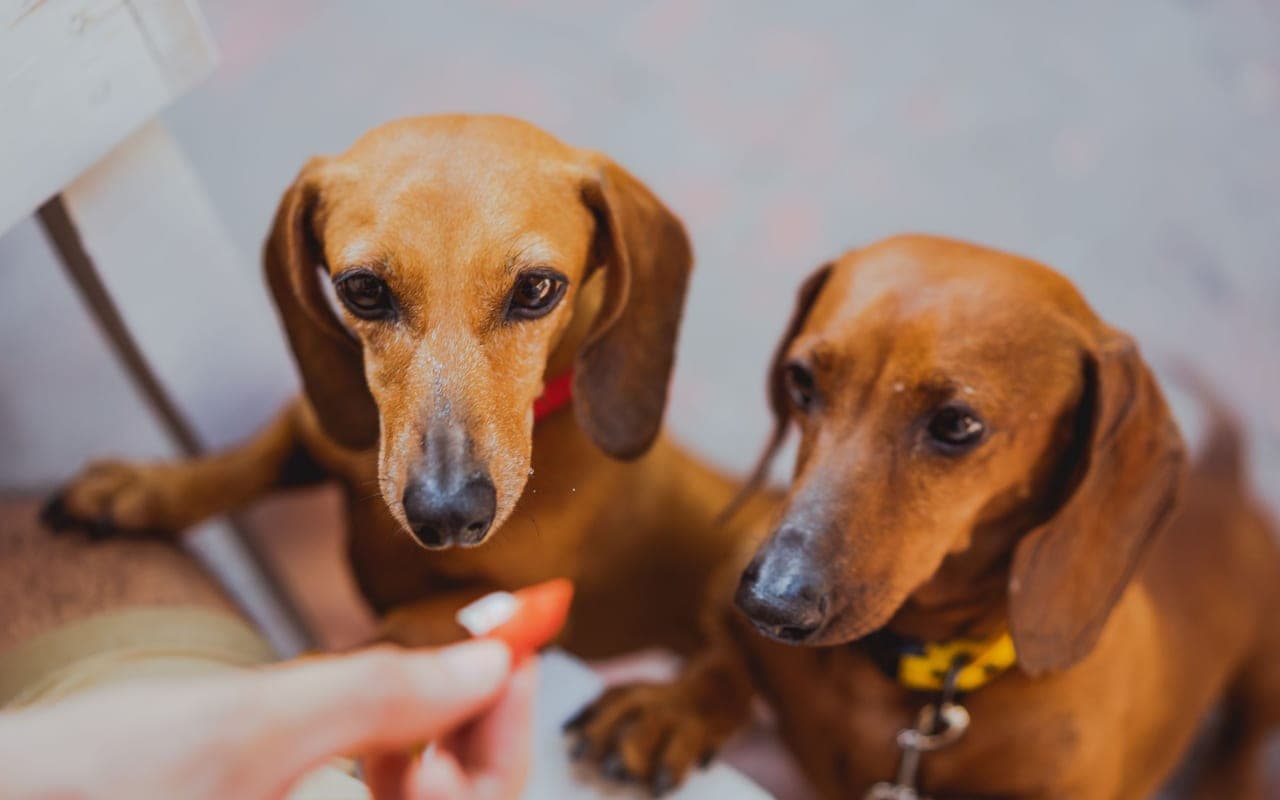
Dachshund
Also in the Hound group, with different care and temperament tradeoffs.
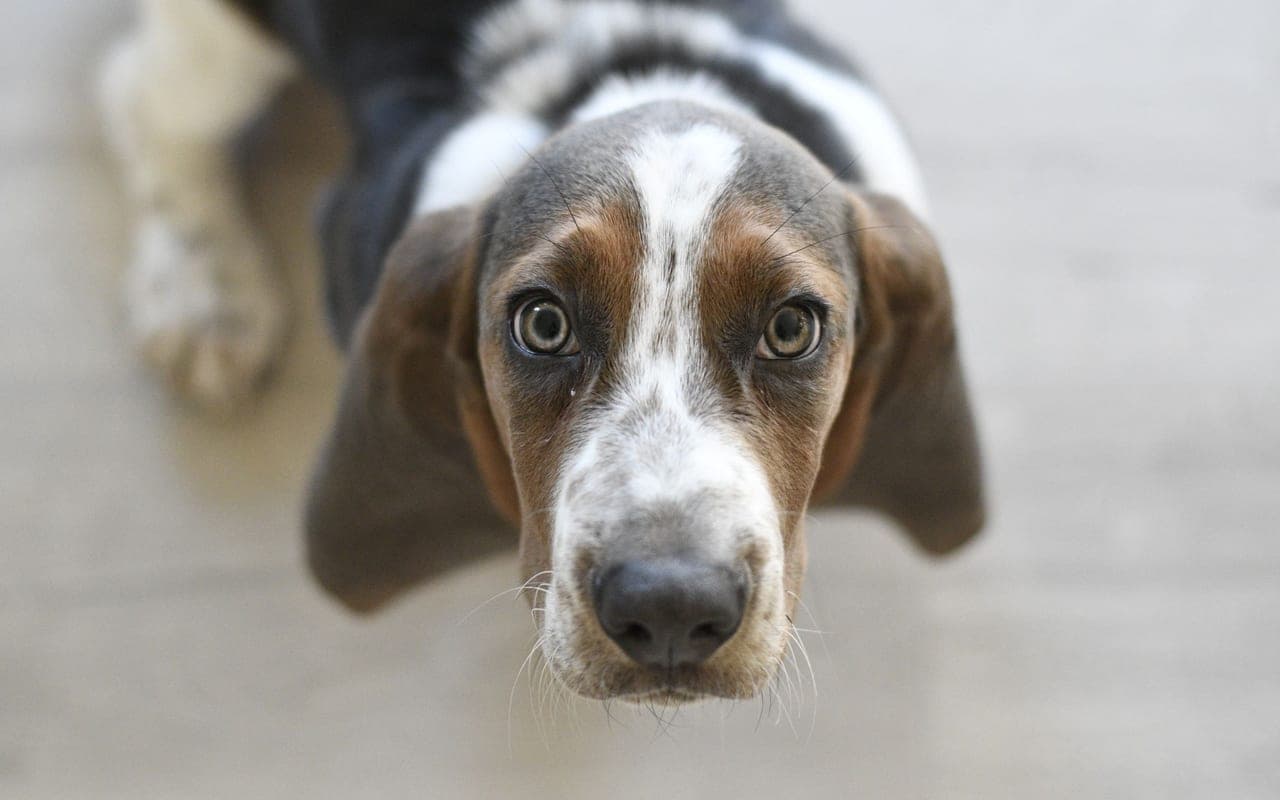
Basset Hound
Also in the Hound group, with different care and temperament tradeoffs.
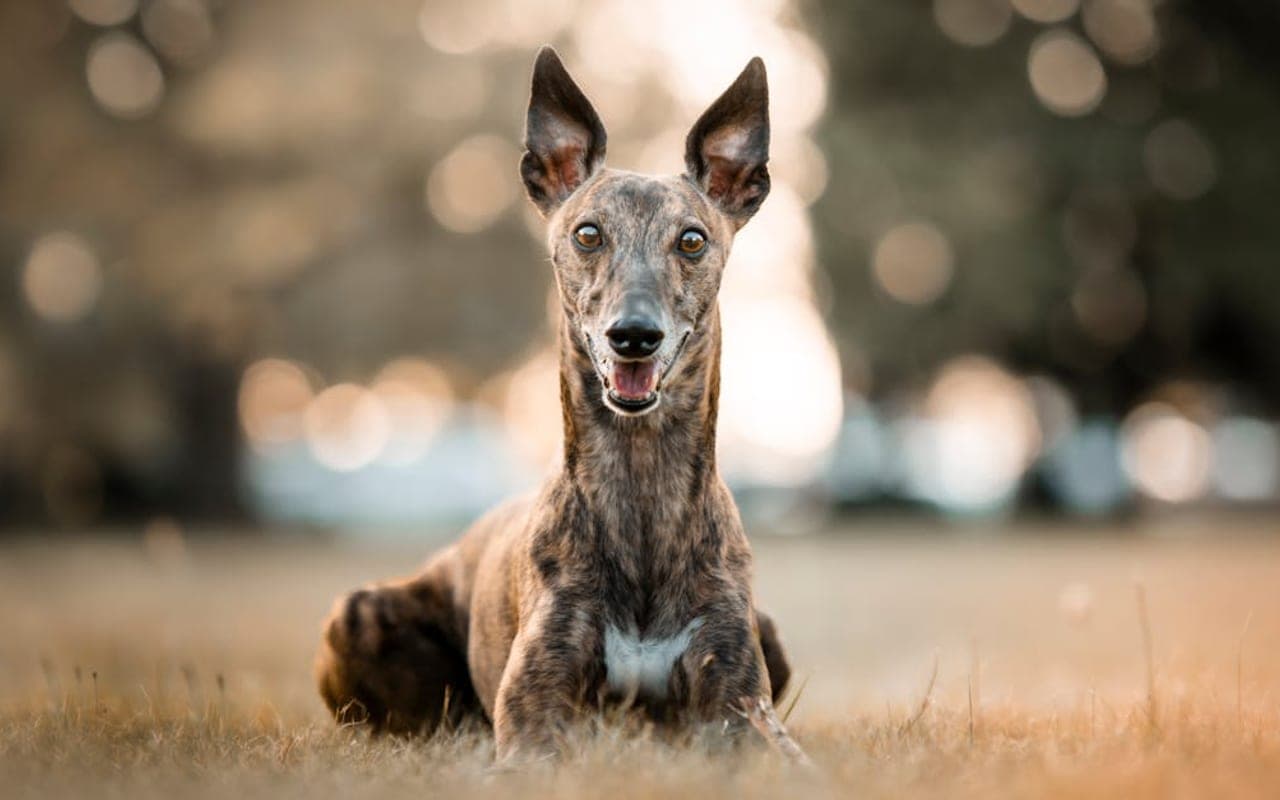
Greyhound
Also in the Hound group, with different care and temperament tradeoffs.
Explore More About Plott Hound
Dive deeper into everything Plott Hound — costs, care, and expert insights.
Large Dog Care Guide: Everything Over 50 lbs
Owning a large or giant breed dog means accepting one of biology's...
Puppy Teething & Biting: Timeline and What Actually Works
A puppy has all 28 deciduous ("baby") teeth by roughly eight weeks of age, and...
Considering a cat instead?
Browse Cats