
Foundation Stock Service group
Portuguese Pointer
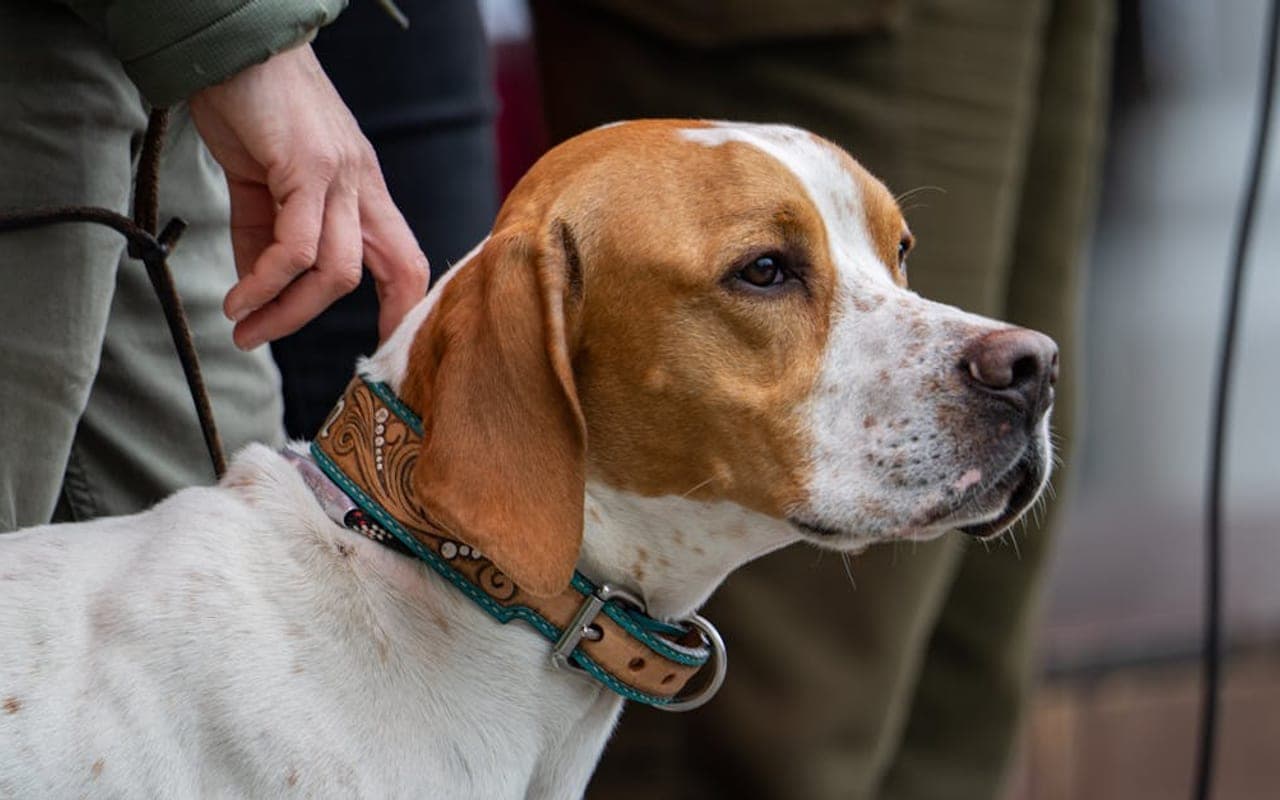
The Portuguese Pointer (Perdigueiro Português) is a medium-sized, square-built hunting breed — roughly 35-60 lb — and the defining thing to understand about it is intensity of attachment, not field range.



Size
35-60 lb
Lifespan
14 years
Exercise
30-60 minutes
Shedding
Moderate
Experience
Match to owner routine
Decision first
Is a Portuguese Pointer right for you?
Start with fit before history or trivia. These are ownership signals, not guarantees about any individual dog.
Best suited for
- Households with children.
- Homes with other compatible pets.
- Apartment homes with a consistent routine.
- Owners seeking a manageable daily exercise routine.
Think carefully if
- You need a dog with almost no daily routine.
- You cannot keep up with grooming and preventive care.
- The dog will spend most days alone without support.
Conditional fit
Apartment fit depends on exercise, enrichment, noise management, and outdoor access.
Daily reality
Portuguese Pointer commitment snapshot
Daily exercise
30-60 minutes
Match activity to age, health, weather, and training goals.
Coat care
Moderate
Grooming needs vary by coat, shedding, and lifestyle.
Time alone
Needs planning
Most dogs need gradual alone-time conditioning and support.
Structured facts
Portuguese Pointer at a glance
The measurements and traits that most affect day-to-day life with this breed.
Group
Foundation Stock Service
Weight
35-60 lb
Height
20-24 in
Lifespan
14 years
Temperament
Affectionate | Smart | Energetic
View all characteristics and methodology
Lifestyle fit
- Apartment suitability
- Likely fit
- Child friendliness
- Often good, with socialisation and supervision
- Other-pet fit
- Often compatible with careful introductions
Owner commitment
- Exercise
- 30-60 minutes
- Grooming
- Moderate
- Shedding
- Moderate
- Training
- Low
Environment and health
- Health risk
- Needs planning
Ratings combine structured breed data, visible breed fields, and editorial context. They are planning aids, not predictions for an individual dog.
Daily life
Portuguese Pointer temperament and behavior
The Portuguese Pointer (Perdigueiro Português) is a medium-sized, square-built hunting breed — roughly 35-60 lb — and the defining thing to understand about it is intensity of attachment, not field range. The Portuguese breed standard itself describes its affection as so strong it can be "inappropriate and inconvenient." This is a dog that wants physical closeness with its person to a degree most pointing breeds don't, which is a feature for the right owner and a genuine problem for someone who wants an independent kennel-and-field dog. Structurally it is a classic pointing gundog: a short, dense coat (yellow/fawn shades, sometimes with white), a distinctive squarish head, pendulous ears, and a hardy frame built for endurance over Portuguese hunting terrain. It works close to the handler with persistence and vivacity, is curious and busy, and can be somewhat haughty toward other dogs while remaining devoted to its people. Energy is high, especially in the first two years; this is not a dog that self-regulates on a quiet weekend. Temperament is affectionate, smart, sensitive, and handler-focused. The flip side of that sensitivity is that it does not tolerate harsh training or long isolation — it is bred to work in close partnership, and it suffers without one. Who the Portuguese Pointer is right for: an active owner or hunter who wants a velcro gundog, will provide 60-90 minutes of real daily exercise, accepts the floppy-ear infection-management routine, and wants a dog that lives in the house and in their lap. Who it is wrong for: anyone wanting an aloof, low-touch dog, a sedentary household, or a dog content with a fenced yard and little human contact. The breed is generally robust and long-lived (~14 years), with hips and ears as the practical health watch-points rather than a dramatic genetic disease.
Affectionate | Smart | Energetic
Affectionate
A common Portuguese Pointer temperament descriptor that should be interpreted alongside training, exercise, and household fit.
Smart
A common Portuguese Pointer temperament descriptor that should be interpreted alongside training, exercise, and household fit.
Energetic
A common Portuguese Pointer temperament descriptor that should be interpreted alongside training, exercise, and household fit.
Owner note
Temperament labels are starting points, not guarantees. Meet the individual dog and ask about behavior history whenever possible.
Care essentials
How to care for a Portuguese Pointer
What looking after one actually involves: exercise, grooming, food, training, and routine health.
ExerciseAs needed
- Moderately active breed needing 30-60 minutes of daily exercise.
GroomingAs needed
- Brush 2-3 times per week.
TrainingAs needed
- Consistent, patient training works best.
NutritionAs needed
- Feed high-quality dog food appropriate for age, size, and activity level.
Veterinary CareAs needed
- Annual wellness exams, vaccinations, dental care, and parasite prevention.
Health planning
Portuguese Pointer health risks and screening
Every breed has individual health variation. Use this profile for planning and discuss medical decisions with a veterinarian.
Responsible ownership
Finding a Portuguese Pointer responsibly
What to ask a breeder or rescue is the same conversation for every breed, so we keep it in one place and keep it current.
Health documentation, meeting the parents or foster, contracts and return support, and the warning signs worth walking away from.
Original purpose
Portuguese Pointer history
History is useful when it explains today's behavior, coat, exercise needs, and training style.
Read the breed history
The Portuguese Pointer is a very old Iberian hunting breed, with pointing-type dogs of its form depicted in Portuguese art and documented in royal kennels for centuries; it is considered one of the foundational pointing breeds and a likely ancestor influence on later English pointing dogs taken back by British wine-trade families from Portugal. It was bred to work closely with the hunter on partridge and other game over Portuguese terrain, which is why close-working partnership and intense handler attachment are baked into the breed rather than trained in. The breed declined sharply by the early 20th century and was rebuilt from surviving rural hunting stock by Portuguese enthusiasts, then later entered the AKC Foundation Stock Service in the United States. For owners, the relevant history is behavioral: centuries of selection for a dog that hunts in tight cooperation with its person is exactly why the modern Portuguese Pointer is so people-bonded and so poorly suited to a hands-off home.
Gallery
Portuguese Pointer photos
Images are cropped consistently and loaded progressively to keep the page responsive.
Lower-page context
Portuguese Pointers in culture
Where the breed shows up in film, sport, work and folklore — the enjoyable part, once the practical questions are answered.
Fun facts
- The Portuguese Pointer belongs to the Foundation Stock Service.
- The average lifespan of a Portuguese Pointer is 14 to 14 years.
- Portuguese Pointer dogs are valued for their affectionate, smart, energetic nature.
Portuguese Pointer FAQs
Is the Portuguese Pointer a healthy breed?
Relatively, yes. There are currently no widely recognized breed-specific genetic diseases and no priority national health-scheme requirements, and the breed is generally robust with a typical lifespan around 12-14 years. The honest qualifiers are hip dysplasia (the main inherited orthopedic concern, screened by OFA/PennHIP) and chronic ear infection (functionally near-universal because of ear shape). It is a sound breed whose realistic costs are joints and ears, not a dramatic hereditary disease.
How long do Portuguese Pointers live?
Generally 12 to 14 years, which is solid for a medium working breed. Longevity here is driven by fundamentals rather than managing a fatal breed condition: keeping the dog lean to protect at-risk hips, staying ahead of recurrent ear infections so they don't become chronic, and the usual vigilance for cancer in older dogs common to working breeds. A lean, well-exercised Portuguese Pointer from hip-screened parents typically lives a full life.
How much exercise does a Portuguese Pointer need?
A lot — plan 60 to 90 minutes of real daily activity, more in the first two years when energy peaks. This is a high-drive hunting breed bred for endurance and close fieldwork; leashed neighborhood walks alone will not satisfy it. Without structured exercise and mental work it becomes restless, vocal, and destructive, and its already-intense need for attention escalates. It suits an active or hunting household, not a sedentary one.
Is the Portuguese Pointer's affection really a problem?
It can be, and the breed standard is unusually honest about it — describing the affection as sometimes 'inappropriate and inconvenient.' In practice that means a dog that wants constant physical closeness, follows you everywhere, climbs into laps, and does poorly with long isolation. For someone who wants a devoted velcro companion this is the breed's best trait; for someone who wants an independent dog or who is away all day, it is a genuine source of separation stress and behavior problems. Match honestly.
Are Portuguese Pointers good with children and other dogs?
With children they are typically affectionate, sociable, and tolerant, though their high energy means supervision with young kids to prevent knock-downs during play. With other dogs they can be somewhat haughty or aloof rather than reliably social, so early socialization and managed introductions help. The bigger day-to-day caveat is energy and attachment, not aggression — a bored, under-exercised Portuguese Pointer is the harder problem than a poorly socialized one.
What is the most predictable recurring cost of owning this breed?
Ear care. The pendulous ear shape traps moisture and debris, making otitis externa the single most predictable recurring veterinary cost over the dog's life. The mitigation is cheap and routine: inspect ears 1-2 times a week, clean with a vet-recommended solution, and always dry the ears after swimming, bathing, or wet-weather work. Owners who build that 60-second habit largely avoid the problem; owners who don't pay for it repeatedly.
Sources
These are the published sources this page draws on. Each opens in a new tab so you can check it yourself.
American Kennel Club
Portuguese Pointer — breed standard and profile(opens in a new tab)Supports: Breed standard and recognition details.
Similar breeds to consider

Jagdterrier
Also in the Foundation Stock Service group, with different care and temperament tradeoffs.

Jindo
Also in the Foundation Stock Service group, with different care and temperament tradeoffs.
Kishu Ken
Also in the Foundation Stock Service group, with different care and temperament tradeoffs.

Romanian Carpathian Shepherd
Also in the Foundation Stock Service group, with different care and temperament tradeoffs.
Explore More About Portuguese Pointer
Dive deeper into everything Portuguese Pointer — costs, care, and expert insights.
Large Dog Care Guide: Everything Over 50 lbs
Owning a large or giant breed dog means accepting one of biology's...
Puppy Teething & Biting: Timeline and What Actually Works
A puppy has all 28 deciduous ("baby") teeth by roughly eight weeks of age, and...
Considering a cat instead?
Browse Cats