
The York Retreat: Animals as Medicine
In 1792, the dominant approach to mental illness in Europe was confinement and coercion. Patients at public asylums were frequently chained, beaten, and put on display for paying visitors. The theory, such as it was, held that the mentally ill were less than fully human and therefore could only be managed through force.
A Quaker merchant named William Tuke found this intolerable. In York, England, he established the York Retreat — a residential community for people with mental illness that operated on the radical premise that dignity, routine, and kindness were more therapeutic than chains. Among the features of the Retreat that distinguished it from every comparable institution of its era were domestic animals: rabbits, chickens, and other small creatures that patients could care for and interact with as part of their daily lives.
Tuke's insight was intuitive rather than empirical — he had no controlled studies, no cortisol measurements, no theoretical framework. But he had observation. Patients who tended animals were calmer. They were more engaged. Their relationships with the animals gave them a form of connection and responsibility that the sterile isolation of conventional asylums systematically denied. The York Retreat became internationally influential, inspiring asylum reform movements across Europe and North America. And its use of animals — almost an afterthought in historical accounts that focus on Tuke's broader reformist vision — planted a seed that would not fully germinate for another 170 years.
Freud's Chow Chow and the Open Secret of Therapy
Sigmund Freud is not generally remembered as an animal lover, but he was a devoted one. In the later years of his life, a Chow Chow named Jofi became a constant presence in his Vienna consulting room. Jofi would position herself near patients during sessions and, Freud noted, seemed to move closer to patients who were anxious or distressed — and farther away from those who were calm.
Freud made a practical observation that foreshadowed decades of subsequent research: patients seemed more open, more willing to speak freely, when Jofi was in the room. Children especially were less guarded. Freud speculated that the dog's non-judgmental presence lowered defenses in a way that the clinical authority of the analyst could not. He used Jofi as an informal signal of a patient's emotional state, noting that the dog's restlessness often preceded a patient's agitation by several minutes.
Freud never published a formal study of Jofi's therapeutic effects. The observations remained anecdotal. But they were recorded, and when researchers in the following generation began investigating animal-assisted therapy systematically, they found Freud had already identified the core mechanism.
Dr. Boris Levinson and the Accidental Discovery (1961)
The formal history of animal-assisted therapy is usually dated to 1961, and it begins with an accident. Boris Levinson was a child psychiatrist in New York who kept a dog named Jingles as a personal pet. One winter afternoon, a withdrawn and uncommunicative child arrived early for an appointment, before Levinson had time to send Jingles out of the office. The child, who had barely spoken in previous sessions, immediately engaged with the dog — talking to him, petting him, showing a warmth and openness that the therapeutic process had not been able to produce.
Levinson, trained as a scientist, recognized what he had seen. He began systematically incorporating Jingles into sessions with difficult-to-reach children, observing and documenting the results. In 1962 he published a paper in Mental Hygiene titled (The Dog as Co-Therapist), coining a term and launching a field. His subsequent book Pet-Oriented Child Psychotherapy (1969) gave the field its first comprehensive theoretical framework.
The reaction from colleagues was initially skeptical — Levinson was reportedly asked at one conference how Jingles split his fees — but the observations were too consistent to dismiss. Within a decade, researchers across disciplines were replicating and extending his findings.
Elaine Smith and the First Formal Program (1976)
The transition from clinical observation to organized practice came in 1976, when a registered nurse named Elaine Smith made a connection she could not ignore. Smith had observed that a chaplain who visited patients at Rusk Institute of Rehabilitation Medicine in New York regularly brought a Golden Retriever named Beautiful Joe. She watched patients respond to Beautiful Joe in ways they did not respond to human visitors — relaxing visibly, engaging more readily, showing affect that illness and institutionalization had suppressed.
Smith founded Therapy Dogs International in 1976, the first organization dedicated to registering, certifying, and insuring therapy dog teams for volunteer work in hospitals, nursing homes, and other care settings. The founding of TDI established a framework that distinguished therapy dogs from personal pets: formal evaluation, training standards, handler commitment, and liability coverage. It made animal-assisted therapy replicable and accountable rather than dependent on individual intuition and opportunity.
The distinction between therapy animals, emotional support animals, and service animals — a distinction that would become legally and socially significant over the following decades — begins to clarify here. A therapy dog works with many people under the guidance of a handler, in institutional settings. An emotional support animal provides comfort to its specific owner. A service animal, like a guide dog, is trained to perform specific tasks for a single person with a disability. The three categories have different legal statuses, different training requirements, and different social roles — but they share a common ancestor in the observations made at the York Retreat in 1792.
The Science Catches Up
By the 1990s, the anecdotal observations of Tuke, Freud, and Levinson were being tested against hard physiological data. Research consistently showed that interaction with a therapy dog reduced cortisol (the primary stress hormone) in both children and adults. Blood pressure fell. Heart rate stabilized. In one landmark study, children reading aloud to trained therapy dogs made significantly faster progress than children reading to adults or alone — the dogs' non-judgmental attention removed the performance anxiety that impedes struggling readers.
The R.E.A.D. (Reading Education Assistance Dogs) program, launched by Intermountain Therapy Animals in Salt Lake City in 1999, systematized this finding into a structured literacy program that has since spread to hundreds of schools and libraries worldwide. Children who struggle to read in front of teachers and classmates will read to a dog — because the dog does not correct them, does not express disappointment, and does not keep score.
Research on therapy animals in hospital settings showed measurable reductions in pain medication requirements among patients visited by therapy dog teams. Studies in psychiatric settings documented reduced anxiety, improved mood, and decreased isolation among patients with severe mental illness. The data was accumulating faster than the institutions could absorb it.
Therapy Animals Expand Their Domain
The late 1990s and 2000s saw therapy animal programs extend into settings that would have been unimaginable a generation earlier. Courtrooms in the United States began allowing facility dogs — specifically trained animals handled by professionals — to accompany child witnesses during testimony, reducing the trauma of recounting abuse or violence in a formal legal setting. Research showed that the presence of a dog did not influence the content of testimony but significantly reduced the physiological stress markers in witnesses.
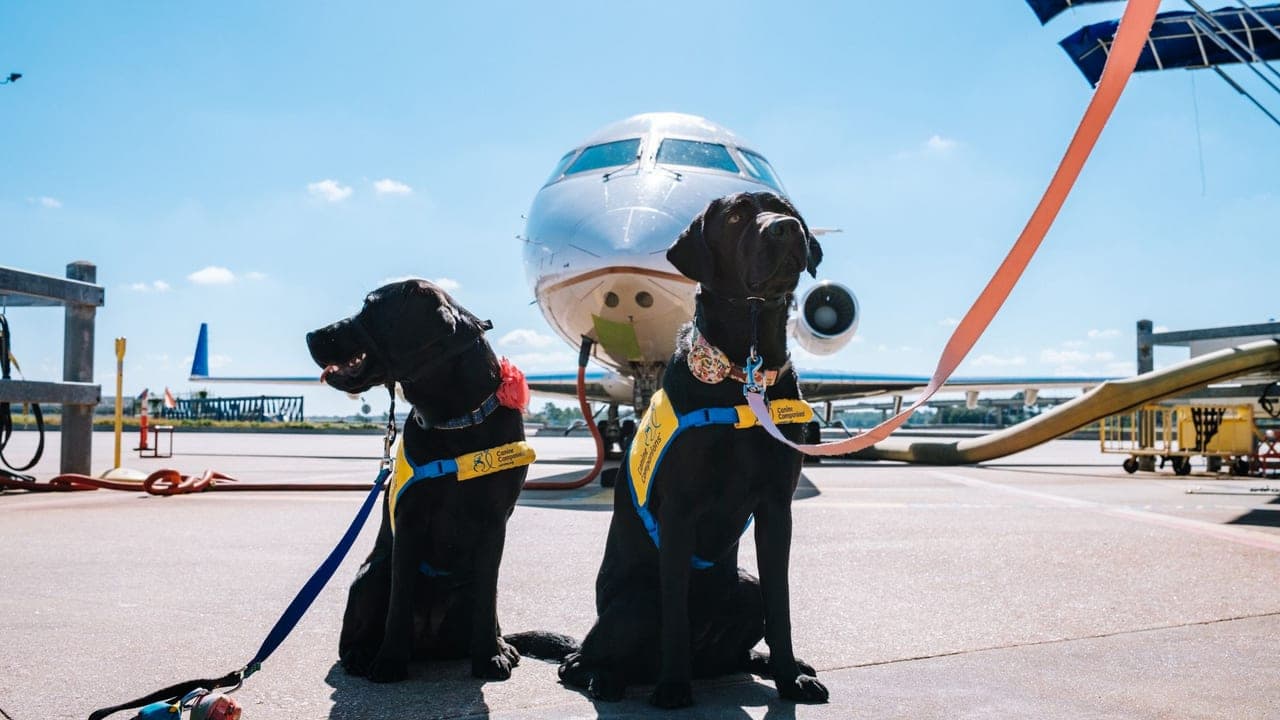
Airports introduced therapy animal programs to address the documented phenomenon of travel anxiety. Los Angeles International Airport's Wag Brigade, launched in 2013, became one of the most publicized examples — teams of certified therapy animals (including, memorably, a therapy pig named LiLou) deployed through terminals to reduce passenger stress. Similar programs now operate at airports in Chicago, San Jose, Minneapolis, and dozens of other cities worldwide.
Schools facing trauma, crisis, or elevated student anxiety began deploying therapy dogs as a first-response resource. After the 2012 Sandy Hook shooting, therapy dog teams were deployed to the community within 48 hours. After Hurricane Katrina, after wildfires, after mass casualty events of every kind, therapy animals became part of the standard crisis response toolkit — not as a luxury, but as an evidence-based intervention.
The Pandemic and What Came After
The COVID-19 pandemic of 2020 created conditions that might have been designed in a laboratory to demonstrate the value of therapy animals — and simultaneously made their in-person work impossible. Animal-assisted therapy programs pivoted to virtual sessions where handlers held their animals up to cameras, with measurable but reduced effectiveness. Demand for pet adoption surged as people sought the comfort that therapy programs had documented for decades. And when therapy animal programs resumed in-person visits as vaccination rates rose, they returned to institutions that were hungry for exactly what they offered.
The pandemic also accelerated research into animal-assisted therapy's mechanisms and limitations. A 2021 meta-analysis of 49 studies confirmed significant benefits across anxiety, depression, and pain outcomes, while also noting that study quality varied widely and that standards for measuring outcomes needed improvement. The field is maturing — moving from the enthusiasm of early adoption to the harder work of rigor and replication.
The journey from William Tuke's rabbits in 1792 to a certified therapy dog wearing a vest in a children's hospital in 2024 spans more than two centuries of accumulated observation, accidental discovery, institutional resistance, scientific validation, and expanding application. It is, in the end, a story not about animals but about what happens to humans in their presence — and why that has always mattered, even before we had words for it.
For more on the breeds most suited for therapy work, visit our Golden Retriever and Labrador Retriever profiles. Or explore the related history of Guide Dogs and their century of partnership.
Frequently Asked Questions
What is the difference between a therapy dog, an emotional support animal, and a service dog?
A therapy dog is trained and certified to work with multiple people in institutional settings (hospitals, schools, nursing homes) under a handler's supervision. An emotional support animal provides comfort specifically to its owner and requires documentation from a mental health professional. A service dog is trained to perform specific tasks for a single person with a disability and has the broadest legal access rights. Only service dogs are protected under the Americans with Disabilities Act for public access.
Did Sigmund Freud really use his dog in therapy sessions?
Yes. Freud's Chow Chow Jofi was a regular presence in his Vienna consulting room in the 1930s. Freud noted that patients, especially children, were more open when Jofi was present and that the dog seemed to move toward distressed patients. He considered Jofi a useful informal indicator of patient emotional state, though he never published a formal study of the observations.
When was the first formal therapy dog program established?
Therapy Dogs International, founded by nurse Elaine Smith in 1976, is generally recognized as the first formal therapy dog organization, establishing certification, training standards, and liability frameworks for volunteer teams visiting hospitals and care settings.
Does reading to a dog actually help children improve literacy?
Yes, according to multiple studies. The R.E.A.D. (Reading Education Assistance Dogs) program, launched in 1999, has documented consistent improvements in reading fluency and confidence among struggling readers who practice with therapy dogs. The non-judgmental, attentive presence of a dog appears to reduce the performance anxiety that impedes reading progress in classroom settings.
Author & Reviewer
Related Reading
Continue the History
Understand Your Companion
Find Your Match
Ready to find your perfect companion?
Take the Breed Quiz →