
Working group
Boerboel
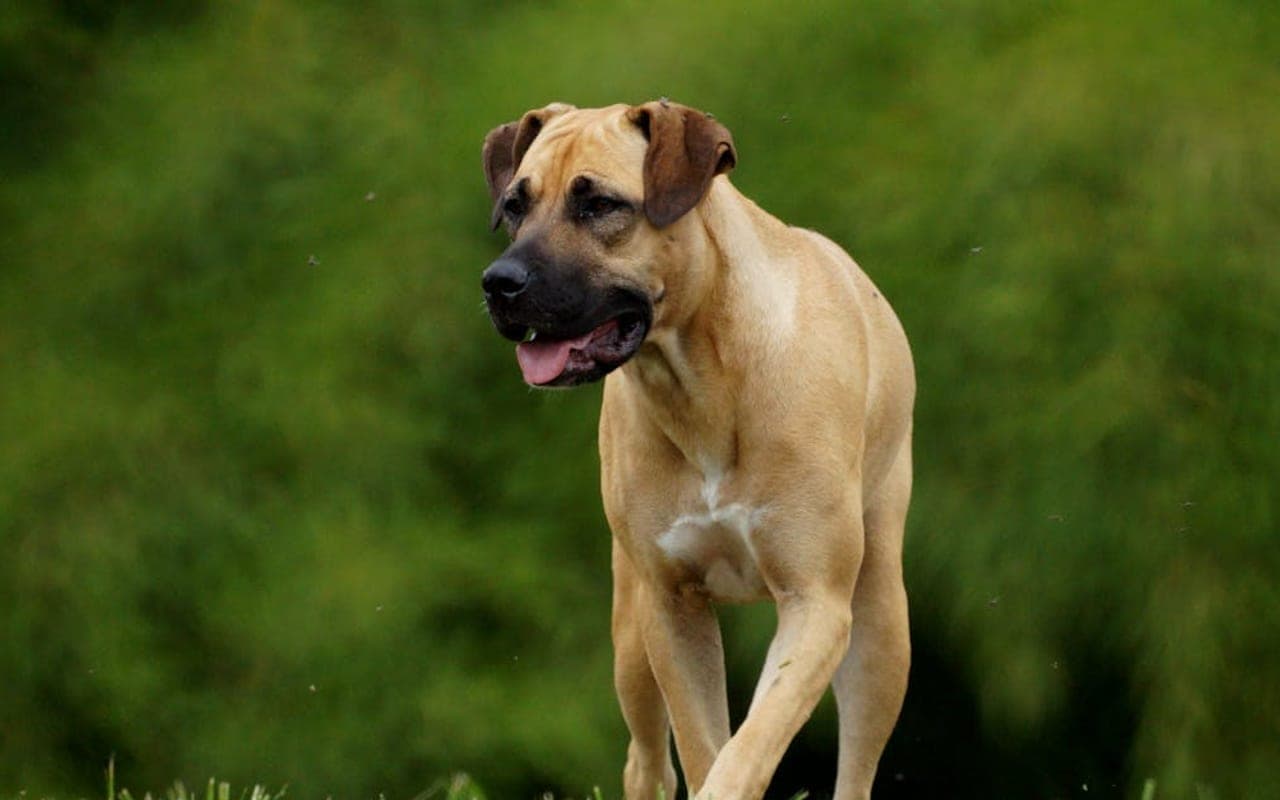
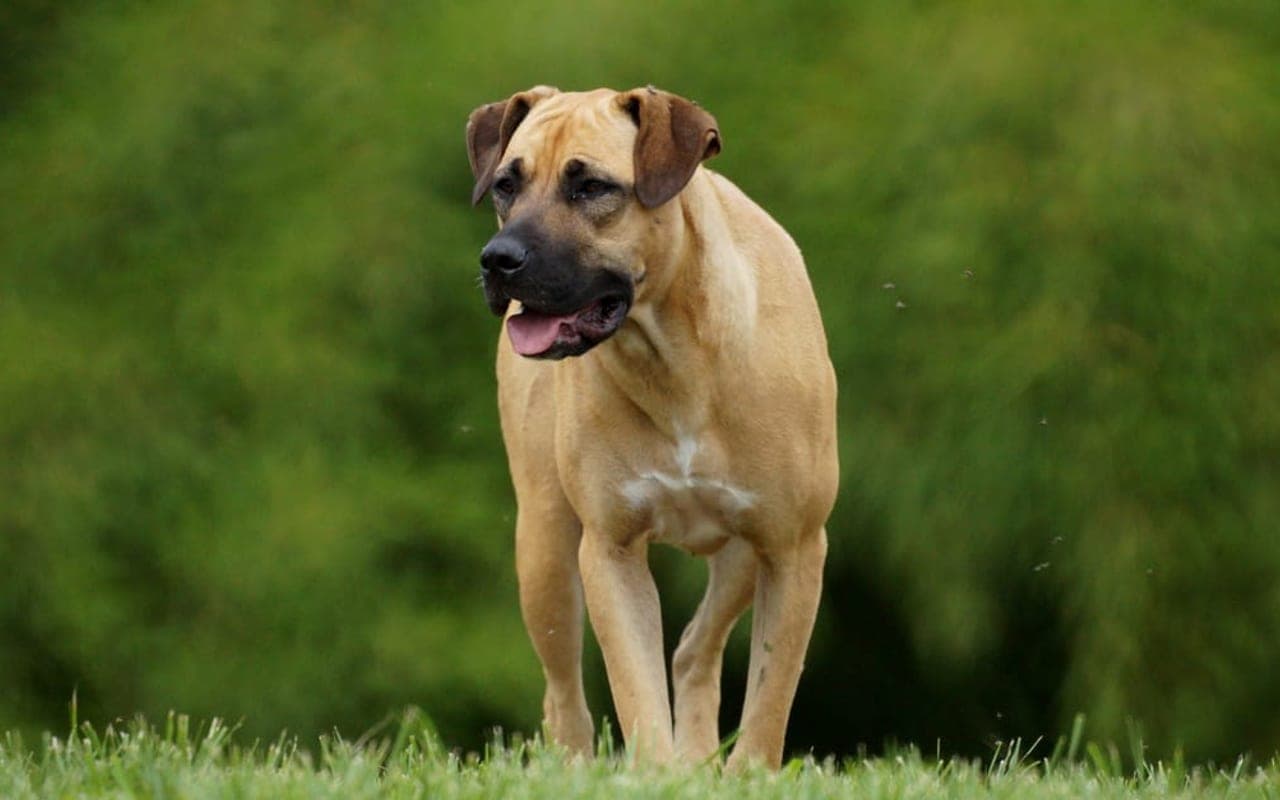
The Boerboel is a South African farm mastiff bred to be the last line of defense on remote homesteads — to hold a leopard or a baboon, to deter intruders, and to do it with judgment rather than indiscriminate aggression.


Size
110-198 lb
Lifespan
9-11 years
Exercise
30-60 minutes
Shedding
Moderate
Experience
Match to owner routine
Decision first
Is a Boerboel right for you?
Start with fit before history or trivia. These are ownership signals, not guarantees about any individual dog.
Best suited for
- Households with children.
- Homes with other compatible pets.
- Apartment homes with a consistent routine.
- Owners seeking a manageable daily exercise routine.
Think carefully if
- You need a dog with almost no daily routine.
- You cannot keep up with grooming and preventive care.
- The dog will spend most days alone without support.
Conditional fit
Apartment fit depends on exercise, enrichment, noise management, and outdoor access.
Daily reality
Boerboel commitment snapshot
Daily exercise
30-60 minutes
Match activity to age, health, weather, and training goals.
Coat care
Moderate
Grooming needs vary by coat, shedding, and lifestyle.
Time alone
Needs planning
Most dogs need gradual alone-time conditioning and support.
Structured facts
Boerboel at a glance
The measurements and traits that most affect day-to-day life with this breed.
Group
Working
Weight
110-198 lb
Height
22-27 in
Lifespan
9-11 years
Temperament
Confident | Intelligent | Calm
View all characteristics and methodology
Lifestyle fit
- Apartment suitability
- Likely fit
- Child friendliness
- Often good, with socialisation and supervision
- Other-pet fit
- Often compatible with careful introductions
Owner commitment
- Exercise
- 30-60 minutes
- Grooming
- Moderate
- Shedding
- Moderate
- Training
- Moderate
Environment and health
- Health risk
- Needs planning
Ratings combine structured breed data, visible breed fields, and editorial context. They are planning aids, not predictions for an individual dog.
Daily life
Boerboel temperament and behavior
The Boerboel is a South African farm mastiff bred to be the last line of defense on remote homesteads — to hold a leopard or a baboon, to deter intruders, and to do it with judgment rather than indiscriminate aggression. That working brief defines the dog you are considering. A Boerboel is a large, blocky, muscular molosser standing roughly 22-27 inches at the shoulder and weighing about 110-200 lb (50-90 kg) depending on sex and line. It is, for its mass, one of the more agile mastiff types. The Boerboel is right for you if you are an experienced large-dog owner who wants a confident, calm, intelligent guardian, has the physical capacity to control 150 lb of dog on a leash, will commit to early and lifelong socialization and training, and lives somewhere a powerful protective breed is legal and insurable. With that owner, a Boerboel is stable, deeply bonded to its family, gentle with its own children, and an effective deterrent. The Boerboel is wrong for you if this is a first dog, if you cannot physically manage a dog that outweighs many adults, if you want an off-the-shelf friendly dog for a busy social household, or if you have not checked local breed legislation and homeowner-insurance implications — both are real and both can force a rehoming after you are attached. An under-socialized or under-trained Boerboel is not a quirky dog with bad manners; it is a serious liability. This breed rewards competence and punishes improvisation.
Confident | Intelligent | Calm
Confident
A common Boerboel temperament descriptor that should be interpreted alongside training, exercise, and household fit.
Intelligent
A common Boerboel temperament descriptor that should be interpreted alongside training, exercise, and household fit.
Calm
A common Boerboel temperament descriptor that should be interpreted alongside training, exercise, and household fit.
Owner note
Temperament labels are starting points, not guarantees. Meet the individual dog and ask about behavior history whenever possible.
Care essentials
How to care for a Boerboel
What looking after one actually involves: exercise, grooming, food, training, and routine health.
ExerciseAs needed
- Moderately active breed needing 30-60 minutes of daily exercise through walks, play, and mental stimulation.
GroomingAs needed
- Regular grooming needed — brush 2-3 times per week and bathe monthly.
TrainingAs needed
- Moderately trainable — consistent, patient training with positive methods works best.
NutritionAs needed
- Feed a high-quality dog food appropriate for their age, size, and activity level. Monitor portions to prevent obesity.
Veterinary CareAs needed
- Annual wellness exams, core vaccinations, dental care, and parasite prevention. Breed-specific health screenings as recommended by your vet.
Health planning
Boerboel health risks and screening
Every breed has individual health variation. Use this profile for planning and discuss medical decisions with a veterinarian.
Responsible ownership
Finding a Boerboel responsibly
What to ask a breeder or rescue is the same conversation for every breed, so we keep it in one place and keep it current.
Health documentation, meeting the parents or foster, contracts and return support, and the warning signs worth walking away from.
Original purpose
Boerboel history
History is useful when it explains today's behavior, coat, exercise needs, and training style.
Read the breed history
The Boerboel was developed by Dutch, German, and Huguenot settlers (the Boers) on the South African frontier from the 1600s onward. Settlers brought European mastiff- and bulldog-type dogs and crossed them with local African dogs, then selected ruthlessly for one job: a single, versatile farm dog tough and brave enough to hold large predators — leopards, hyenas, baboons — and to guard isolated homesteads against intruders, yet stable enough to live among the family and livestock it protected. Function, not appearance, drove the breed for centuries. The Boerboel nearly disappeared in the mid-20th century as commercial farming and urbanization reduced the need for homestead guardians and indiscriminate crossbreeding diluted the type. A deliberate recovery effort in South Africa from the 1980s onward, including breed surveys and registries, rebuilt the modern Boerboel. The American Kennel Club recognized it in the Working Group in 2015. The result is a guardian breed whose protectiveness, size, and discernment are intentional, working inheritances — not exaggerations to be trained away.
Gallery
Boerboel photos
Images are cropped consistently and loaded progressively to keep the page responsive.
Lower-page context
Boerboels in culture
Where the breed shows up in film, sport, work and folklore — the enjoyable part, once the practical questions are answered.
Fun facts
- The Boerboel belongs to the Working Group.
- The average lifespan of a Boerboel is 9 to 11 years.
- Boerboel dogs are valued for their confident, intelligent, calm nature.
Boerboel FAQs
How long do Boerboels live?
A Boerboel typically lives 9-11 years, which is normal for a dog of this mass — giant breeds are simply shorter-lived than small ones. What shortens it further is rarely general aging; it is usually a bloat episode that is not caught in time, advanced hip or elbow disease that erodes mobility, or a cardiac problem. Keeping the dog lean its whole life, screening the parents' hips, elbows, and heart, and managing feeding to prevent bloat are the levers that actually move lifespan in this breed.
Is a Boerboel a good first dog?
No. This is a 110-200 lb guardian breed bred for centuries to make protective decisions and physically confront threats. In skilled hands it is stable and controllable, but a first-time owner typically lacks the timing, consistency, and physical control to socialize and manage that correctly, and the failure mode is not a badly behaved pet — it is a dangerous, possibly un-insurable, possibly legally restricted liability. Start with an experienced large-breed mentor, a guardian-savvy trainer from week one, and a realistic look at local breed laws before committing.
Are Boerboels good with children?
With their own family's children, a well-bred, well-socialized Boerboel is typically gentle, patient, and protective. The realistic caveats are size and supervision: a dog this heavy can injure a small child by accident simply by moving or leaning, and the breed's guarding instinct means interactions with visiting children and their friends must always be managed and supervised. Raise the dog with structured exposure to children from puppyhood, never leave young kids unsupervised with any large guardian breed, and the family bond is genuine and strong.
How much exercise does a Boerboel need?
About 45-60 minutes a day of walking and structured activity for an adult — enough to keep a powerful dog fit and mentally settled, but this is not a marathon breed. The critical exception is the puppy: do not jog, force-run, or stair-climb a Boerboel before roughly 18 months, because high-impact exercise on a fast-growing giant directly worsens hip and elbow dysplasia. Build muscle slowly with controlled walks and lean body weight; the joints you protect in the first 18 months determine the next decade.
What does it really cost to own a Boerboel?
Beyond purchase, budget realistically for the things this breed forces: professional guardian-breed training (often $1,000+ in the first year), giant-breed quantities of quality food, larger doses of any medication, and a serious risk of high-cost orthopedic care — hip or elbow surgery can run $4,000-$7,000+ per joint. Add the hidden costs many owners miss: higher homeowner-insurance premiums or outright policy refusal for the breed, and possible breed-specific legislation. Verify insurance and local law before you buy, not after you have bonded.
Do Boerboels have eye problems?
Yes — eyelid conformation faults are common enough that the breed club recommends eyelid screening. Entropion rolls the eyelid inward so the lashes scratch the cornea; ectropion sags it outward and exposes the eye to irritation and infection. Both cause chronic discomfort and, untreated, corneal damage, and both are corrected surgically. Practically, do a weekly check for redness, squinting, excess tearing, or visible eyelid rolling, and choose a puppy from parents with clear eye evaluations — it is a frequent and avoidable Boerboel expense.
Sources
These are the published sources this page draws on. Each opens in a new tab so you can check it yourself.
American Kennel Club
Boerboel — breed standard and profile(opens in a new tab)Supports: Breed standard and recognition details.
Similar breeds to consider

Siberian Husky
Also in the Working group, with different care and temperament tradeoffs.

Rottweiler
Also in the Working group, with different care and temperament tradeoffs.

Boxer
Also in the Working group, with different care and temperament tradeoffs.

Akita
Also in the Working group, with different care and temperament tradeoffs.
Explore More About Boerboel
Dive deeper into everything Boerboel — costs, care, and expert insights.
Considering a cat instead?
Browse Cats