
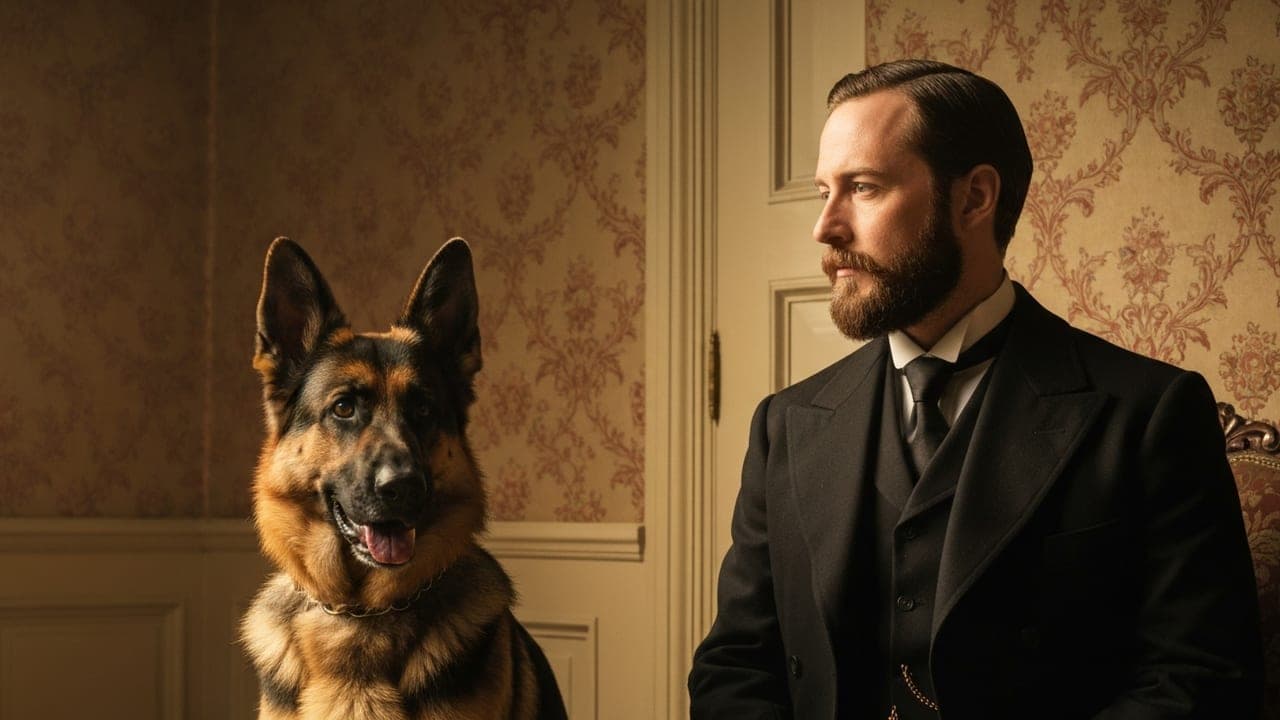
A Queen's Obsession That Changed Everything
When Queen Victoria ascended to the throne in 1837, she already owned a King Charles Spaniel named Dash, whom she adored with an intensity that Victorian propriety barely contained. On the day of her coronation, after hours of ceremony in Westminster Abbey, the 18-year-old queen rushed home to give Dash his bath. That image — the newly crowned monarch of the British Empire abandoning her regal composure to wash a small spaniel — captures perfectly how dogs would transform British culture over the next six decades.
Victoria would own 36 dogs by the time of her death in 1901. She kept detailed journals about their personalities, commissioned portraits of them from Edwin Landseer (who became the era's most celebrated animal painter), and had their effigies cast in bronze for the grounds of Windsor Castle. When her beloved Greyhound, Eos, died in 1844, she was devastated. When Noble the Collie died in 1887, the queen's grief was public and unrestrained. This was new behavior for a monarch, and the British public took note.
From Working Animal to Family Member
Before Victoria's reign, dogs occupied a more utilitarian place in British society. Aristocrats kept hunting hounds. Farmers kept sheepdogs. The poor kept ratters. The notion of a dog as an emotional companion — as a being deserving grief at its death — was largely absent from mainstream culture. Darwin himself, in his 1872 The Expression of the Emotions in Man and Animals, noted that dogs displayed what appeared to be genuine affection, guilt, and even something resembling grief. His observations gave scientific weight to what Victoria's behavior had already signaled socially: dogs were not mere tools.
Industrialization accelerated this transformation. As Britain urbanized throughout the mid-19th century, the practical roles that had justified dog-keeping declined. You didn't need a herding dog in a Manchester row house. But you might desperately want companionship in the isolating anonymity of a growing city. The middle class, newly prosperous and anxious to demonstrate refinement, discovered that owning a purebred dog conferred social status while also satisfying genuine emotional needs.
By the 1860s, London's Regent Street was lined with pet shops selling small dogs to middle-class customers. Illustrated papers ran cartoons and stories featuring dogs with distinct personalities. Children's books began populating themselves with loyal canine protagonists. A cultural feedback loop had begun.
The Kennel Club and the Science of Breeding
On April 4, 1873, twelve men met at a tavern in London and founded the Kennel Club — an event with consequences for dogs that persist to this day. Their stated purpose was to establish a studbook for purebred dogs and standardize breed characteristics. The practical effect was the codification of what a "proper" dog of each breed should look and behave like, enforced through a show system that rewarded conformity to those standards.
The first properly organized dog show had taken place at Newcastle upon Tyne in 1859, drawing entries of Pointers and Setters from sporting gentlemen. By 1862, a London show attracted more than a thousand dogs across dozens of classes. By the time the Kennel Club formalized things, dog shows had become social events — places to see and be seen, to debate breed merits, and to purchase puppies from breeders whose stock had been publicly evaluated.
The Kennel Club's studbook, first published in 1874, registered 40 breeds. Within two decades, that number had more than doubled. Breeds were standardized, named, and in some cases essentially invented to fill niches in the show ring. The Yorkshire Terrier, for example, was developed in the 1860s-70s by working-class weavers in Yorkshire and Huddersfield, then refined into a show dog whose coat became longer and silkier with each generation. The Pomeranian was bred down from large Spitz-type sled dogs to the tiny companion that Victoria famously kept; her preference for smaller specimens directly influenced the breed's direction.
Veterinary Medicine Comes of Age
Dogs couldn't become family members without someone to care for them when they were sick. The Royal Veterinary College had been founded in London in 1791, but for most of the early 19th century it focused primarily on horses, which were industrial infrastructure. As dogs became companions rather than tools, demand grew for medical care that treated them as patients rather than livestock.
The first purpose-built small-animal veterinary hospital in Britain opened in the 1880s. The profession began developing specific expertise in canine conditions. Distemper, which killed enormous numbers of pet dogs throughout the century, became the focus of serious scientific inquiry. The anti-dog poisoning campaign of the 1860s-70s arose partly from this new sentiment: rat catchers commonly laid strychnine bait that killed pet dogs along with pests, and the growing dog-owning public began lobbying against the practice with real political force.
The Royal Society for the Prevention of Cruelty to Animals, founded in 1824, expanded its focus throughout the Victorian era to include companion animals. Its prosecutions of dog-beaters and dog-fighters were widely reported in the press, reinforcing the message that dogs had a moral claim on human treatment. By 1891, the RSPCA was receiving thousands of complaints annually about dog mistreatment in London alone.
The Library of Dogs
The Victorian era produced an extraordinary body of dog literature. John Henry Walsh, writing under the pen name "Stonehenge," published The Dog in Health and Disease in 1859, the first comprehensive English-language guide to dog breeds and their care. It went through multiple editions, each expanding to cover new recognized breeds. Gordon Stables, a naval surgeon turned dog writer, published dozens of books on specific breeds throughout the 1880s and 1890s, each combining practical advice with sentimental narrative.
Darwin's observations on dogs appeared throughout his work, most systematically in The Expression of the Emotions. He corresponded with dog breeders and trainers, using their empirical knowledge of heredity to support his evolutionary arguments. The relationship was mutual: Darwin's framework gave breeders a conceptual language for what they were doing when they selected for traits across generations.
Victorian dog portraits deserve their own mention. Landseer's paintings — including the famous Dignity and Impudence (1839), showing a Bloodhound and a West Highland Terrier peering from a kennel — were reproduced as mass prints and hung in middle-class homes across Britain. Dogs were depicted with expressions and poses that anthropomorphized them deliberately, presenting them as emotional beings worthy of the viewer's sympathy.
Legacy: What the Victorians Built
By 1901, the framework that would govern human-dog relationships for the next 150 years was fully in place. Breed standards, kennel clubs, dog shows, veterinary medicine for companion animals, legal protections against cruelty, a publishing industry devoted to dog care, the expectation of dogs as household members — all of it crystallized during Victoria's reign.
The shadow side of this legacy was also established in the Victorian era. Breeding for appearance over health, the creation of extreme physical traits through selective pressure, the social stratification of dogs by breed and price — these patterns were visible even then to critics. A letter to The Times in 1891 complained that fashionable dog breeding had produced animals "tortured by their own bodies for the amusement of the show ring." The brachycephalic crisis affecting Bulldogs and flat-faced dogs in the 21st century has roots in Victorian breeding decisions that prioritized wrinkled, compressed faces as marks of breed type.
But the central transformation was positive and profound. The Victorian era established that dogs were not merely useful but beloved, not merely owned but mourned. That understanding — sentimental in origin, backed eventually by neuroscience and ethology — is the foundation of the modern human-animal bond. It began, improbably but fittingly, with a newly crowned queen abandoning her coronation to give her spaniel his bath.
Frequently Asked Questions
Q: How many dogs did Queen Victoria own?
Victoria owned 36 dogs at the time of her death in 1901, across many breeds including Collies, Pomeranians, Greyhounds, and Dachshunds. Her favorite was reportedly a Dachshund named Waldmann, though her Collie Noble and her early Spaniel Dash also received particular devotion.
Q: When was the Kennel Club founded and what did it do?
The Kennel Club was founded on April 4, 1873, by twelve men meeting in London. It established the first formal studbook for purebred dogs, created breed standards specifying what each recognized breed should look and behave like, and organized the show system that enforced those standards competitively.
Q: How did industrialization affect dogs' roles in society?
Industrialization reduced the practical need for working dogs in herding, hunting, and pest control as Britain's population urbanized. At the same time, it created newly prosperous middle classes living in cities who found in dogs both emotional companionship and a means of displaying social status through ownership of recognized purebred breeds.
Q: Were there animal welfare laws protecting dogs in the Victorian era?
Yes. The RSPCA, founded in 1824, expanded its work to companion animals throughout the Victorian era and successfully prosecuted many cases of dog abuse. The Cruelty to Animals Act of 1835 made cruelty to domestic animals illegal in Britain, and a growing public sentiment supported its enforcement, particularly as dogs became more widely kept as pets.
Author & Reviewer
Related Reading
Continue the History
Understand Your Companion
Find Your Match
Ready to find your perfect companion?
Take the Breed Quiz →