
How to Start a Dog Breeding Business
Fact-checked against the sources listed on this page, including American Kennel Club, Golden Retriever Club of America, Orthopedic Foundation for Animals and 24 more. Not individually reviewed by a veterinarian. Read our editorial standards.
Last updated:
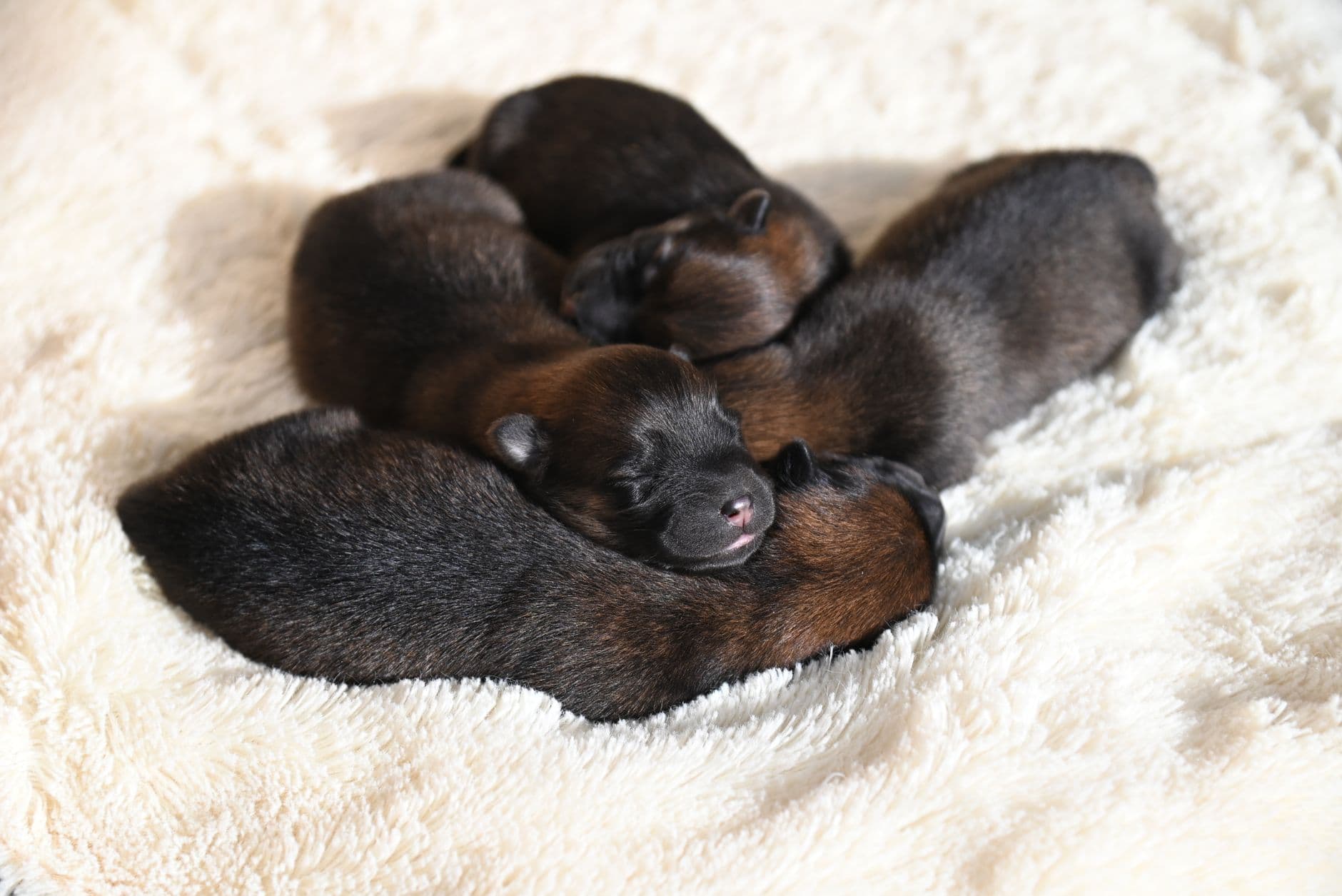
Most guides to this business will tell you how to register an LLC. None of the six ranking guides we read in full will tell you that when the 2004 UK Kennel Club/BSAVA purebred dog health survey covered 22,005 litters from 13,141 bitches across 151 breeds, more than 80% of litters in Boston Terriers, Bulldogs and French Bulldogs were delivered by caesarean section.
Two things that number is not. It is not a random sample of all breeders — the households in it were breed club members, who are unusually engaged. And it is not current: it describes 2004 UK practice, and caesarean rates follow veterinary norms as well as anatomy. Part 1 unpacks both qualifications. Neither of them makes the number small.
So if one of those three breeds attracts you because the puppies sell for a lot, plan on surgical delivery as the expected case rather than the emergency — and plan for a bill that arrives whether or not the puppies survive. What that bill is at your clinic is a question this guide tells you how to ask, in Part 5, rather than a number it invents for you.
This guide covers the business. It also covers the part the business guides leave out: the dogs, the tests, the veterinary reality, and the arithmetic of a litter that does not go to plan. If by the end you decide not to do this, the guide has worked.
Scope, stated plainly. This article is general information for people evaluating a breeding programme. It is not veterinary advice — every clinical decision here belongs to a veterinarian who has examined your dog — and it is not legal or tax advice. Licensing, zoning, contract and tax rules differ by country, state, county and city, and change. Verify your own position with the authorities named here and with a local professional.
The short answer
To start a dog breeding business you need, roughly in this order:
- Deep knowledge of one breed — not a portfolio.
- A breeding objective you can state in a sentence that is not "sell puppies".
- Foundation stock with verifiable, multi-generation health results, bought from a breeder who will still take your call in three years.
- A veterinarian experienced in reproduction, engaged before the first mating, not during the first whelping.
- Breed-specific health testing, completed at the age the breed's parent club specifies.
- A legal place to do it — zoning first, then city, county, state and federal licensing.
- A whelping and puppy-rearing setup designed around welfare rather than capacity.
- Emergency capital sufficient to fund a caesarean and neonatal care with no puppy income.
- A socialisation programme that runs from birth to placement.
- Buyer screening, a written contract, and a lifetime return commitment.
- Records — of matings, litters, health testing, buyers and finances.
- Enough money that the business does not depend on the next litter selling.
Everything below is the detail behind those twelve lines.
Part 1 — Before you buy a dog
Are you actually ready? A gate, not a pep talk
Most articles in this category are written to keep you reading. This section is written to help you stop, because stopping is the right answer for a large share of people who search this phrase.
You are probably not ready if:
- You have not spent at least a couple of years deeply involved with your chosen breed — showing, working, training, or under an established breeder's wing.
- You cannot name the inherited conditions your breed screens for, and what each test result means.
- You picked the breed mainly because the puppies command high prices.
- You could not fund an out-of-hours caesarean tomorrow without borrowing.
- You have nowhere to keep a puppy that does not sell, for months.
- You could not take a dog back in five years' time if a buyer's life fell apart.
- You do not have a mentor in the breed, or a veterinarian who handles reproduction.
You are closer to ready if:
- You can read a pedigree and explain why a particular mating would or would not improve on the dam.
- You know your breed's parent-club health requirements without looking them up.
- You have an objective — a specific thing you are trying to preserve or improve.
- You have a reproduction-capable veterinary practice and know their emergency arrangements.
- You have checked your zoning and your state's breeder rules, in writing.
- You can absorb a litter that produces no income at all.
None of this is gatekeeping for its own sake. A breeder who cannot afford the emergency cannot protect the dam, and a breeder with nowhere to put an unsold puppy makes placement decisions for the wrong reasons.
The breeding programme and the business are two different systems
None of the six guides we read in full draws this distinction, and it is the reason so many people do one and believe they have done both. They fail differently, and they fail at different times.
| The breeding programme | The business |
|---|---|
| Genetics and inherited disease | Licences, zoning, inspections |
| Temperament and breed type | Tax status and bookkeeping |
| Mate selection and pedigree | Contracts and liability |
| Reproductive health | Pricing and the buyer pipeline |
| Whelping and neonatal survival | Facilities and insurance |
| Puppy development | Records and compliance |
A strong programme with no business behind it produces good dogs and an unmanageable mess of receipts, tax exposure and unenforceable handshake agreements. A strong business with no programme behind it is a puppy factory with excellent bookkeeping. You need both, and the programme has to lead — because everything the business sells is produced by it.
Choosing one breed, for a reason that is not price
You will find lists of "the most profitable breeds to breed" everywhere. Ignore them: choosing a breed by its price is the decision that most directly sets the three variables this guide keeps returning to — delivery risk, hereditary disease load, and whether your buyers wanted the dog or wanted the trend.
Evaluate a breed against these instead.
| Factor | The question to answer |
|---|---|
| Genuine experience | Have you lived with this breed, not just admired it? |
| Inherited disease | What does the national parent club require be screened, and why? |
| Delivery risk | Does this breed commonly need caesareans? (See below — this is not a minor variable.) |
| Litter size | What is typical, and what does that do to your economics? |
| Temperament | What behaviour would you be propagating, good and bad? |
| Purpose | What was the breed developed to do, and do your buyers want that dog? |
| Grooming and care | What lifetime burden are you handing to an owner? |
| Buyer reality | Who is genuinely suited to this dog, and are there enough of them near you? |
| Mentorship | Will an established breeder in this breed guide you? |
The delivery-risk variable none of them prices
Evans and Adams analysed caesarean rates across 151 breeds, 13,141 bitches and 22,005 litters, using the 2004 Kennel Club/BSAVA Purebred Dog Health Survey of UK breed-club-member households. The ten breeds with the highest caesarean rates were the Boston Terrier, Bulldog, French Bulldog, Mastiff, Scottish Terrier, Miniature Bull Terrier, German Wirehaired Pointer, Clumber Spaniel, Pekingese and Dandie Dinmont Terrier. In the first three, the paper states, "the rate was > 80%" (Evans & Adams, Journal of Small Animal Practice, 2010).
Two honest qualifications, because they matter more than the headline. This was a survey of breed club members, not a random population sample, so the households in it are unusually engaged and the figure may not transfer exactly to all breeders. And it describes 2004 UK practice; caesarean rates are a function of veterinary norms as well as anatomy.
Neither qualification changes the decision. Merck puts the overall incidence of dystocia — difficult or failed delivery — at roughly 5% of pregnancies in the bitch or queen, and adds in the same sentence that it "may approach 100% in some breeds of dogs and cats, especially of the achondroplastic and brachycephalic types" (Merck Veterinary Manual). Read that 5% carefully: it is a clinical reference figure rather than a study cohort, it covers cats as well as dogs, and it includes the high-risk breeds rather than describing the breeds outside them. It is a floor for a typical breed, not a forecast for yours. If you are considering a brachycephalic breed — one of the flat-faced breeds, such as the three named above — plan on surgical delivery as the expected case and budget accordingly.
Define a breeding objective
Write one sentence describing what you are trying to preserve or improve. Health, temperament, working ability, structure, or the survival of a numerically small breed are objectives.
"I want Golden Retrievers because they sell" is not an objective. It gives you no way to choose between two mates, no way to decide which puppy to keep, and no way to tell whether the programme is working.
Every proposed mating should have an answer to: what does this pairing do that the previous generation did not?
Part 2 — Foundation stock: the decision that sets your ceiling
This is the longest section here and the shortest in all six guides we read, where it is typically one sentence: "buy quality breeding stock". That sentence is correct and useless.
Your first breeding animals determine what traits enter your programme, what weaknesses you will spend generations correcting, which stud owners will work with you, and what a knowledgeable buyer sees when they look at your pedigree. You cannot out-manage bad foundation stock. It takes generations to correct what you compromise on in generation one — which is why the place not to economise is the first dog.
Buy the best foundation bitch you can, before you buy anything else
For a small starting programme, one outstanding foundation bitch with access to carefully chosen outside sires beats owning a mediocre pair.
Owning both animals feels cheaper and is not, because it silently converts every future mating decision into "the dog I already have". A stud you own is convenient; he is rarely the best genetic complement to your bitch in any given generation, and never in every generation.
THE CONVENIENT MODEL              THE PLANNED MODEL

  Female A                          Foundation female
      │                                    │
   Male A  (owned)                  ├── Stud A → corrects structure
      │                             ├── Stud B → strengthens working traits
  repeat pairing                    └── Stud C → holds type while improving health
      │                                    │
  no genetic strategy               generational development
What "champion bloodline" certifies — and what it does not
A conformation championship is real evidence: judges, repeatedly, found the dog competitive against its breed standard. Registries also award titles in field work, obedience, agility, herding, tracking and scent work, each certifying something specific.
A title does not certify hips, elbows, eyes, heart, longevity, reproductive soundness, freedom from inherited disease, or the quality of what the dog produces. Those are separate questions answered by separate tests, and a pedigree crowded with titles and empty of health results is a marketing document.
The thing that compounds is the combination:
Excellent foundation animal = proven lineage + verifiable multi-generation health results + stable breed-appropriate temperament + correct type + reproductive soundness + a transparent breeder behind it.
Ask for all six. A breeder who is glad to be asked is also the breeder who will help you in three years.
Read the pedigree horizontally, not just vertically
Beginners trace upward: father, grandfather, great-grandfather. That is half the picture.
The horizontal pedigree — littermates, half-siblings, aunts, uncles, and any previous offspring — is often more informative, because it shows what the line actually produces rather than what its best individuals achieved. One titled dog can be an outlier. Six healthy, long-lived siblings are a pattern.
Coefficient of inbreeding: what the evidence supports
Two terms first, because the studies below are worth reading and the vocabulary is the only hard part of them. A coefficient of inbreeding is a number between 0 and 1 estimating how much of a dog's DNA is duplicated because its parents share ancestors — higher means less variety. Heterozygosity is the same idea measured from the other end: how much variety is present. Raising one lowers the other.
One more distinction, because the two numbers are not interchangeable. A pedigree COI is calculated from recorded ancestors; a genomic measure is read from the dog's DNA and captures shared ancestry the pedigree never recorded — so a genomic figure will not generally match a pedigree COI for the same dog. The studies below report genomic measures; the registry tools most breeders use report pedigree COI. Compare like with like.
Both are measurable, and both track outcomes that cost money.
- Across 227 breeds and 49,378 genotyped dogs, average genomic inbreeding was 0.249 — roughly a quarter of the genome duplicated (95% confidence interval 0.235–0.263). Matching 162 of those breeds to Swedish pet-insurance records (Agria, 2011–2016), veterinary illness claims rose across three inbreeding bands: 1,282 events per 10,000 dog-years of cover in the 11 least-inbred breeds, 1,537 in the 66 in the middle, and 1,626 in the 85 most inbred — a gradient unlikely to be chance (P = 0.0003 across the three bands) (Bannasch et al., Canine Medicine and Genetics, 2021).
- In 93 US Golden Retrievers from the Morris Animal Foundation lifetime study, each 10-percentage-point increase in inbreeding was associated with roughly one fewer puppy per litter (Chu et al., Mammalian Genome, 2019).
- Across 118 breeds and more than 40,000 dogs, primarily European, each 1% more median heterozygosity was associated with about one additional month of predicted average lifespan, once body size was accounted for (Yordy et al., GeroScience, 2022).
For a breeder this is not an abstraction. Smaller litters and more veterinary claims are the two variables that most directly determine whether a litter is financially survivable.
A foundation-stock scorecard
Work through this before money changes hands.
| Area | What to verify | How |
|---|---|---|
| Pedigree | 3–5 generations, read horizontally | Registry pedigree + the breeder's own records |
| Titles | What each title actually certifies | Registry title definitions |
| Health results | The actual results, not "the parents are tested" | The screening registry the parent club names |
| Parents | Health, structure, temperament | Meet the dam; ask to meet or see the sire |
| Grandparents | Longevity and cause of death | Breeder's records — a good breeder knows |
| Siblings and prior offspring | Consistency across the litter | Ask directly; evasiveness is an answer |
| Temperament | Breed-appropriate and stable | Meet the dog, more than once |
| Reproductive soundness | Veterinary assessment | Your vet, before breeding |
| Genetic diversity | COI for the proposed pairing — note whether it is pedigree or genomic | Registry or genetic-diversity tooling |
| Contract | Full vs limited registration; co-ownership terms | In writing, read before signing |
| Mentorship | Will they help you develop the programme? | The conversation itself tells you |
One question replaces most of this: "What tests were done on the sire and dam, what were the results, and where can I look them up myself?" Then look them up.
Part 3 — Health testing and the veterinary plan
There is no universal "dog breeder health test"
Screening requirements are breed-specific by design. The Orthopedic Foundation for Animals runs the Canine Health Information Center (CHIC) programme jointly with national parent clubs, and each breed's requirements are set by that breed's club. Start at your parent club, and use OFA's CHIC programme to understand how the scheme works.
Depending on breed, screening may include hip and elbow evaluation, an ophthalmologist examination, cardiac evaluation, patellar evaluation, thyroid testing, hearing (BAER) testing, and breed-specific DNA tests. Two worked examples from parent clubs:
- The Golden Retriever Club of America names hips, elbows, eyes and heart as the screenings for the parents of a litter, and notes that final OFA hip and elbow certification requires the dog to be at least 24 months old (GRCA).
- The Labrador Retriever Club names its CHIC set — hips, elbows, an ophthalmologist eye examination, and DNA tests for exercise-induced collapse and the D locus — as "the minimum necessary health clearances we expect from reputable breeders": a floor rather than a ceiling (LRC).
Now the point most beginners get backwards, which comes from how CHIC itself is defined rather than from any one club: a dog does not have to be clear on every test to be bred. A dog earns CHIC certification when it "has been screened for every disease recommended by the parent club for that breed and those results are publicly available in the database" (OFA) — screened and published, not normal. Health testing is not a pass/fail gate that produces perfect dogs. It is an information system. Its purpose is to let you make an informed mating decision and to let a buyer see what you knew.
The American Kennel Club maintains the compiled breed health testing requirements drawn from national parent clubs — the fastest way to find your breed's list.
What CHIC does and does not mean. A CHIC number means a dog completed the testing its parent club requires and the results were made public. It does not mean every result was normal. Ask for the results themselves, and verify them at the source rather than accepting a summary.
Before any mating: the veterinary plan
Merck's guidance is that a breeding soundness examination should be carried out before an animal is purposefully bred — for both sexes, covering physical health, reproductive history, hereditary risk and temperament (Merck Veterinary Manual).
Your veterinarian will determine what that examination includes. Your job as the business owner is to have the relationship in place, to know what it costs, and to know the practice's out-of-hours arrangements before you need them at two in the morning.
Brucellosis screening is not optional in a breeding programme
Brucella canis is a bacterial infection transmitted venereally and through birth and abortion fluids, causing reproductive failure — and it is zoonotic, meaning it can infect the people handling the dogs. There is no reliable cure; infected animals are typically removed from breeding permanently.
Merck's breeding-soundness guidance calls for screening both sexes before first breeding, then testing bitches before each planned cycle and studs at least annually (Merck, breeding soundness examination). Merck's separate guidance on the disease itself adds that breeding programmes and kennels should screen serologically at intervals of around six months alongside strict isolation (Merck, brucellosis in dogs). The CDC's guidance for veterinarians and animal-care staff covers the human-health side.
Design your testing protocol with your veterinarian. Do not design it from an article — this one included.
Where the clinical line sits in this guide
Everything from here on describes the business consequences of reproductive events: what to plan for, what it costs, when to escalate. It deliberately does not tell you how to manage a whelping, what to give, or when to intervene. Those are decisions for the veterinarian who has examined your dog, and a breeder who learns them from an article is the risk this section exists to avoid.
Part 4 — The four layers of law
Dog breeding is regulated at up to four levels simultaneously, and the layers do not know about each other. Meeting one says nothing about the others.
        Where will you breed?
                 │
        1. ZONING — may you keep and breed dogs at this address at all?
                 │
        2. CITY / COUNTY — kennel permit, animal limits, inspections
                 │
        3. STATE — commercial breeder licensing, often keyed to numbers or sales
                 │
        4. FEDERAL — depends on HOW you sell, not only on how many dogs you keep
                 │
        Then: business registration, tax status, insurance
Start at the bottom of that list and work up. Zoning is the layer that can end the plan outright, and it is the one people check last.
The federal layer, and the claim almost everyone gets wrong
You will read, repeatedly, that "five or more breeding females requires a USDA licence". That is not what the regulation says.
The Animal Welfare Act regulations set out exemptions from licensing. The relevant one, 9 CFR §2.1(a)(3)(iii), exempts:
"Any person who maintains a total of four or fewer breeding female pet animals … small exotic or wild mammals … and/or domesticated farm-type animals … and sells only the offspring of these animals, which were born and raised on his or her premises, for pets or exhibition, and is not otherwise required to obtain a license. This exemption does not extend to any person residing in a household that collectively maintains a total of more than four … or to any person maintaining such breeding female animals on premises on which more than four … are maintained, or to any person acting in concert with others …"
Four things follow, and each contradicts the common shorthand:
- It is an exemption, not a trigger. Falling outside it does not automatically create a licensing duty; a separate retail-pet-store exemption may still apply.
- The four is a combined total across pet animals, small exotic mammals and farm-type animals. Four dogs plus goats is not four.
- It only covers offspring you bred and raised. Sell a dog you did not breed and the exemption does not describe you, regardless of how few females you keep.
- The household, premises and "acting in concert" clauses close the obvious workarounds.
The other half of the federal question is how you sell. The rule that matters here is from 2013, not recent: the definition of "retail pet store" was narrowed so that it requires the seller, the buyer and the animal to be physically present together (78 FR 57227). Sight-unseen sales — shipping a puppy to a buyer who never met it — is what moves a breeder out of that exemption.
Do not self-diagnose from this article. USDA APHIS publishes a licensing assistant and application guidance; use it, and if your situation is near a boundary, ask them in writing.
If you do become licensed, note that the written program of veterinary care required under 9 CFR §2.40 is conditioned on using a part-time or consulting veterinarian rather than a full-time one — a detail commonly reported as a blanket requirement.
State, county and city
These vary enormously and change often. Michigan State University's Animal Legal & Historical Center maintains a table of state commercial breeder laws that is a practical starting point for orientation — then confirm against the authority itself, because the table summarises law that changes. Then go to the actual authority: state departments of agriculture or licensing bodies (for example Texas TDLR, Iowa Department of Agriculture, Pennsylvania kennel licensing), your county animal-control office, and your city's zoning department.
Outside the US, the structure differs again. In England, breeding three or more litters in any twelve-month period and selling any of them, or breeding and selling dogs as a business, requires a licence under Schedule 1 of the Animal Welfare (Licensing of Activities Involving Animals) (England) Regulations 2018.
Business structure and tax
Register the business, choose a structure, and separate the money on day one. The US SBA covers choosing a business structure and licences and permits.
The tax question that catches breeders is hobby versus business. If an activity is not carried on for profit, deductions are limited — and the IRS applies a multi-factor test looking at how businesslike your records are, your expertise, the time you put in, your history of income or losses, and whether you depend on the income (IRS; the factors are set out at 26 CFR §1.183-2).
Practically: keep books, a separate bank account, receipts, contracts, a written plan, and records of every mating, litter and sale. The records are also what a licensing inspector asks for.
No authoritative, non-marketing source exists for kennel or animal-bailee insurance requirements, and this guide will not elevate a broker's blog to fill the gap. Speak to an agent who writes animal business coverage, and ask specifically about liability, care-custody-and-control, and property.
Part 5 — How to price your startup, and the litter that loses money
Why there is no startup number in this guide
All six guides we read publish a startup figure. None of them can know yours: the single largest line item — foundation stock — varies by an order of magnitude between a pet-quality registered puppy and a proven producing bitch, and the second largest — veterinary care — varies by region and by breed.
So instead of a number that would be wrong for you, here is the method, with the source of each quote.
| Cost category | Where your number comes from |
|---|---|
| Foundation bitch | Actual quotes from breeders found through the national parent club |
| Transport / travel to collect | Actual quote |
| Registration and pedigree | Registry fee schedule |
| Health screening | Your veterinarian, plus the specialist exams your breed requires, plus the registry's own submission fees |
| DNA testing | The laboratory your parent club names |
| Showing / proving the dog | Entry fees, travel, accommodation, handling, training |
| Reproduction veterinary care | Your practice — ask for the full cycle, not per-visit |
| Stud fee | The stud contract |
| Pregnancy monitoring | Your practice |
| Whelping setup | Actual equipment cost |
| Housing, fencing, containment | Vendor quotes |
| Business formation | Government fees plus an accountant |
| Insurance | An agent who writes animal business cover |
| Website and photography | Vendor or your own time |
| Emergency reserve | See below — this is not optional |
| Working capital | Months of running costs with no litter income |
Two rules that will keep you honest:
- Get real quotes. Pricing a breeding programme from puppy classified ads is how people arrive at numbers that collapse on contact with a specialist invoice.
- Price the tests, not the registry fee. Submitting a result to a screening registry is a small administrative charge. The radiographs, sedation, specialist examinations and laboratory work that produce the result are the actual cost, and they are the part quoted at a veterinary practice.
The cost of proving your own dogs
A puppy from a titled line is one thing. Producing your own titled, health-tested dogs — the thing that eventually gives a kennel a reputation and pricing power — is a separate, ongoing budget: entries, travel, accommodation, training, professional handling, grooming, and the years it takes.
Most first-time breeders omit this entirely and then wonder why their puppies are valued like everyone else's.
The litter that loses money
Here is the section none of the six writes. Every profitability model we found assumes a live, complication-free litter. The evidence says that is not the modal outcome, let alone the guaranteed one.
Puppies die, and at rates worth planning around.
- In 4,971 puppies from 784 litters across 38 French breeding kennels (10 breeds), overall neonatal mortality was 8.2% (406/4,971; 95% CI 7.4–9.0). Of the 625 litters for which stillbirth data was recorded, 31% (193/625) contained at least one stillborn puppy. Mortality tracked birth weight closely: 4.2% for normal-weight puppies, 8.8% for low birth weight, and 55.3% for very low birth weight (Mugnier et al., BMC Veterinary Research, 2020).
- In a smaller study of 224 puppies from 30 dams at one licensed UK commercial breeding establishment, stillbirth was 4.46%, perinatal mortality 9.38%, and 40% of litters were affected by perinatal mortality (Cornelius et al., 2022).
- Merck summarises reported neonatal mortality in dogs and cats across the literature as ranging from 9% to 26% (Merck Veterinary Manual).
Now put that beside the caesarean figures from Part 1, and model the litter properly:
TRUE LITTER COST
  pre-litter investment
    foundation stock (depreciated across her breeding life)
    health testing and DNA panels
    titling and proving
    pre-breeding veterinary examination
  + stud fee, semen collection/shipping, insemination if used
  + progesterone timing and pregnancy monitoring
  + dam nutrition through gestation and lactation
  + whelping supplies and setup
  + delivery care  ── and, at breed-specific probability, a CAESAREAN
  + neonatal veterinary care
  + puppy food, worming, vaccination, microchipping, registration
  + socialisation time (weeks of it)
  + cleaning, laundry, utilities
  + buyer packets, contracts
  + carrying cost of any puppy that does not place
  + YOUR LABOUR
  = what the litter actually cost

Then, and only then:
  puppies PLACED (not puppies born) × realistic price
  − true litter cost
  = the result
Never model revenue as puppies born × price. Model it as puppies placed, after the survival rates above, after the delivery risk of your breed, and after the possibility that the bitch does not conceive at all.
The emergency reserve
A breeder who cannot fund an emergency cannot protect the dam. That is the whole argument.
Before the first mating, ask your veterinary practice what an out-of-hours emergency caesarean and subsequent neonatal care would cost at their clinic, and hold that amount in reserve — separate from working capital, and not dependent on a puppy selling. Ask during a consultation, not during labour.
Our own emergency vet cost guide covers what out-of-hours veterinary care involves more generally.
Part 6 — Facilities, whelping and the first eight weeks
Design around welfare, not capacity
A facility scaled to the number of dogs you want is planned backwards. Scale it to the standard of care you can deliver, then see how many dogs that supports.
| Zone | Why it exists |
|---|---|
| Adult housing | Secure, climate-appropriate everyday living space |
| Exercise area | Physical and behavioural need, safely contained |
| Whelping room | Quiet, warm, controllable, cleanable |
| Neonatal area | Temperature-controlled, low-traffic |
| Puppy enrichment space | Where socialisation actually happens |
| Isolation area | Disease control for new arrivals or illness |
| Food storage | Pest-proof, dry |
| Cleaning and laundry | Sanitation is infection control, not tidiness |
| Records and admin | Where compliance lives |
| Buyer meeting area | Controlled contact that protects the litter |
| Vehicle access | Getting a dam to an emergency clinic at speed |
Add washable surfaces, ventilation, reliable heat, drainage, secure fencing, and a written plan for loss of power and for fire.
Whelping: the business view
The clinical management belongs to your veterinarian. Your responsibilities as the business are:
- Know the expected due date and how it was determined. Canine gestation is commonly given as 64–66 days from the LH peak, which is why timing is done with veterinary testing rather than by counting from a mating date (Merck).
- Have the emergency route, clinic and after-hours number written down and visible.
- Have transport available and a second person on call.
- Know your practice's escalation threshold — the point at which they want to hear from you — and agree it in advance.
- Keep records from the first puppy: time, weight, sex, markings.
- Weigh every puppy daily. Birth weight and early weight gain are the strongest survival signals in the literature above.
For the owner-facing pregnancy timeline, see our guide to how long dogs are pregnant.
Puppy development is the product
A breeder is not selling an eight-week-old animal. They are selling the outcome of the period in which that animal's behavioural foundation is laid — and it happens on your premises, not the buyer's.
The American Veterinary Society of Animal Behavior's position statement identifies the first three months as the primary socialisation window, and states that puppies can begin classes as early as 7–8 weeks, having had at least one set of vaccines at least seven days beforehand (AVSAB).
Most of that window is yours. A structured programme — gentle handling, varied safe surfaces, household sounds, individual time away from littermates, novel objects, early crate familiarity, grooming handling, toileting habits — is the difference between a puppy that adapts and one that is returned at ten months.
Nutrition changes across this period too: gestation and lactation, and growth, have different requirements from adult maintenance, and large-breed growth is formulated differently again — AAFCO's model regulations define large-size dogs for growth-diet labelling at 70 lb or more as an adult (AAFCO model regulations), and its consumer guidance explains why the nutritional adequacy statement on the label is the thing to read (AAFCO). Your veterinarian sets the actual feeding plan.
Hand every buyer our puppy socialisation guide and vaccination and worming schedule — and see puppy feeding by breed size for the growth-diet question.
Part 7 — Placement, contracts and reputation
Finding the right homes is a business function
Call it what it is. This is not "marketing"; it is the quality control step at the end of your production process, and a responsible business sometimes declines a sale.
Screen for the things that decide whether the placement holds, and know why you are asking each one.
| What you ask about | What the answer actually tells you |
|---|---|
| Household composition and children | Whether the dog's size, energy and tolerance fit the house it is going to |
| Existing animals | Whether the introduction is a plan or an accident, and whether the resident animals are vaccinated |
| Previous dog experience | How much of the training and health load they already understand, and how much you will need to teach |
| Working hours and time alone | Whether the dog's day has been thought through at all — ask what it looks like at four months and at fourteen |
| Housing and landlord permission | Whether the home is theirs to promise — get it in writing, not in conversation |
| Exercise and training intentions | Whether they want the breed you actually made, or the one they saw online |
| Grooming and veterinary budget | Whether the lifetime cost has been priced at all, before it arrives as a surprise |
| What happens if you move? | Whether a move is treated as a reason to rehome or a problem to solve — you are asking for the assumption, not the plan |
| What happens if you can no longer keep the dog? | Whether they already assume the answer is you — which is the answer you want |
We publish no ranking of these, because no dataset we found measures why dogs are returned — treat the list as a set of things worth knowing, not as an order of risk. The last two are still the ones worth asking last: they surface how a buyer thinks about the dog's whole life while the dog is still in your kitchen.
Microchip every puppy, and register it properly
Microchipping is the identification layer that makes everything else auditable: breeder → puppy → buyer → contract → health record.
The registration step is the one that fails. In a study of 7,704 microchipped animals entering 53 US animal shelters between August 2007 and March 2008, owners were found for 74.1% (2,191/2,956) of microchipped stray dogs — but when shelters contacted a registry, only 58.1% (1,129/1,943) of animals were actually registered, and 35.4% (310/876) of unreachable owners could not be contacted because the phone number was wrong or disconnected (Lord et al., JAVMA, 2009).
A chip nobody registered is a number in an animal. Register it, transfer it at sale, and show the buyer how to keep their details current.
Contracts and the lifetime return commitment
If you created the dog, your responsibility does not end when the payment clears. A return-to- breeder clause — the dog comes back to you rather than to a shelter or a classified ad, at any point in its life — is the single clearest marker separating a breeder from a seller.
A contract should cover: the return commitment, restrictions on rehoming, health guarantee terms, registration type and any conditions, spay/neuter terms where applicable, disclosure of known health findings, and what each side is responsible for.
Have a local attorney draft or review it. This guide supplies no boilerplate: contract law is jurisdictional, and a template from an article is exactly the document that fails when it is needed.
Note what registries actually require, which is less than commonly claimed. Registering a litter needs the sire owner's approval (AKC). Separately, AKC's record-keeping regulation requires breeding records kept on dedicated forms and held for at least five years, and provides that where completed registration papers do not go with the dog, the seller must give the buyer "a bill of sale, or other signed memorandum giving all of the identifying information", adding that "a promise of later identification is not acceptable" (AKC record keeping). Both written instruments run to the buyer. A written stud agreement is ordinary commercial prudence and we recommend one; it is not, as often stated, an AKC requirement.
Programmes like AKC Breeder of Merit and Bred with H.E.A.R.T. combine titles and health testing, and are a reasonable external marker of a programme's seriousness.
Build a website that proves you are real
This matters more than it used to. The FTC warns that scammers build fake webpages and posts "using stolen or AI-generated images of pets in need of forever homes", and that they may "use AI to create fake photos or videos of your pet in distress" (FTC, June 2026). On the buying side it warns separately that scammers post fake ads for pets and advises searching the seller's name alongside "review", "scam" or "complaint" (FTC, December 2024). Every legitimate breeder now operates in a market where buyers have been trained to assume fraud.
So publish what a fraud cannot: your real identity and location, your actual adult dogs, health testing results a buyer can verify at the registry, your veterinary relationship, dated photographs of the current litter, your policies and contract, your buyer process, breed-club involvement, and a clear deposit policy.
Do not use AI-generated images to represent real dogs. It is the exact signal buyers are being told to watch for, and using it puts you in the category you are trying to be distinguished from.
Part 8 — Is dog breeding profitable?
People search this, so here is a direct answer: it can produce income, and it does not reliably produce profit. Individual litters and individual years can and do lose money.
You will see the pet industry's size quoted as evidence that breeding pays. The American Pet Products Association reported $158 billion in US pet industry spending for 2025, with roughly $165 billion projected for 2026 (APPA). That figure describes what households spend on pets in total. It says nothing about the unit economics of one litter, and any guide that presents it as proof of profitability is selling you something.
Real profit, for a breeding programme, is:
  revenue from puppies PLACED
− foundation stock depreciation
− health testing and DNA panels
− titling, showing, training
− stud fees and reproductive services
− pregnancy, whelping and emergency veterinary care
− neonatal and puppy veterinary care
− food, worming, vaccination, microchips, registration
− facilities, utilities, insurance
− marketing, website, photography
− carrying cost of unplaced puppies
− taxes
− YOUR LABOUR, at a real hourly value
= profit
The two lines missing from every profitability model we read are labour and foundation stock depreciation — and wherever the dam was bought well and the litter took real time, they are also among the largest.
A working test: if the answer only works when every puppy lives, every puppy sells at asking price, and your time is worth nothing, it does not work.
Why breeding businesses fail
Ordered by our judgment of how often each is the underlying cause rather than the visible symptom. No published dataset ranks these; read the order as an argument, not as a finding.
- The breed was chosen for its price. Everything downstream inherits that decision.
- Veterinary costs were underestimated — routinely, and by a lot.
- There was no emergency reserve, so a caesarean became a crisis.
- Breeding happened before health testing was complete, and the results arrived too late to inform anything.
- Foundation stock was the place they economised.
- Too many dogs, too soon, before the care standard was proven at a smaller scale.
- Buyers were not screened, and dogs came back — or worse, did not.
- Socialisation was treated as optional, producing dogs that were returned.
- There was no return policy, so the breeder lost track of what they produced.
- Zoning or licensing was checked last, after the dogs were bought.
- The model assumed every pregnancy produces a saleable litter.
- Reputation was pursued through marketing rather than through breeding quality. It is the slowest failure and the hardest to reverse.
Frequently asked questions
Is dog breeding profitable?
It can generate income; it does not guarantee profit. Profitability depends on breed, delivery risk, litter size, survival, veterinary costs, your local market and your reputation — and an honest model counts your labour and the cost of your foundation stock. Individual litters can lose money.
How much does it cost to start a dog breeding business?
There is no universal figure, and any guide quoting one is guessing at your circumstances. Price it category by category using the table in Part 5, with real quotes from breeders, your veterinarian and your registry — plus an emergency reserve sized to an out-of-hours caesarean at your own clinic.
Do you need a licence to breed dogs?
Usually yes, at some level — but which level depends on where you live, how many animals you keep and how you sell. Check zoning first, then city and county, then your state, then the federal position. Never assume one layer's answer covers another.
How many breeding females can I have before I need a USDA licence?
The regulation is written as an exemption, not a threshold. 9 CFR §2.1(a)(3)(iii) exempts someone maintaining four or fewer breeding females who sells only offspring born and raised on their own premises and is not otherwise required to be licensed — and it counts pet animals, small exotic mammals and farm-type animals together, with clauses covering households, shared premises and people acting in concert. How you sell matters as much as how many you keep. Use the USDA licensing assistant rather than a number from an article.
Can I breed dogs from home?
Sometimes — zoning decides, and it decides before anything else. Many residential zones limit the number of animals or prohibit breeding outright, independent of state licensing.
What health tests do breeding dogs need?
Whatever your breed's national parent club specifies, completed at the age it specifies. There is no universal panel. Start with the parent club and the AKC's compiled breed health testing requirements.
How do beginners start breeding dogs?
By not starting with a litter. Learn one breed deeply, find a mentor, understand the health testing, acquire one excellent foundation bitch, prove her, and breed only when there is a reason to.
How long does it take?
Longer than a business plan suggests. Final hip and elbow certification typically cannot happen before 24 months in breeds that require it, and the dog's development — not your schedule — sets the timeline.
Do I need an LLC?
That is a question for an accountant familiar with your state and your circumstances. What matters regardless is that the business is registered appropriately, the money is separate, and the records would satisfy the IRS's profit-motive factors.
What records should breeders keep?
Matings, litters, individual puppy records, health testing, veterinary care, microchip numbers, buyers, contracts and registrations — plus complete financial records. Licensing inspectors and tax authorities ask for the same things.
What makes a breeder reputable?
Verifiable multi-generation health testing, transparency about what they found, breed-club involvement, careful buyer screening, a written contract, and a lifetime return commitment. Titles are evidence of achievement; they are not a substitute for any of the above.
Sources
This article draws on the following published references. Each opens in a new tab so you can check it against what you have read here.
American Kennel Club
Breed Health Testing Requirements – American Kennel Club(opens in a new tab)American Kennel Club
Online Litter Registration Requirements(opens in a new tab)American Kennel Club
AKC Bred with H.E.A.R.T. Program - Requirements(opens in a new tab)American Kennel Club
AKC Breeder of Merit Program(opens in a new tab)Golden Retriever Club of America
Health Screenings for the Parents of a Litter(opens in a new tab)American Kennel Club
Regulations for Record Keeping and Identification of Dogs (Amended to February 2019)(opens in a new tab)Orthopedic Foundation for Animals
CHIC Program | OFA(opens in a new tab)The Labrador Retriever Club, Inc.
Health Issues - The Labrador Retriever Club, Inc.(opens in a new tab)Federal Trade Commission, Bureau of Consumer Protection
Getting a pet? Avoid scams(opens in a new tab)Federal Trade Commission, Bureau of Consumer Protection
Animal lovers: learn to spot and avoid this breed of pet scams(opens in a new tab)Texas Department of Licensing and Regulation
How to Apply for a Cat or Dog Breeder License(opens in a new tab)Pennsylvania Department of Agriculture
Apply for a New Kennel License(opens in a new tab)U.S. Small Business Administration
Choose a business structure(opens in a new tab)U.S. Small Business Administration
Apply for licenses and permits(opens in a new tab)Internal Revenue Service
Know the difference between a hobby and a business (IRS Fact Sheet FS-2022-38)(opens in a new tab)US Centers for Disease Control and Prevention
Veterinary Guidance for Brucellosis | Brucellosis | CDC(opens in a new tab)USDA APHIS
Apply for an Animal Welfare License or Registration(opens in a new tab)Iowa Department of Agriculture and Land Stewardship
Animal Welfare FAQ(opens in a new tab)NCBI PubMed (record for Journal of the American Veterinary Medical Association)
Characterization of animals with microchips entering animal shelters.(opens in a new tab)PubMed Central / Scientific Reports
Factors influencing ease of whelping and its relationship with maternal behaviour and puppy perinatal mortality in commercially bred dogs(opens in a new tab)PubMed Central / Canine Medicine and Genetics
The effect of inbreeding, body size and morphology on health in dog breeds(opens in a new tab)PubMed Central / Mammalian Genome
Inbreeding depression causes reduced fecundity in Golden Retrievers(opens in a new tab)PubMed Central / GeroScience
How size and genetic diversity shape lifespan across breeds of purebred dogs(opens in a new tab)NCBI PubMed (record for Journal of Small Animal Practice)
Proportion of litters of purebred dogs born by caesarean section.(opens in a new tab)PubMed Central / BMC Veterinary Research
Low and very low birth weight in puppies: definitions, risk factors and survival in a large-scale population(opens in a new tab)American Pet Products Association (APPA)
U.S. Pet Industry Reaches $158 Billion in 2025, Poised for Continued Growth in 2026(opens in a new tab)Animal Legal & Historical Center, Michigan State University College of Law
Table of State Commercial Pet Breeders Laws(opens in a new tab)American Veterinary Society of Animal Behavior
AVSAB Position Statement On Puppy Socialization(opens in a new tab)The National Archives (legislation.gov.uk)
Schedule 1, The Animal Welfare (Licensing of Activities Involving Animals) (England) Regulations 2018 (SI 2018/486)(opens in a new tab)U.S. Government Publishing Office / National Archives (eCFR)
9 CFR § 2.40 Attending veterinarian and adequate veterinary care (dealers and exhibitors)(opens in a new tab)U.S. Government Publishing Office / National Archives (eCFR)
9 CFR § 2.1 Requirements and application(opens in a new tab)Federal Register / USDA APHIS
Animal Welfare; Retail Pet Stores and Licensing Exemptions (Final Rule)(opens in a new tab)U.S. Government Publishing Office / National Archives (eCFR)
26 CFR § 1.183-2 Activity not engaged in for profit defined(opens in a new tab)Association of American Feed Control Officials
Selecting the Right Pet Food | AAFCO(opens in a new tab)Association of American Feed Control Officials
Model Regulations for Pet Food and Specialty Pet Food(opens in a new tab)Merck Veterinary Manual (Merck & Co., Inc.)
Management of the Neonate in Dogs and Cats(opens in a new tab)Merck Veterinary Manual (Merck & Co., Inc.)
Dystocia in Small Animals(opens in a new tab)Merck Veterinary Manual (Merck & Co., Inc.)
Brucellosis in Dogs(opens in a new tab)Merck Veterinary Manual (Merck & Co., Inc.)
The Breeding Soundness Examination in Dogs and Cats(opens in a new tab)Merck Veterinary Manual (Merck & Co., Inc.)
Breeding Management of Bitches(opens in a new tab)
Mr Pet Lover Team
The Mr Pet Lover team is dedicated to providing warm, accurate, and practical pet care advice backed by veterinary research and real-world experience.
Related Articles
Emergency Vet Costs: What 8 Common Emergencies Actually Cost (and How to Prepare)
What 8 common pet emergencies actually cost, how big an emergency fund needs to be, and what insurance covers vs. not — so one bad night doesn't become debt.

Is Pet Insurance Worth It in 2026? A Real-Numbers Decision Guide
US accident-and-illness pet insurance averaged about $70/mo for dogs and $36/mo for cats in 2025 — but 'worth it' is arithmetic, not affection. Compare it with a pet emergency fund using a real-numbers decision rule.
How to Trim Your Cat's Nails Without Getting Scratched
Gentle technique, gradual desensitization, and the right tools make cat nail trimming manageable — even for reluctant cats.