
How to Read Your Dog's Body Language — A Visual Guide
Not individually reviewed by a veterinarian. Read our editorial standards.
Last updated:
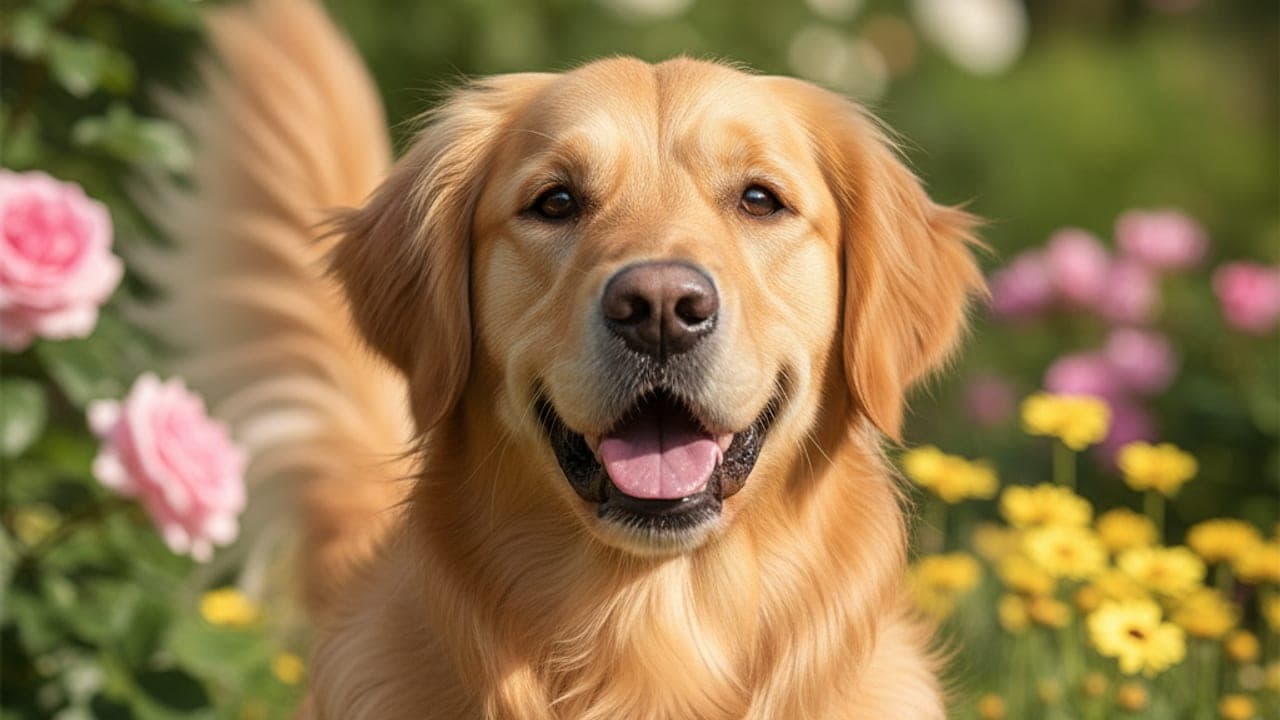
- A wagging tail doesn't always mean happy — speed, height, and direction all carry different meanings
- Whale eye (showing the whites) and lip-licking are early stress signals most owners miss
- Relaxed ears, soft eyes, and a loose body posture together indicate a genuinely content dog
- Yawning, sneezing, and shake-offs in non-obvious contexts are calming signals your dog uses to self-soothe
- Learn to read clusters of signals rather than single cues — context is everything in dog communication
A golden retriever at the dog park drops into a play bow — front legs flat, rear end high, tail whipping like a metronome. Every dog within twenty feet understands the invitation instantly. The humans, though? Half of them think he's about to pounce. The other half aren't paying attention at all.
Dogs are speaking to us constantly. Every ear flick, weight shift, and tail position carries meaning. The problem isn't that dogs are hard to read — it's that most of us were never taught the language. Once you learn even the basics, your relationship with your dog changes. You catch stress before it escalates. You recognize joy when it's genuine. You stop accidentally punishing a dog who's asking for help.
Here's your guide to the signals that matter most.
The Tail: More Than Just a Wag
The most common misconception in dog body language is that a wagging tail always means a happy dog. It doesn't. A wagging tail means an emotionally aroused dog — and that arousal can be joy, anxiety, frustration, or even aggression.
What to watch:
- Position matters more than movement. A tail held at a natural midline and wagging in broad, sweeping arcs usually signals relaxed happiness. A tail held stiff and high, vibrating rapidly, often signals tension or alertness — not friendliness.
- Direction has meaning. Research by Dr. Giorgio Vallortigara at the University of Trento found that dogs tend to wag more to the right side when they feel positive emotions (seeing their owner) and more to the left when they feel negative emotions (seeing an unfamiliar dominant dog). The difference is subtle but measurable.
- A tucked tail is always significant. When a dog tucks her tail between her legs, she's communicating fear or submission. She's making herself smaller, protecting a vulnerable area, and asking for space. Never approach a tucked-tail dog with direct eye contact or looming posture.
- A still, rigid tail is a warning. If the tail stops wagging and goes rigid — especially when held high — the dog is making a decision about what to do next. This is the moment to calmly create distance.
Breed matters here, too. A Greyhound's natural tail carriage is low. A Siberian Husky's curls over the back. Learn what's "neutral" for your dog's breed before interpreting deviations.
The Eyes: Windows to Emotional State
Dogs communicate a remarkable amount through their eyes, and learning to read canine eye language can prevent bites, reduce anxiety, and help you understand when your dog needs something from you.
Soft eyes — relaxed lids, slightly squinted, maybe paired with a slow blink — indicate a calm, content dog. This is the look your dog gives you when she's lying beside you on a quiet evening. It's the canine equivalent of a contented sigh.
Hard eyes — wide open, unblinking, with visible tension around the brow — signal alertness or threat. If a dog stares at you with hard eyes, especially with a rigid body, she is not being friendly. She is warning you. Resource guarding often shows up as hard-eye staring over a food bowl or toy.
Whale eye (also called half-moon eye) appears when a dog turns her head slightly away but keeps her eyes fixed on something, exposing the white sclera in a crescent shape. This is a stress signal. Dogs show whale eye when they're uncomfortable but not yet ready to escalate. You'll often see it when a child hugs a dog too tightly or when a dog is cornered.
Avoiding eye contact entirely is a calming signal — the dog is actively trying to de-escalate tension. If your dog looks away when another dog approaches, she's saying, "I'm not a threat, please don't be one either."
The Ears: Directional Antennas for Emotion
Ears are one of the most mobile and expressive features on a dog's body. While ear shape varies dramatically across breeds — the upright radar dishes of a German Shepherd versus the soft folds of a Basset Hound — the principles remain consistent.
Forward-facing ears indicate interest, alertness, or focus. Your dog heard something, saw something, or smelled something worth investigating. This is engaged attention, not necessarily aggression.
Ears pulled back and flat against the head signal fear, submission, or anxiety. If the ears are pinned back tightly, especially combined with a tucked tail and lowered body, the dog is frightened and may bite if cornered.
Ears in a neutral, relaxed position — whatever "neutral" looks like for your dog's breed — mean exactly what you'd expect: the dog is calm and unbothered.
One ear forward, one back often means the dog is processing conflicting information. She's interested in something ahead but also monitoring something behind or beside her. It's a transitional state.
The Mouth: Smiles, Yawns, and Lip Licks
Dogs don't smile the way humans do, but their mouth positions communicate volumes.
A relaxed, slightly open mouth with the tongue visible is the "happy dog" look that most people recognize. It typically accompanies soft eyes and a loose body. This is a dog who feels good.
A closed, tense mouth — lips pressed together, jaw muscles visible — signals concentration, stress, or the beginning of a guarded state. If your dog's mouth snaps shut when a stranger approaches, she's uneasy.
Lip licking (a quick tongue flick over the nose or lips, not during eating) is one of the most reliable stress signals in dogs. Behaviorist Turid Rugaas, who pioneered research on calming signals, identified lip licking as one of the first signs that a dog is feeling social pressure. If your dog lip-licks during a vet exam, during grooming, or when a child approaches, she's telling you she's uncomfortable.
Yawning outside of sleepiness is another calming signal. Dogs yawn to self-soothe and to communicate non-threat to others. A dog who yawns repeatedly during training isn't bored — she may be mildly stressed by the pressure.
A pulled-back "grin" showing teeth can be either a submissive grin (usually accompanied by squinting eyes, a low body, and a wagging tail) or a warning snarl (accompanied by hard eyes, a stiff body, and growling). Context and the rest of the body tell you which one it is.
The Whole Body: Posture Tells the Full Story
Individual signals are clues. The full body tells the story.
A loose, wiggly body — the whole-body wag where the dog's spine seems to curve with happiness — is unmistakable. This dog is genuinely delighted. You'll see it when you come home, when the leash comes out, or when a favorite person visits.
A stiff, upright body with weight shifted forward means the dog is alert and potentially confrontational. She's making herself look larger. The tail may be high and rigid. The ears are forward. This is a dog who has decided something needs addressing.
A crouched, low body with weight shifted backward means the dog is ready to retreat. She's making herself smaller, signaling that she's not a threat and hoping the other party will back off.
The play bow — front end down, back end up, tail wagging — is the universal dog invitation to play. It's one of the most joyful postures in the animal kingdom. Dogs use it with other dogs, with cats, with humans, and occasionally with inanimate objects they find exciting.
Freezing — a sudden, total stillness — is one of the most critical signals to recognize. A dog who freezes has moved past uncertainty into decision-making. She's about to do something: flee, bite, bark, or snap. If a dog freezes while a child reaches for her toy, intervene immediately and calmly.
Putting It All Together: Signal Clusters
The key to reading dog body language accurately is looking at signal clusters, not individual signals in isolation. A wagging tail with soft eyes, a loose body, and relaxed ears? That's a happy dog. A wagging tail with hard eyes, a rigid body, and forward ears? That's a tense dog who may be about to react.
Dr. Sophia Yin, the late veterinary behaviorist, emphasized that misreading individual signals — especially the "wagging tail equals happy" myth — contributes to a significant percentage of dog bites. The bite "came out of nowhere" is almost always a case of missed warning signals that were there all along.
Practice reading the whole dog. Stand at a dog park and watch interactions. Observe your own dog during different situations — mealtime, walks, meeting strangers, hearing doorbells. The more you watch, the more fluent you become.
Common Misreadings (And What's Really Happening)
| What You See | Common Interpretation | What It Often Actually Means |
|---|---|---|
| Dog rolls on back | "She wants belly rubs!" | Sometimes yes. But can also be a submissive display asking for space. Check for tension in the body and tucked tail. |
| Dog puts paw on your arm | "She's being sweet!" | Often an attention-seeking or mild dominance gesture. Not concerning, but not always affection. |
| Dog avoids eye contact | "She's guilty!" | Dogs don't feel guilt. She's reading your tense body language and trying to de-escalate. |
| Dog yawns during training | "She's bored." | She's likely mildly stressed. Shorten the session or reduce pressure. |
| Dog growls during play | "She's getting aggressive!" | Play growling is normal and healthy. Listen for tone — play growls are higher-pitched and variable. |
Frequently Asked Questions
Can I teach myself to read dog body language?
Yes. Start by observing your own dog in calm situations to establish her "baseline" posture, ear position, and tail carriage. Then notice how those change in different contexts. Within a few weeks of intentional observation, you'll be reading signals you never noticed before.
Do different breeds have different body language?
The core signals are universal, but breed-specific anatomy affects expression. Brachycephalic breeds (flat-faced dogs) have limited facial expression. Breeds with docked tails lose a major communication tool. Learn what's normal for your dog's breed.
How should I respond when my dog shows stress signals?
Remove or increase distance from the stressor. Don't force interaction. Give your dog space and time to de-escalate. If stress signals are frequent, consider consulting a certified dog behaviorist.
Is it true that dogs "smile"?
Some dogs do learn to pull their lips back in a relaxed "grin" — especially breeds like Golden Retrievers and Labrador Retrievers. This is usually a learned social behavior, not an involuntary emotional expression. It's endearing, and it usually does mean the dog is happy.
Want to understand your specific breed's communication style? Explore our dog breed profiles or take the breed matching quiz to find your perfect companion.
Angel Lequiron
The Mr Pet Lover team is dedicated to providing warm, accurate, and practical pet care advice backed by veterinary research and real-world experience.
Related Articles

How to Help Your Dog with Thunderstorm Anxiety
Storm anxiety goes deeper than noise — barometric pressure, static electricity, and scent all play a role. Comfort strategies, medication, and long-term solutions.
Why Does My Cat Knead? The Science Behind 'Making Biscuits'
Kneading traces back to nursing instinct — but it also involves territory marking, comfort-seeking, and a deep bond with you.

Do Dogs Dream? The Science of Canine Sleep
Dogs enter REM sleep and dream about their daily lives — research confirms it. What science reveals about your dog's sleeping brain.