
Newcastle, 1859: An Accidental Revolution
The first documented dog show was, by later standards, a modest affair. Held on June 28, 1859, in the Town Hall of Newcastle upon Tyne as part of a broader sporting exhibition, it accepted only two breeds: Pointers and Setters. Sixty dogs entered. The judges were sporting gentlemen who evaluated the animals based on their likely performance in the field rather than any standardized physical criteria.
Nobody present that day in Newcastle could have anticipated what they had started. Within three years, a London show would attract more than a thousand entries across dozens of classes. Within fourteen years, the Kennel Club would be founded to govern the sport systematically. Within twenty-five years, dog shows would be running on two continents, and breeders would be deliberately creating new breeds to fill niches in the show ring. The dog — an animal that had evolved over thousands of years through functional selection — had become, in part, a competitive product.
The Kennel Club and the Birth of Breed Standards
The founding of the Kennel Club on April 4, 1873, was the single most consequential event in dog show history. Before 1873, the term "breed" was loosely applied: breeders had general ideas about type, but no formal specification of what a correct specimen should look like, weigh, or behave like. The Kennel Club changed this by creating written breed standards — detailed descriptions specifying everything from ear set and coat texture to gait and temperament.
These standards were simultaneously a technical achievement and a new form of power. Whoever wrote the standard for a breed controlled what the breed became. Influential breeders who sat on Kennel Club breed committees could push their dogs' characteristics into the official definition of correctness, then win shows with dogs that matched the standard they had written. Critics observed this dynamic from the beginning, but the organizational logic of shows made it nearly impossible to prevent.
The American Kennel Club, founded in 1884, adopted a similar structure. When the first Westminster Kennel Club Dog Show opened at Madison Square Garden in 1877 — before the AKC existed — it attracted more than 1,200 entries and drew crowds that would have filled the Garden for any purpose. Westminster rapidly became America's premier dog show, a social event as much as a competitive one, where the winning dog's image appeared on the front page of New York newspapers the following morning.
Breeds Made for the Show Ring
One of the dog show's more remarkable effects was the creation of entirely new breeds designed specifically for competitive exhibition. The Doberman Pinscher, developed in Germany by tax collector Louis Dobermann beginning around 1890, was bred as a personal protection dog but refined through show lines that emphasized a sleek, dramatic appearance. The Doberman that wins at Westminster today is physically quite different from Louis Dobermann's originals — more elegant, less stocky, optimized for a judge's eye rather than a criminal's resistance.
Similarly, the German Shepherd was developed in the 1890s by Max von Stephanitz as a working herding and protection dog. Von Stephanitz was deeply suspicious of the show world's influence and repeatedly warned that appearance-based selection would undermine the breed's working ability. His warnings were partially vindicated: show-line German Shepherds today often exhibit a dramatically sloped back that working-dog enthusiasts and veterinarians criticize as biomechanically problematic.
The Poodle presents a different case. Developed as a water retriever, the Poodle's distinctive clip — the pom-poms and shaved areas — originally served a working function (reducing drag in water while protecting joints from cold). Show breeders elaborated these clips into elaborate sculptural designs that retained no working rationale. The Poodle nevertheless became one of the most successful show breeds in Westminster history, winning Best in Show 8 times.
Crufts and the Brachycephalic Crisis
Crufts, Britain's premier dog show, was founded by Charles Cruft in 1891 and has run almost continuously since, growing to become the world's largest dog show by entry count. But in 2008, the BBC dropped its television coverage of Crufts following the broadcast of a documentary, Pedigree Dogs Exposed, that documented health problems in show-bred dogs with disturbing specificity.
The film's most impactful segments focused on brachycephalic breeds — flat-faced dogs whose compressed skull structure causes breathing difficulties, eye problems, dental crowding, and skin fold infections. The Bulldog, a breed with a history stretching back centuries, had been selectively bred over decades of show competition to extremes that left many individuals unable to breathe freely, exercise normally, or give birth without veterinary intervention. The Cavalier King Charles Spaniel was shown suffering from syringomyelia — a condition where the skull is too small for the brain, causing chronic pain — at rates the documentary claimed were epidemic.
The BBC's withdrawal forced a reckoning that Kennel Club insiders had been avoiding. New breed standards were written for the most affected breeds, emphasizing health over aesthetic extremes. The Kennel Club launched a health-testing scheme requiring certain breeds to demonstrate clear health results before being shown. These reforms were contested — some breeders argued that the new standards changed their breeds' defining characteristics — but they represented the first systematic attempt to use the show system's own authority to reverse damage the show system had caused.
The Working Type vs. Show Type Divide
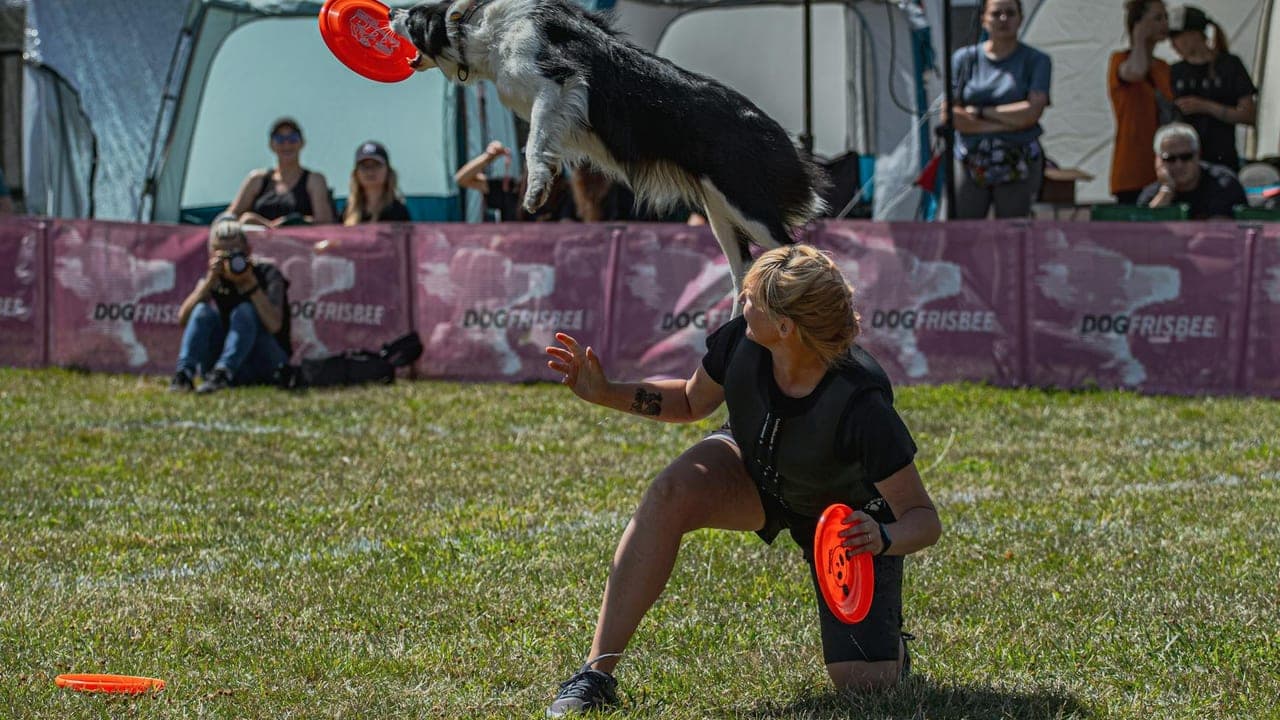
One of the dog show's most consequential legacies is the split within many breeds between show-type and working-type lines. The Border Collie, arguably the world's most capable herding dog, illustrates this divide with particular sharpness. Show Border Collies are evaluated on appearance: coat quality, markings, overall balance. Working Border Collies are evaluated through trials: the precision and efficiency with which they move sheep. The two populations are barely recognizable as the same breed.
The Australian Shepherd and Labrador Retriever show similar splits. Working-line Labradors are leaner, more athletic, and behaviorally more intense than the heavier, calmer show lines. This divergence began within decades of the show system's establishment and has only deepened. Breed rescue organizations frequently find that show-line dogs and working-line dogs have different behavioral needs, making the difference consequential for adoptive families choosing between them.
Westminster Winners and Breed Popularity
Winning Best in Show at Westminster is the most visible moment in American dog show culture, and research has consistently shown it drives adoption and purchase of the winning breed in the months following the show. When a Wire Fox Terrier won Best in Show repeatedly in the 1920s and 1930s, it became one of America's most popular breeds. When a Beagle named Uno won in 2008 — the first of his breed to do so — Beagle registrations increased noticeably the following year.
This influence cuts in complex directions. Sudden popularity increases demand that can be met by irresponsible breeders who prioritize volume over health. The post-101-Dalmatians Dalmatian adoption surge of 1996-97, while not driven by Westminster, illustrated how breed popularity surges create welfare problems when supply rushes to meet demand from buyers who are not prepared for the breed's actual characteristics.
The modern breed rescue movement developed partly as a counter-reaction to show breeding's excesses. Rescue advocates note that show-driven popularity spikes create surrender surges when owners discover that the prize-winning dog they impulse-purchased requires more exercise, grooming, or behavioral management than they anticipated. The show ring created the problem; the rescue network absorbs its consequences.
For more on how dog breeds were formalized and standardized, read about dogs in the Victorian era and the ancient origins of the human-dog bond.
Frequently Asked Questions
Q: When and where was the first dog show held?
The first recorded dog show was held on June 28, 1859, in Newcastle upon Tyne, England, as part of a broader sporting exhibition. It accepted only Pointers and Setters and drew 60 entries. A larger show in Birmingham followed in 1860, and by 1862 a London show had attracted more than 1,000 entries.
Q: When was the Westminster Kennel Club Dog Show founded?
The first Westminster Kennel Club Dog Show was held at Madison Square Garden in New York City in 1877, attracting more than 1,200 entries. It predates the founding of the American Kennel Club (1884) and has run continuously ever since, making it one of the longest-running sporting events in America.
Q: What is the brachycephalic crisis and how did dog shows contribute to it?
Brachycephalic breeds — flat-faced dogs like Bulldogs, French Bulldogs, and Pugs — have been selectively bred over generations of show competition to increasingly compressed skull structures that cause breathing difficulties, eye problems, and other health issues. A 2008 BBC documentary, Pedigree Dogs Exposed, forced a public reckoning with this issue. The Kennel Club subsequently revised breed standards for the most affected breeds to emphasize health over appearance extremes.
Q: What is the difference between show-type and working-type dogs within the same breed?
Many breeds have diverged into distinct show-type and working-type populations through decades of selection for different traits. Show lines are selected for appearance traits that win under judges; working lines are selected for behavioral traits that perform in the field. Border Collies, German Shepherds, Labrador Retrievers, and Australian Shepherds all show significant physical and behavioral differences between their show and working populations.
Author & Reviewer
Related Reading
Continue the History
Understand Your Companion
Find Your Match
Ready to find your perfect companion?
Take the Breed Quiz →